Dino Toys is reader-supported. When you buy through links on this page we may earn an affiliate commission, at no extra cost to you. As an Amazon Associate we earn from qualifying purchases.
What Dinosaur Has 500 Teeth? Meet the 10 Most Fierce-Toothed Giants!
Greek for “terrible lizard,” dinosaurs are giant creatures that once dominated our planet hundreds of millions of years ago. Boasting large, long bodies with upright limbs and, in many cases, hundreds of huge sharp teeth, dinosaurs are one of the most fascinating yet mysterious groups of animals ever to have existed on Earth.
Ever since the word “dinosaur” was coined in 1842, paleontologists from all around the world have put in major efforts to learn more about these animals. Over the following century, details about their characteristics and the circumstances surrounding their extinction have been heavily researched. Through the excavation and study of dinosaur remains, many conclusions have been reached about their attributes — and those attributes change a great deal depending on the type of dinosaur.
In this article we’ll focus on one of the most revealing features of all: dinosaur teeth. While some species like Ornithomimus and Gallimimus had no teeth at all, others like the Tyrannosaurus rex sported more than 50 sharp teeth the size of bananas. There are even dinosaurs that had hundreds of teeth. Below you’ll discover exactly what dinosaur has 500 teeth, along with the rest of the top 10 fierce-toothed dinosaurs that once walked our Earth.
The short answer
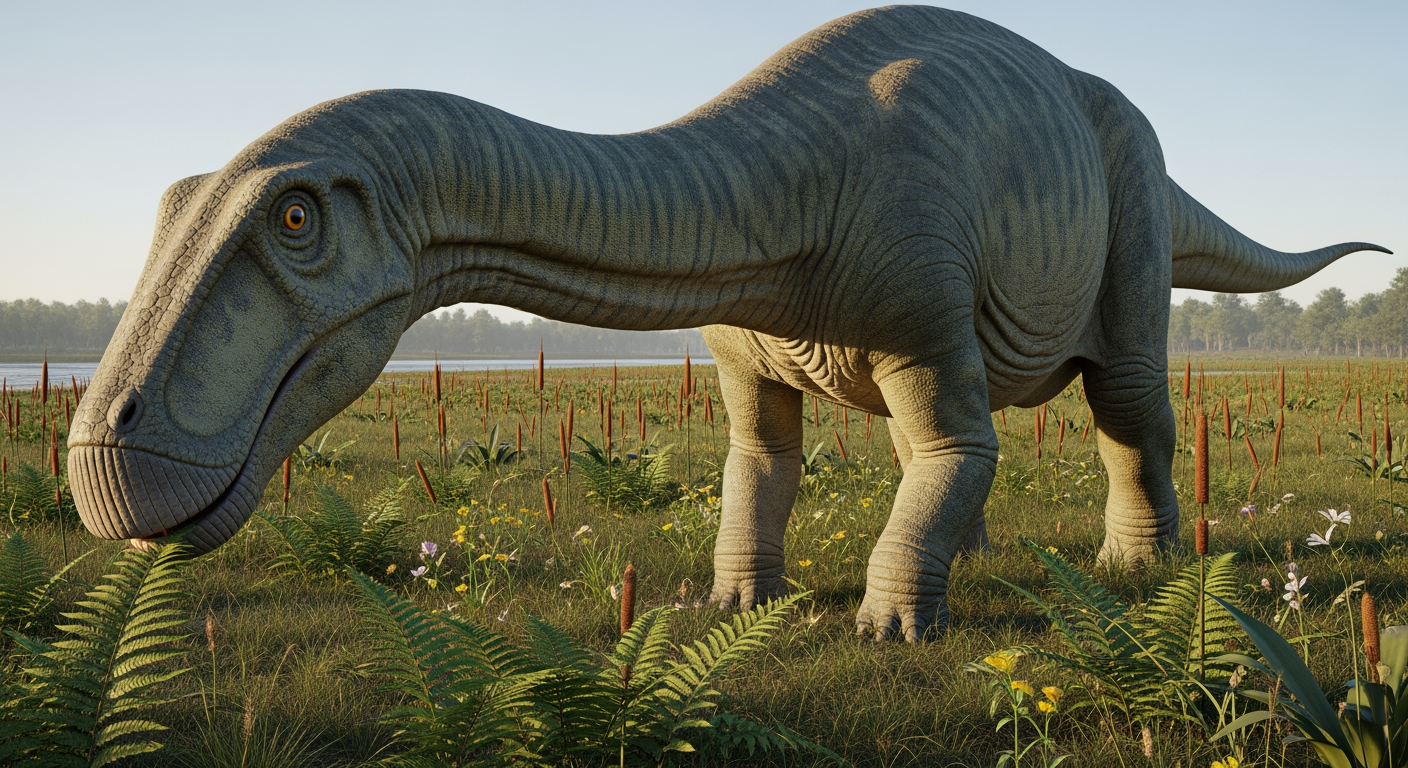
- The dinosaur with 500 teeth is Nigersaurus, a plant-eating sauropod from what is now the Republic of Niger.
- It lived about 110 million years ago, in the middle of the Cretaceous period.
- Its 500+ teeth sat in dental batteries — stacked columns that replaced themselves as they wore out.
- All those teeth were lined up across the front of a broad, straight-edged muzzle built for grazing at ground level.
The 10 dinosaurs with the greatest number of teeth
| # | Dinosaur | Teeth | Type |
|---|---|---|---|
| 1 | Nigersaurus | ~500 | Sauropod (herbivore) |
| 2 | Hadrosaurs | up to 300 | Duck-billed (herbivore) |
| 3 | Iguanodon | up to 200 | Herbivore |
| 4 | Troodon / Stenonychosaurus | ~122 | Troodontid (omnivore) |
| 5 | Stegosaurus | ~78 | Herbivore |
| 6 | Ankylosaurus | ~72 | Armored herbivore |
| 7 | Spinosaurus | ~64 | Carnivore (fish-eater) |
| 8 | Apatosaurus | ~60 | Sauropod (herbivore) |
| 9 | Tyrannosaurus rex | ~60 | Carnivore |
| 10 | Velociraptor | ~28 | Carnivore |
1. Nigersaurus — 500 teeth
The answer to the question of what dinosaur has 500 teeth is the sauropod Nigersaurus. Nicknamed the “Mesozoic cow” for the way its strange skull and grazing behavior echo a modern cow, Nigersaurus is one of the most unorthodox dinosaurs ever to have roamed the Earth.
The French paleontologist Philippe Taquet first described fossil remains of this dinosaur on expeditions to West Africa between 1965 and 1972. Meaning “reptile of Niger,” the name was coined after the location of its fossils in the Sahara Desert, in the modern-day Republic of Niger. Taquet’s work was later built upon by American paleontologist Paul Sereno, whose 1999–2000 excavations recovered far more complete remains.
This animal lived about 110 million years ago, in the middle of the Cretaceous period. It measured roughly 30 feet long and weighed about four tonnes — close to a modern African elephant. A plant-eating herbivore, its diet mainly consisted of soft plants such as ferns, early flowering plants, and horsetails.
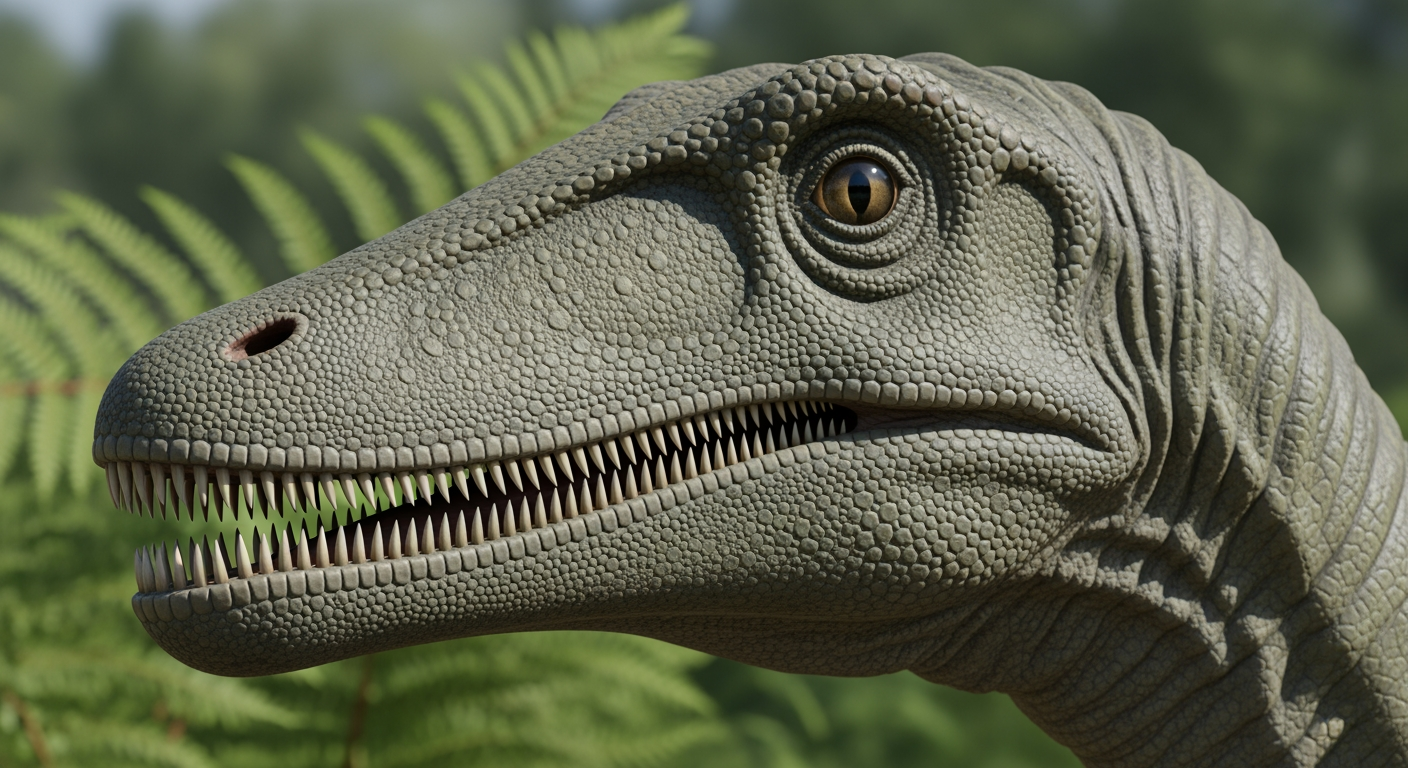
Nigersaurus is most widely recognized for its exceptionally wide mouth filled with over 500 small teeth. The broad snout is often compared to that of a cow, and it was actually wider than the back of the head. But sheer number isn’t the only remarkable thing about this sauropod’s teeth. Its skull was one of the first found with dental batteries — vertically stacked columns of teeth that replaced one another as needed, with 68 columns lining the upper jaw and 60 the lower. Once a tooth was lost or worn out, the one behind it slid into place, guaranteeing a fresh supply for the animal’s entire life.
Unlike dinosaurs whose teeth ran far back into the mouth, this sauropod kept all of its teeth at the very front of the muzzle, packed tightly in neat columns — perfect for shearing and mashing vegetation efficiently. With those front-loaded teeth and a relatively short neck for a sauropod, Nigersaurus fed at ground level, scooping up soft plants and slicing them with its broad, shear-like jaws.
2. Hadrosaurs — 300 teeth
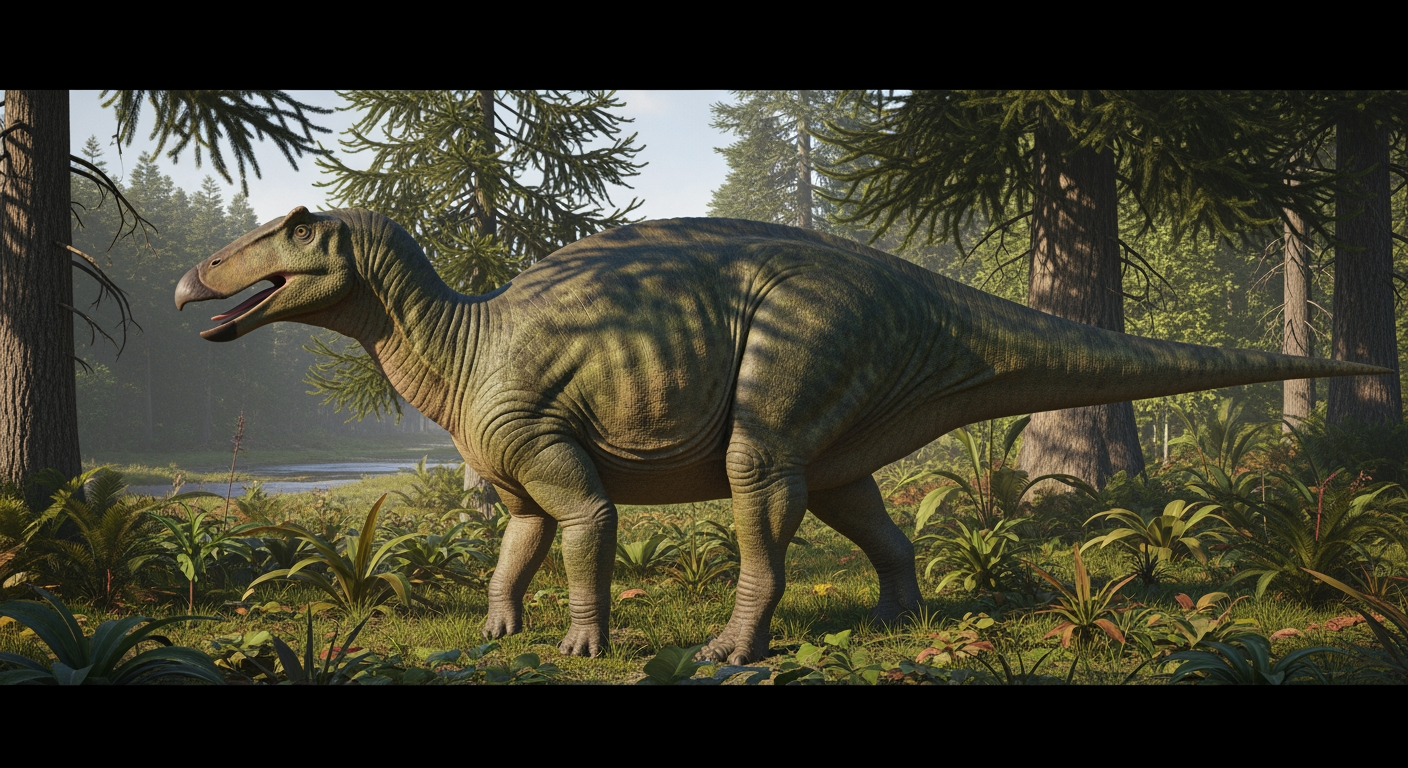
Also known as duck-billed dinosaurs, the hadrosaurs were herbivores that roamed parts of Europe, Asia, and North America during the Cretaceous period, roughly 75 to 65 million years ago. The “duck-billed” nickname comes from the unique structure of their faces, which featured long flattened snouts and big beaks.
In 1858, a near-complete dinosaur skeleton was discovered in a marl pit in Haddonfield, New Jersey, by fossil enthusiast William Parker Foulke. The bones were identified as Hadrosaurus, a herbivore with up to 300 teeth in its strong jaws, and are still on display at the Academy of Natural Sciences in Philadelphia.
Measuring up to about 30 feet long and weighing three to four tons, the hadrosaur was a powerful animal capable of rearing onto two legs to reach higher vegetation — roughly the size of a modern elephant. Its teeth are some of the most interesting dental discoveries in the world: positioned far back in the mouth and packed in tightly fused parallel stacks, they formed a grinding surface powerful enough to shear the toughest plant material. Researchers often compare them to human teeth because they weren’t firmly fused to the jaw — though, unlike ours, they had no nerves or blood vessels and were made entirely of hard tissue.
3. Iguanodon — 200 teeth
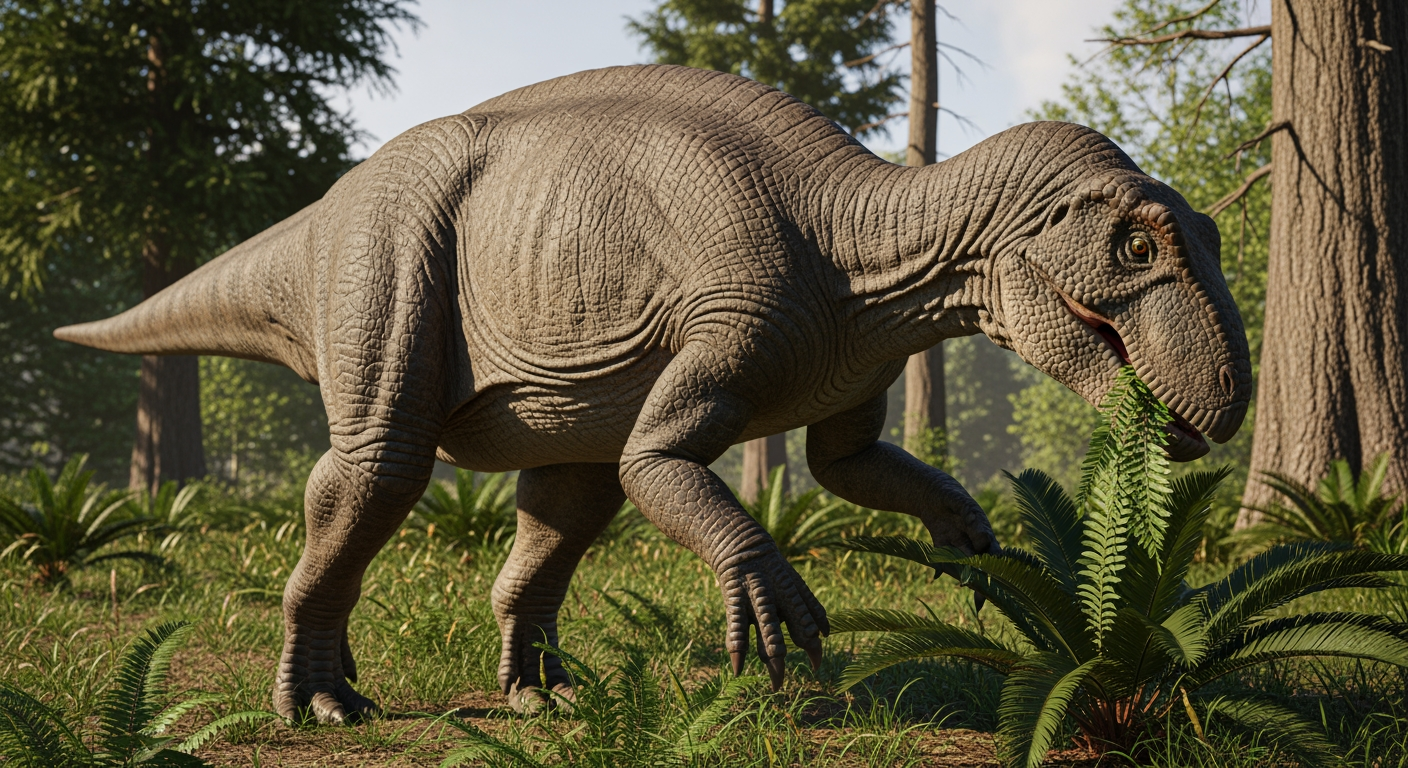
The Iguanodon was a herbivorous dinosaur of the Early Cretaceous period, roughly 125 million years ago. Its remains have been found across many continents, including parts of Europe, Asia, North America, North Africa, and Australia. With up to 200 teeth in its powerful jaws, it was one of the more impressively toothed dinosaurs ever discovered.
Reaching lengths of up to about 10 metres and weighing as much as four tons, Iguanodon was a massive animal. It was first identified in Sussex, England, in the 1820s by the husband-and-wife team of Mary Ann Mantell and Dr. Gideon Mantell — the teeth were the very first part to be unearthed, still embedded in rock. Decades later, a quarry discovery added limb bones, vertebrae, and pelvis fragments that clarified the animal’s body structure.
After noticing how closely the teeth resembled those of a modern iguana, researchers concluded the animal was essentially a super-sized version of the living lizard — which is exactly what the name Iguanodon (“iguana tooth”) refers to. It uniquely had two tooth types: spoon-shaped ones for snipping vegetation off branches, and chisel-like ones for grinding coarser plants such as cycads. Like Nigersaurus, it also had self-replacing dental batteries that lasted a lifetime.
4. Troodon / Stenonychosaurus — 122 teeth
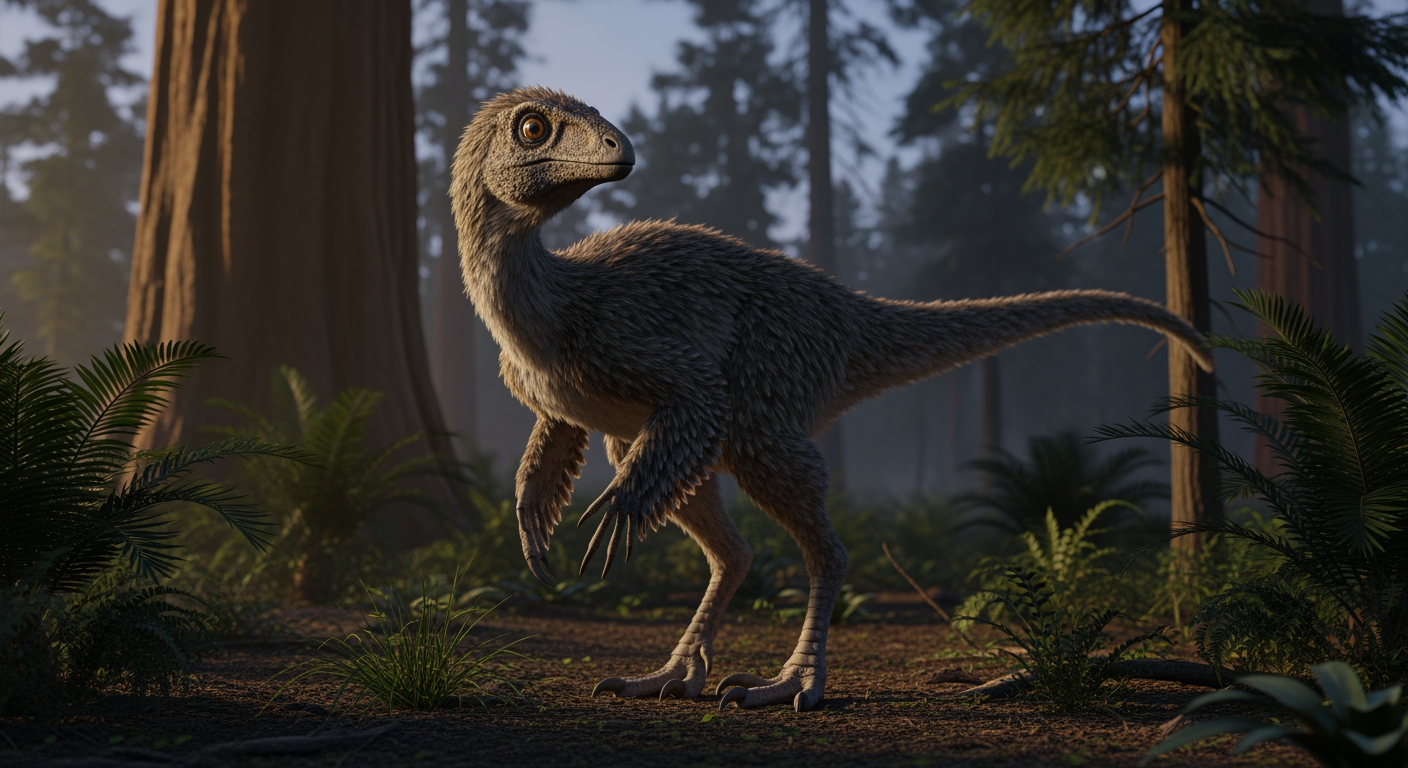
Often described as a slender, bird-like troodontid, Stenonychosaurus was an omnivorous dinosaur that lived in what is now Canada during the Late Cretaceous, around 75 million years ago. Its name means “narrow-claw lizard,” which suits its small, agile build. Small though it was, it packed an impressive 122 teeth into its compact jaws.
There is an ongoing debate about this animal’s name, with some researchers classifying it as Troodon — the name first given by American paleontologist Joseph Leidy to a single fossil tooth found in Montana in 1855. Later, similar remains from the Dinosaur Park Formation in Alberta were named Stenonychosaurus, so the two labels are still used side by side.
Standing up to about 10 feet long and weighing up to 110 pounds, it was a petite dinosaur — but with very large, forward-facing eyes that gave it advanced binocular vision. The wear and serrations on its teeth point to a carnivorous or omnivorous diet. Combined with its unusually large brain, grasping hands, and forward-facing eyes, those features suggest it was one of the most intelligent dinosaurs of its kind.
5. Stegosaurus — 78 teeth
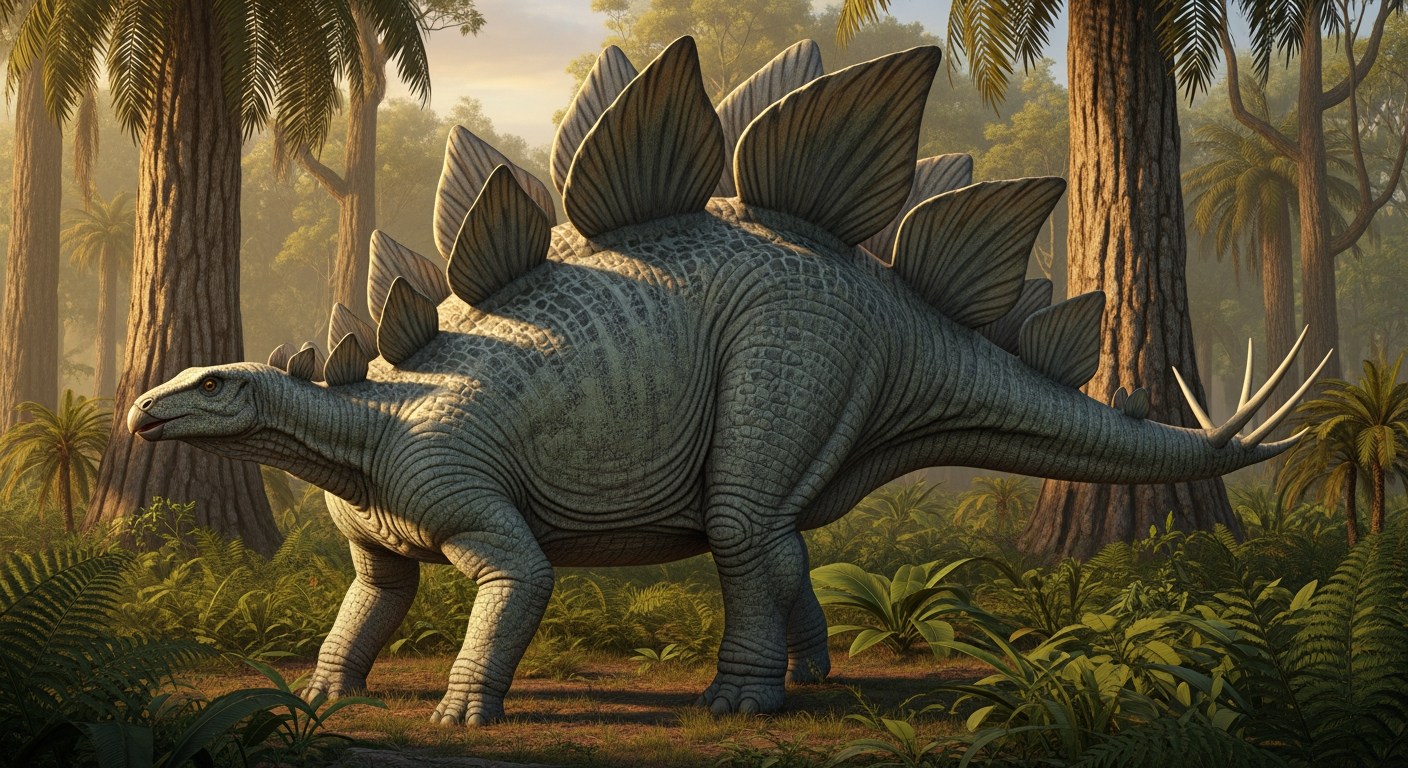
The Stegosaurus is one of the most instantly recognizable dinosaurs thanks to its iconic back plates. It lived about 155 to 150 million years ago, in the Late Jurassic, across what is now Colorado, Utah, and Wyoming in the United States, as well as parts of Europe.
Stegosaurus was named by the American paleontologist Othniel Charles Marsh in 1877, from fossils found in the Rocky Mountains; the name means “roof lizard.” It was a massive animal, reaching up to 30 feet long and 14 feet tall. Its most distinctive features were the large bony plates running along its back and a spiked tail — the “thagomizer” — used for defense and possibly temperature regulation.
Relative to its body, the animal had a very small head, a short neck, and a brain about the size of a plum, which is why popular culture often (unfairly) calls it the “dumb dinosaur.” A herbivore that mainly ate horsetails, cycads, fruit, and conifers, it had about 78 small, triangular, flat-surfaced teeth for grinding plants. Unusually for a herbivore, its teeth were spaced apart rather than packed together, pointing to a simple up-and-down jaw motion.
6. Ankylosaurus — 72 teeth
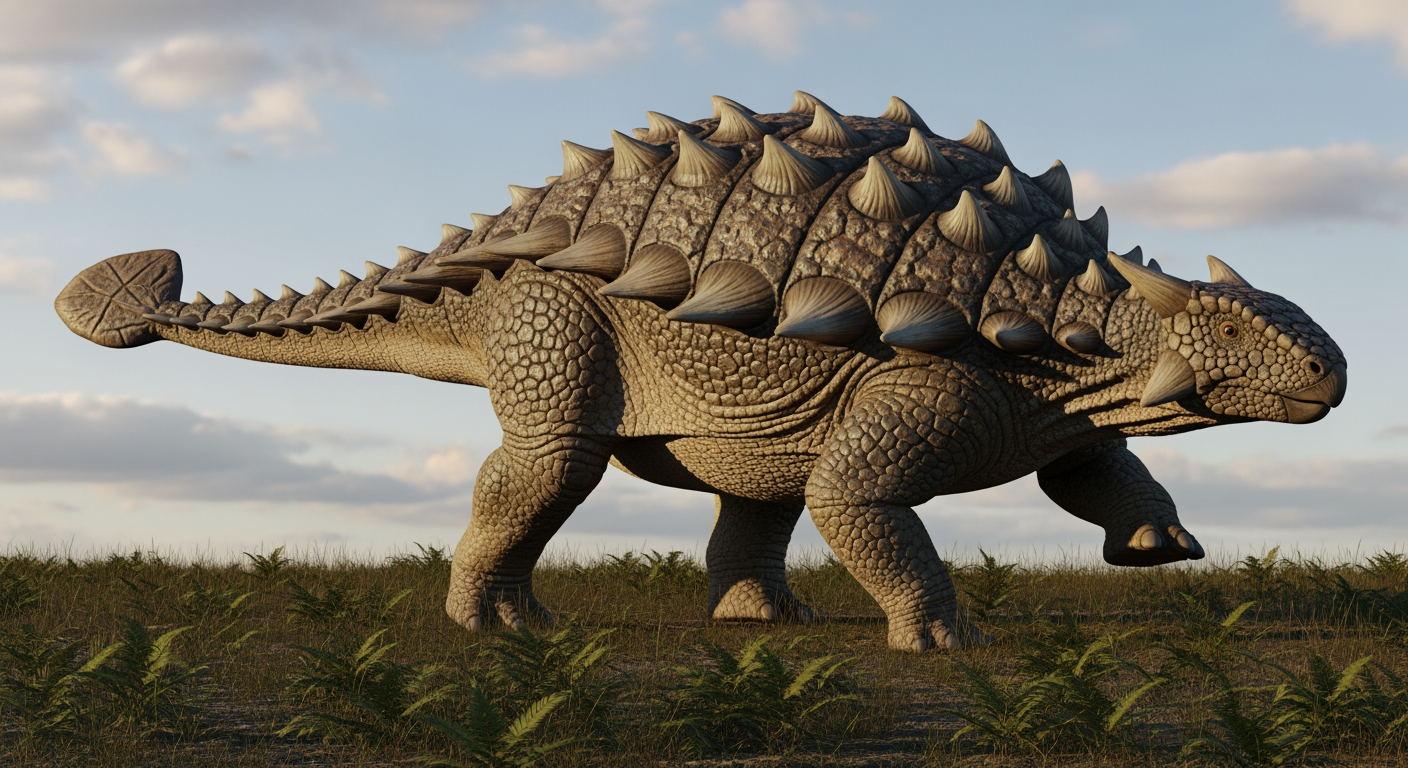
Greek for “fused lizard,” Ankylosaurus was a giant herbivore that lived in North America during the Late Cretaceous, roughly 70 million years ago. Often compared to a military tank, it was an armored animal covered in spiked, bony plates.
The first Ankylosaurus was found in 1906 by American paleontologist Barnum Brown during a Museum of Natural History expedition to Montana, in the Hell Creek Formation. Members of the wider armored-dinosaur family have since been found on nearly every continent, a sign of just how successful these animals were.
Ankylosaurus was not small — up to about 33 feet long and around four tons — with a flat, squared-off head and short legs. Its back, flanks, and skull were sheathed in thick bony armor, and its tail ended in a fused club. Its only real weak spot was its soft, broad underbelly. Despite its menacing look, it was a herbivore that ate low-lying plants like ferns. It had 72 small, leaf-shaped teeth with multiple cusps that looked almost serrated — each less than half an inch long, and well suited to its diet.
7. Spinosaurus — 64 teeth
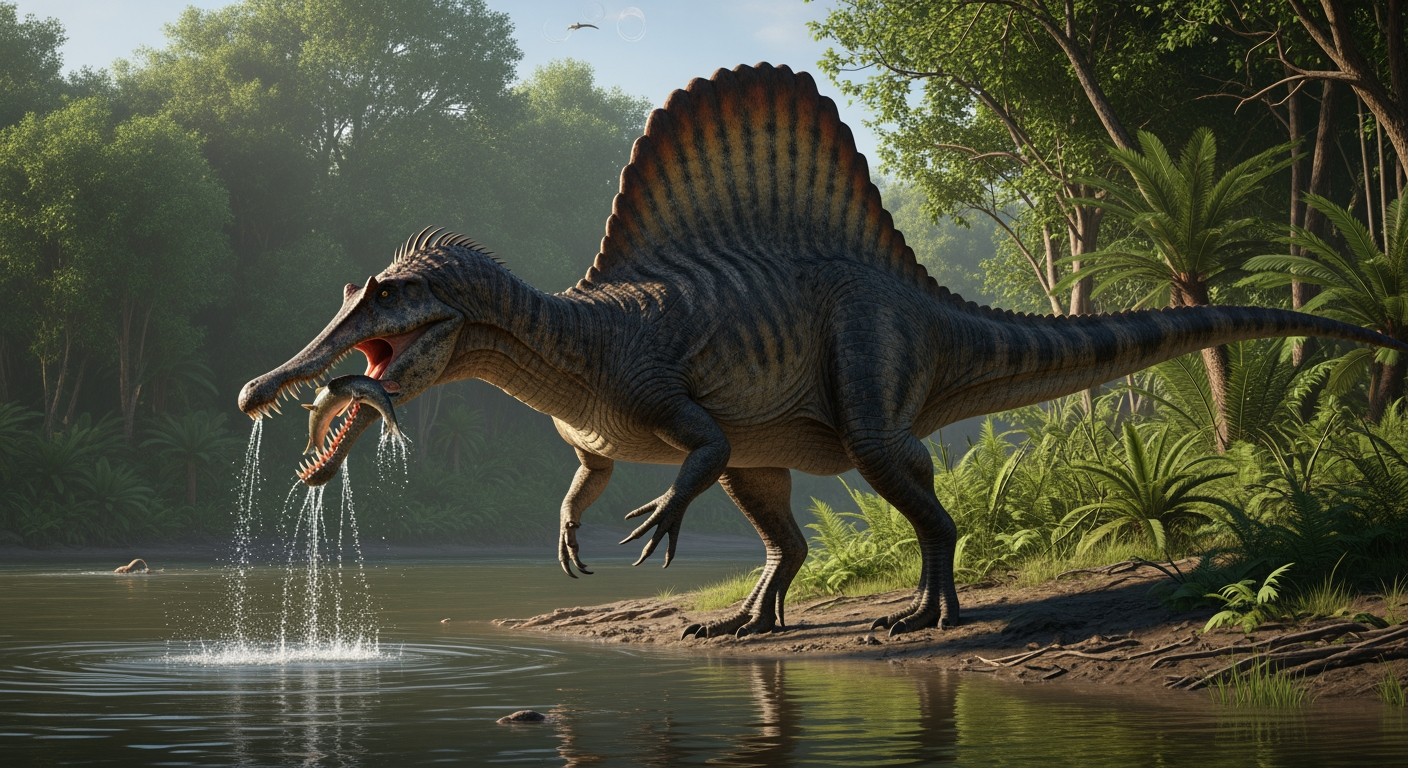
The only semi-aquatic fish-eater on this list, the Spinosaurus was a large meat-eating dinosaur of the Late Cretaceous, living in North Africa about 99 to 94 million years ago. Its name means “spined reptile,” a nod to the tall sail of vertebral spines along its back.
Partial skeletal fossils were first found by the German paleontologist Ernst Stromer and his assistant Richard Markgraf in 1915, at the Bahariya Oasis in western Egypt. Tragically, those original fossils were destroyed in 1944 when the Munich museum holding them was bombed during World War II, along with much of Stromer’s life’s work. For decades his notes were the only record, until new remains turned up in Tunisia, Morocco, and Algeria in the 1990s and 2000s.
Spinosaurus is often compared to a crocodile thanks to its long, narrow skull and nostrils set high near the eyes. Measuring roughly 14 to 18 metres long, it is the longest carnivorous dinosaur known. Its teeth were conical and smooth rather than blade-like, about 64 of them interlocking like a crocodile’s — strong evidence that it lived largely on fish.
8. Apatosaurus — 60 teeth
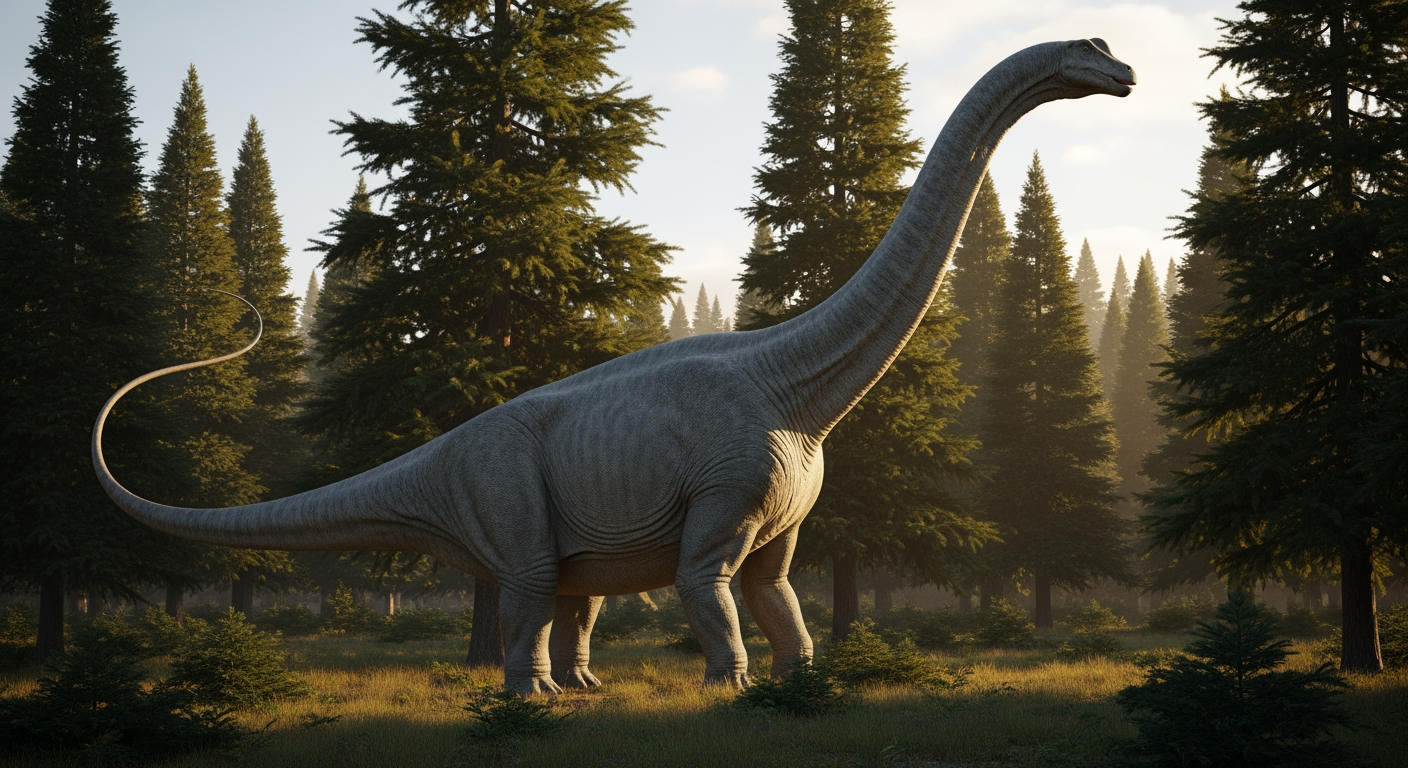
The Apatosaurus was a sauropod dinosaur that lived in the Late Jurassic, some 150 million years ago, in what is now North America — alongside the likes of Stegosaurus, Diplodocus, and Allosaurus.
It was first discovered in the foothills of Colorado by the naturalist Arthur Lakes, with more remains found in Wyoming in 1877 by the American paleontologist O. C. Marsh. Its fossils are concentrated in the Morrison Formation, a sedimentary rock sequence spanning modern-day New Mexico, Utah, Wyoming, and Colorado.
Measuring up to about 75 feet long and weighing well over 20 tons, Apatosaurus was one of the most massive land animals ever to exist, with the classic sauropod shape: a long neck and a whip-like tail. It carried 45 to 60 small, peg-like teeth ideal for stripping vegetation, and replaced them continuously throughout its life. Interestingly, it didn’t chew — it swallowed plants whole and let them ferment and digest in its enormous gut.
9. Tyrannosaurus rex — 60 teeth
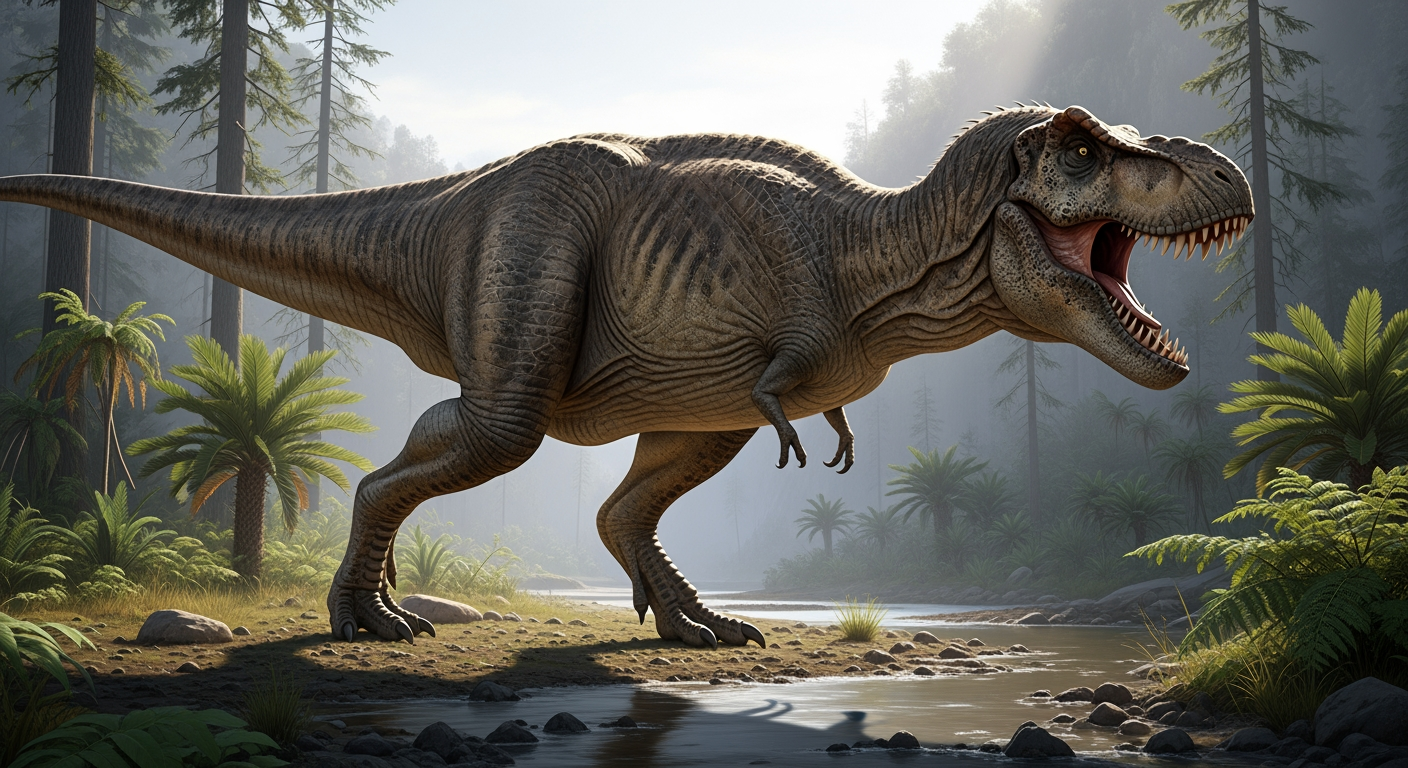
Often abbreviated to T. rex, the Tyrannosaurus rex was one of the most formidable predators in history. A fierce carnivore, it ruled the river valleys of western North America about 68 million years ago, in the Cretaceous period.
The first T. rex bones were found in 1902 by the famous fossil hunter Barnum Brown at Hell Creek, Montana. Most later finds come from North America, with a few close relatives unearthed in Mongolia. The name means “king of the tyrant lizards,” and it earned it: a muscular body up to 40 feet long, weighing as much as eight tons, balanced on two legs with famously small arms and a powerful tail. Rather than a pure scavenger, T. rex is now seen as an apex predator that both hunted and scavenged.
Its jaws held about 60 razor-sharp teeth, the largest up to 12 inches long. Their shape varied by position: the front teeth were chiselled and tightly packed for gripping and pulling prey, while the side teeth were spaced for slicing flesh, and any tooth lost in a fight was soon replaced. The bite itself was astonishing — up to 10,000 pounds per square inch — and a keen sense of smell helped it track its next meal.
10. Velociraptor — 28 teeth
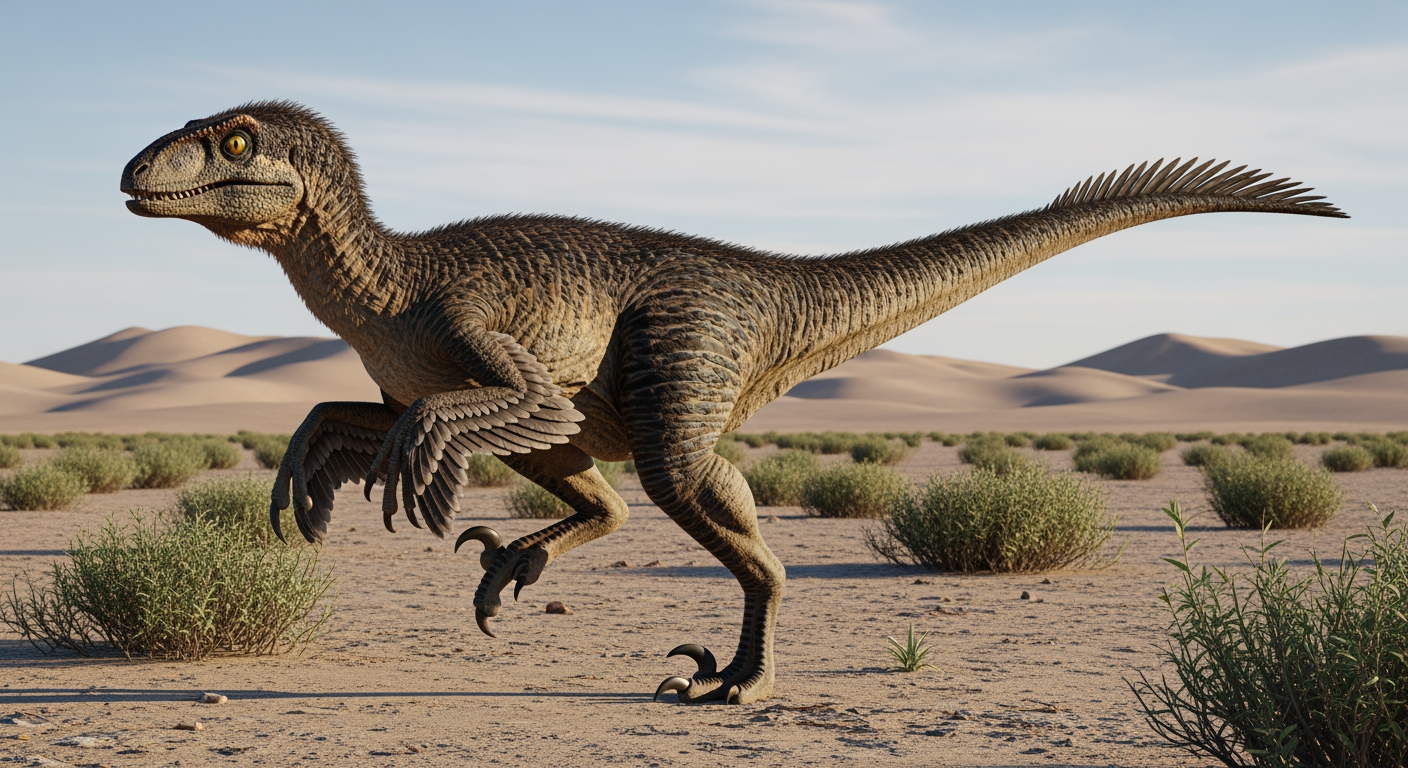
Small but ferocious, the carnivorous theropod Velociraptor was one of the deadliest hunters of the Late Cretaceous, roaming parts of central and eastern Asia between 75 and 70 million years ago. The animals that truly shared its world were Mongolian neighbours such as Protoceratops and Oviraptor — not the T. rex or Spinosaurus of popular imagination, which lived on other continents and, in some cases, millions of years apart.
This famous theropod was found on 11 August 1923 at a dig site in the Gobi Desert of Mongolia, during an American Museum of Natural History expedition. Associate paleontologist Peter Kaisen is credited with finding the skull and toe claw. At the time, the region was so remote it could only be reached by car and cavalry — nearly as dangerous as the dinosaur itself.
Built for speed and agility, the real Velociraptor averaged about 6 feet long and weighed under 50 pounds, with a long narrow head, a flat snout, sickle claws on each foot, and — as fossil evidence now shows — feathers. It had about 26 to 28 blade-like teeth, widely spaced and heavily serrated, ideal for slicing flesh; though sharp, they were tiny, barely a quarter-inch long. As with the others on this list, those teeth were continually replaced throughout its life. (Curious how the real animal compares to the movie monster? See our guide to the best Velociraptor costumes and LEGO raptor sets.)
From wide-mouthed grazers to razor-toothed hunters, we’ve ranked the best dinosaur figures, plush, and play sets for every age.
Fun facts about Nigersaurus, the dinosaur with 500 teeth
Nigersaurus is one of the most enigmatic dinosaurs ever found, thanks to its sheer strangeness. A few highlights:
The weirdest dinosaur ever seen
With 500 teeth lined up in stacked vertical columns, its broad, flat jaw has been compared to a vacuum cleaner. Even the renowned paleontologist Paul Sereno has called it the weirdest dinosaur he has ever seen in his career.
Its anatomy was a mystery for decades
Although fossils were found in the mid-20th century, the animal’s true appearance only came to light in the late 2000s — the early specimens were too incomplete and fragile to read clearly.
It had cartoonishly large eyes
The skull shows surprisingly large eye sockets for a sauropod, giving it an almost cartoon-like face.
Short-necked for a sauropod
Sauropods are famous for enormously long necks, but Nigersaurus kept its relatively short — a body plan tuned for grazing at ground level rather than browsing the treetops.
A hatchling small enough to fit on a coin
Sereno’s team also found fossil parts of a baby Nigersaurus, so small its skull would have fit on a silver dollar.
Why are dinosaur teeth important?
Despite being hundreds of millions of years old, dinosaur teeth often survive remarkably well, making them some of the most pristine fossils ever found. That preservation is a gift for science, because teeth can reveal a great deal about a dinosaur’s diet, size, and survival strategies — their shape, sharpness, and size let researchers reconstruct how an animal lived.
Diet and feeding habits
As the main tool for processing food, teeth are strong evidence of diet. Flat grinding teeth point to a plant-based herbivore, while serrated, blade-like teeth suggest a meat-eater that tore flesh. Microscopic wear marks add even more detail: coarse pits and wide scratches hint at a gritty diet, while fine, shallow scratches suggest soft vegetation.
Behavioral patterns
Tooth wear can also separate predators, scavengers, and grazers. Teeth found lodged in the fossilized bones of prey, for instance, point to aggressive feeding behavior. Tooth position helps too: teeth set far back in the jaw tend to crush food passively, while large, conical teeth at the front suggest an animal that grasped struggling prey.
Final thoughts
Although Nigersaurus answers the headline question of what dinosaur has 500 teeth, it isn’t actually the dinosaur with the most teeth ever discovered. Researchers believe some dinosaurs had even more — the Triceratops may have carried up to 800, and certain duck-billed dinosaurs up to 960 cheek teeth. As some of the best-preserved fossils we have, teeth keep bringing us a step closer to understanding the diets, behaviors, and survival strategies of these astonishing animals that ruled our planet for so long.
Frequently asked questions
What dinosaur had zero teeth?
What dinosaur has 10,000 teeth?
What dinosaur had the largest teeth?
Can a dinosaur’s age be determined from its teeth?
Were there dinosaurs with beaks instead of teeth?
How did dinosaurs replace their teeth?
Do any modern animals have teeth like dinosaurs?
A note on accuracy: this guide follows mainstream paleontology. Dinosaur sizes, dates, and tooth counts are best estimates drawn from published fossil studies and can shift as new specimens are found.