Dino Toys is reader-supported. When you buy through links on this page we may earn an affiliate commission, at no extra cost to you. As an Amazon Associate we earn from qualifying purchases.
Flying Dinosaurs: Names, Types, and the Truth About the Creatures That Ruled the Skies
Close your eyes and picture a flying dinosaur. You’re probably seeing leathery wings, a long crested head, and a shadow gliding over a Jurassic coastline. It’s a brilliant image — and it hides one of the biggest surprises in all of paleontology: the famous “flying dinosaurs” weren’t dinosaurs at all.
Pterodactyl, Pteranodon, Quetzalcoatlus — the winged giants that fill our films, toy boxes and museum ceilings — belong to a separate group called pterosaurs, the flying reptiles. The real flying dinosaurs turn out to be much closer to home: they’re birds, and they’re still soaring over your head today. This guide untangles the whole story — every famous flyer and what it was really called, the biggest and smallest of them, how flight evolved, the myths worth busting, and how to tell a true flying dinosaur from its look-alikes.
The short version
- Most “flying dinosaurs” — Pterodactyl, Pteranodon, Quetzalcoatlus — were actually pterosaurs (flying reptiles), not dinosaurs.
- The only true flying dinosaurs are birds, plus feathered relatives like Archaeopteryx and Microraptor.
- The biggest flyers ever — Quetzalcoatlus and Hatzegopteryx — had wingspans of around 10–11 metres, the size of a small plane.
- Flying reptiles ruled the air for over 160 million years, from the Late Triassic until the asteroid wiped them out 66 million years ago.
Quick note before we dive in: because almost everyone searches for these animals as “flying dinosaurs,” that’s the phrase we’ll use throughout — but we’ll always flag whether a given creature was a pterosaur, a bird, or a genuine dinosaur. Accuracy and clarity, side by side.
Flying dinosaurs at a glance: a quick list of names and types
Here are the headline flyers, what each one actually was, and how big it got. Think of it as your cheat-sheet list of flying dinosaur names before we meet them one by one.
| Name | What it really was | Wingspan | When it lived |
|---|---|---|---|
| Pterodactylus | Pterosaur (flying reptile) | ~1 m | Late Jurassic |
| Pteranodon | Pterosaur | ~6–7 m | Late Cretaceous |
| Quetzalcoatlus | Pterosaur (largest ever) | ~10–11 m | Late Cretaceous |
| Hatzegopteryx | Pterosaur (giant) | ~10–12 m | Late Cretaceous |
| Rhamphorhynchus | Pterosaur (toothed) | ~1.8 m | Late Jurassic |
| Dimorphodon | Pterosaur (big-headed) | ~1.4 m | Early Jurassic |
| Anurognathus | Pterosaur (tiny) | ~35 cm | Late Jurassic |
| Archaeopteryx | Early bird / feathered dinosaur | ~0.5 m | Late Jurassic |
| Microraptor | Feathered dinosaur (four wings) | ~1 m | Early Cretaceous |
| Ichthyornis | Early seabird (a true dinosaur) | ~0.6 m | Late Cretaceous |
Were there really flying dinosaurs? Can dinosaurs fly?
The honest answer is a wonderful “yes and no.” If you mean the winged reptiles of the Age of Dinosaurs — the pterosaurs — then no, strictly speaking they weren’t dinosaurs, even though they lived right alongside them and dominated the skies for the entire Mesozoic Era.
But if you mean “can any dinosaur fly?” then the answer is a definite yes — because birds are dinosaurs. Modern science places birds firmly inside the dinosaur family tree, as the surviving branch of the meat-eating theropods that also produced Tyrannosaurus and Velociraptor. So every sparrow, eagle and pigeon you’ve ever seen is, technically, a living flying dinosaur. The pigeon on your windowsill has a better claim to the title than Pteranodon ever did.
That single fact reshapes the whole question. Real flying dinosaurs aren’t extinct at all — there are roughly 11,000 species of them alive right now. The extinct flyers we’re about to meet fall into two camps: the pterosaurs (close cousins of dinosaurs, but not dinosaurs themselves) and the early birds and their feathered theropod relatives (true dinosaurs that learned to fly).
Pterosaur, bird, or dinosaur? How to tell them apart
The confusion is completely understandable — pterosaurs, birds and dinosaurs are all related archosaurs, and they shared the same world. But three simple differences sort them out, and the wings give the clearest clue of all.
It’s all in the wing. A pterosaur’s wing was a sheet of skin and muscle — a membrane called a patagium — stretched mostly along one enormously elongated fourth finger. A bird’s wing (and the wing of a feathered dinosaur like Microraptor) is a feathered arm. Same job, totally different engineering: one is a living kite, the other a feathered limb.
Different family, different hips. Dinosaurs are defined by a specific set of skeletal features, including an upright stance with the legs held directly beneath the body. Pterosaurs branched off just outside the dinosaur group — close cousins, but a separate lineage of flying reptiles. So a “flying reptile” like Pteranodon and a “flying bird dinosaur” like Ichthyornis sit on different branches of the tree, even though both ended up airborne.
Feathers vs fuzz. Birds and their dinosaur ancestors had true feathers. Pterosaurs were coated in hair-like filaments called pycnofibres — warm and fuzzy, but not feathers. If it had a feathered arm-wing, it was a dinosaur; if it had a membrane wing and fuzzy coat, it was a pterosaur.
How do palaeontologists actually tell them apart? Mostly from exquisitely preserved fossils — sites in Germany, China and Brazil have produced specimens so detailed you can see wing membranes, fuzz and individual feather impressions frozen in stone. Those fossils are why we can say with confidence that a pterosaur’s wing and a bird’s wing solved the same problem in two completely different ways.
The pterosaurs: the flying reptiles everyone calls dinosaurs
These are the animals most people mean by “flying dinosaurs.” They were the first vertebrates to achieve powered flight, and over 160 million years they evolved into an astonishing range of shapes — from sparrow-sized insect-catchers to giants the size of light aircraft. Here are the ones worth knowing by name.
Pterodactylus — the original “pterodactyl”
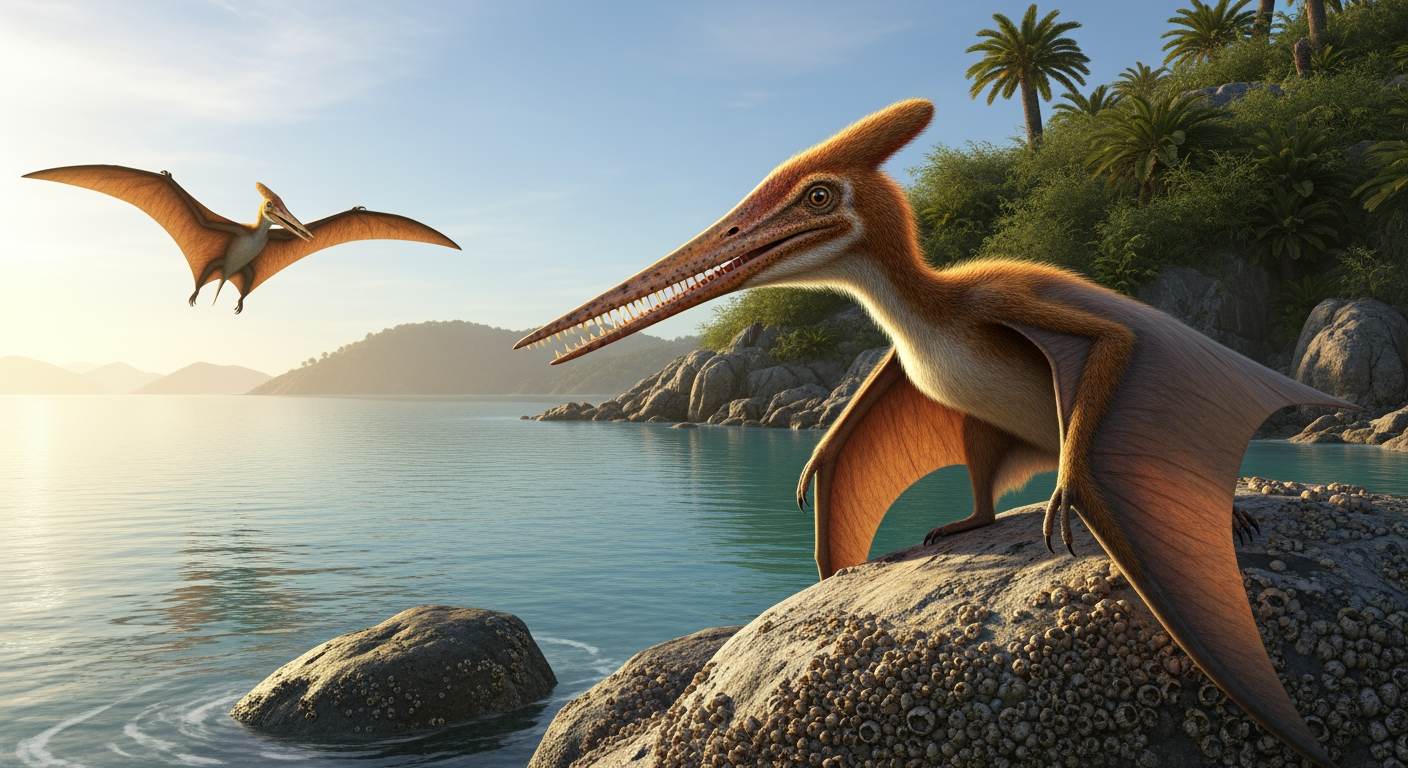
When people say “pterodactyl,” this is the animal the word actually comes from. Pterodactylus was a fairly small pterosaur of the Late Jurassic, with a wingspan of around a metre, a long toothy snout and a small head crest. It was one of the first pterosaurs ever described, back in the late 1700s, long before anyone had even coined the word “dinosaur.” Over time “pterodactyl” became a catch-all nickname for almost any flying reptile — which is why so many different species get lumped under it today. If your kids love this one, our guide to the best Pterodactyl toys is built for exactly that.
Pteranodon — the crested film star
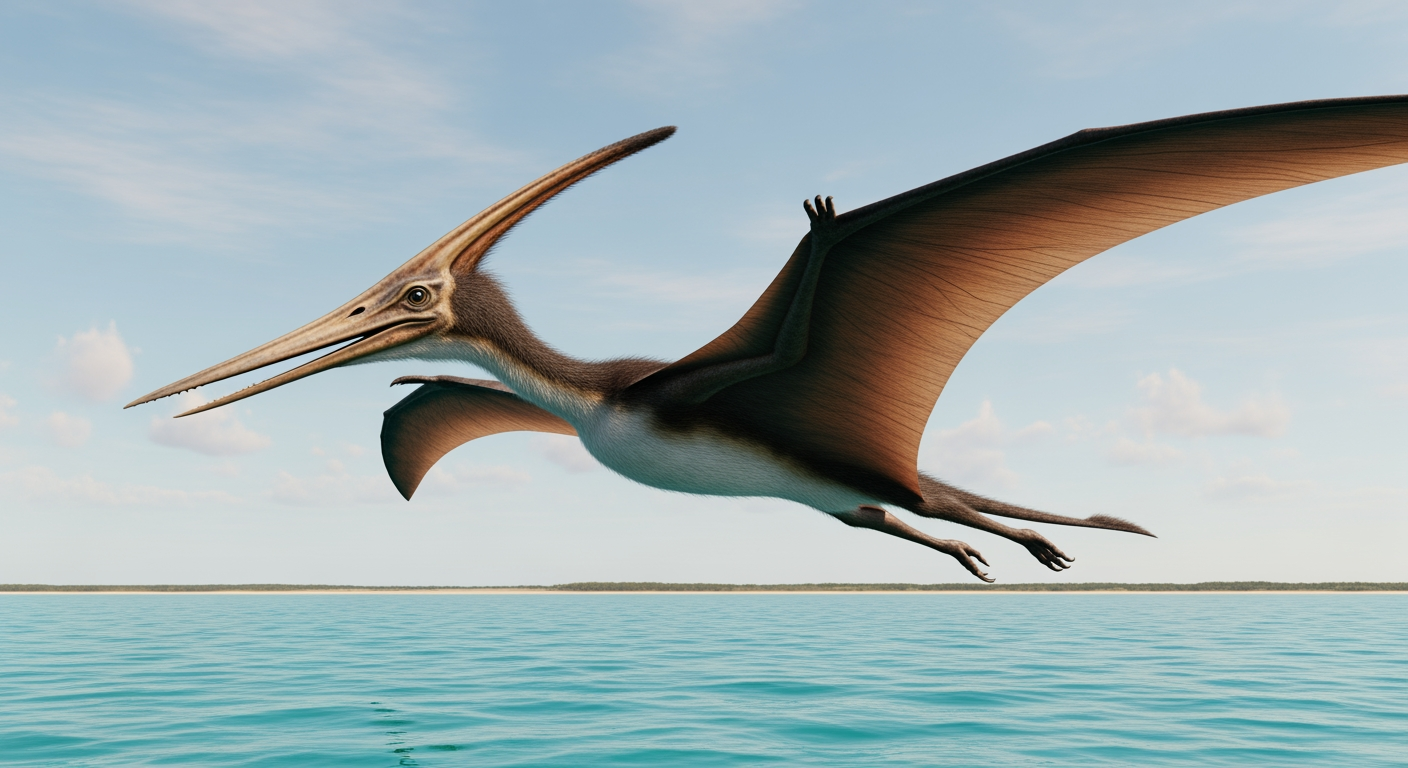
If you’ve seen a flying reptile in a dinosaur film, chances are it was Pteranodon — or something based on it. This Late Cretaceous pterosaur had a wingspan of six to seven metres, a long pointed crest sweeping back from its skull, and a completely toothless beak. It soared over the warm inland seas of North America much like a giant seabird, snatching fish from near the surface. Its name actually means “toothless wing,” a neat reminder that not every flying reptile was bristling with fangs.
Quetzalcoatlus — the largest flying animal of all time
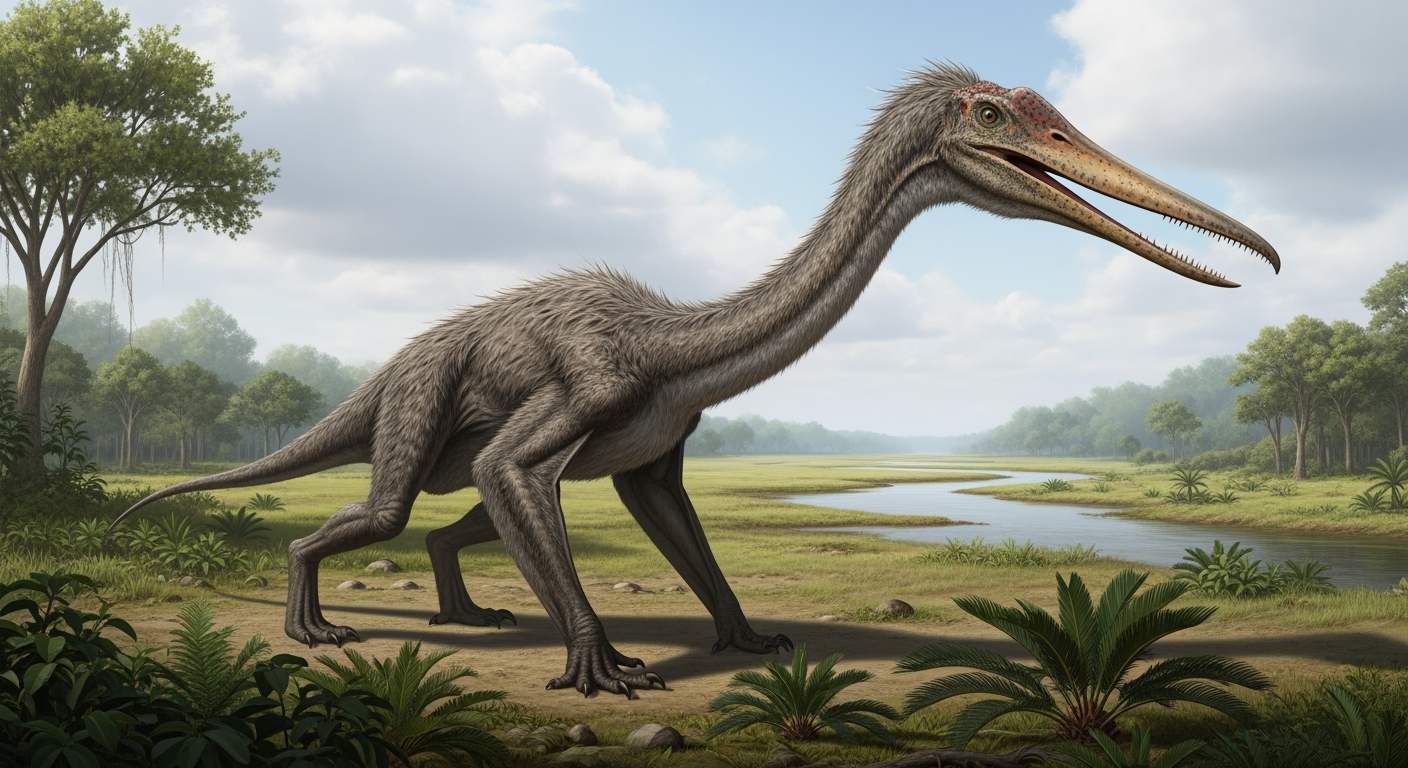
Meet the record holder. Quetzalcoatlus was an azhdarchid pterosaur from the very end of the Cretaceous, and with a wingspan estimated at 10 to 11 metres it’s the largest flying animal known to science — bigger than any bird, and roughly the size of a small plane. On the ground it stood about as tall as a giraffe, and many researchers think it stalked across the landscape on all fours, snapping up smaller animals like a colossal prehistoric stork. It’s the answer you’ll most often see to “what was the biggest flying dinosaur?” — with one close rival we’ll meet in a moment. Fans of this giant can browse our pick of Quetzalcoatlus toys.
Hatzegopteryx — the heavyweight rival
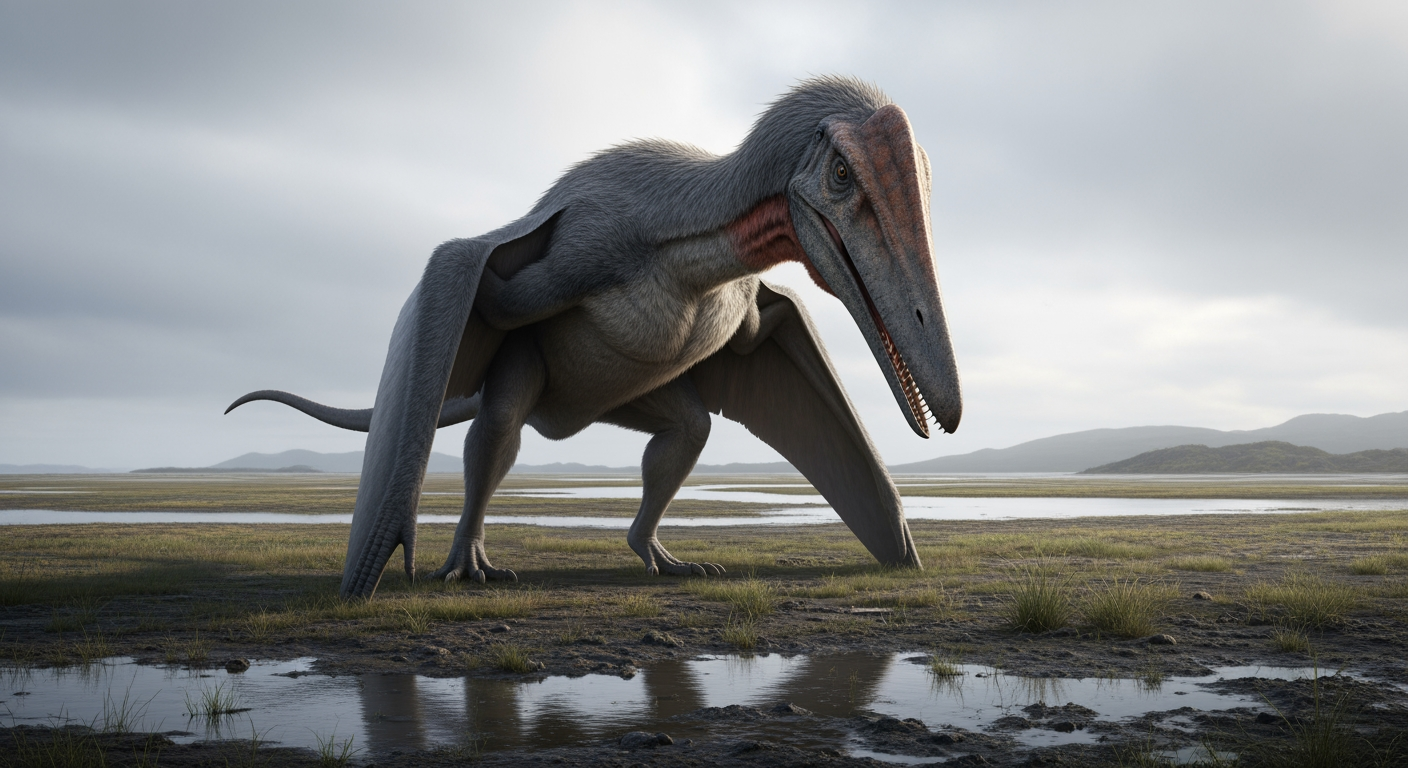
Found in Romania, Hatzegopteryx was a giant azhdarchid that rivalled Quetzalcoatlus for the title of biggest flyer, with a wingspan estimated around 10 to 12 metres. What set it apart was its build: a short, massive neck and a huge, robust skull suggest it was the apex predator of its island home, capable of taking down sizeable prey rather than just picking at small animals. Where Quetzalcoatlus was tall and elegant, Hatzegopteryx was the heavyweight.
Rhamphorhynchus — the toothy one
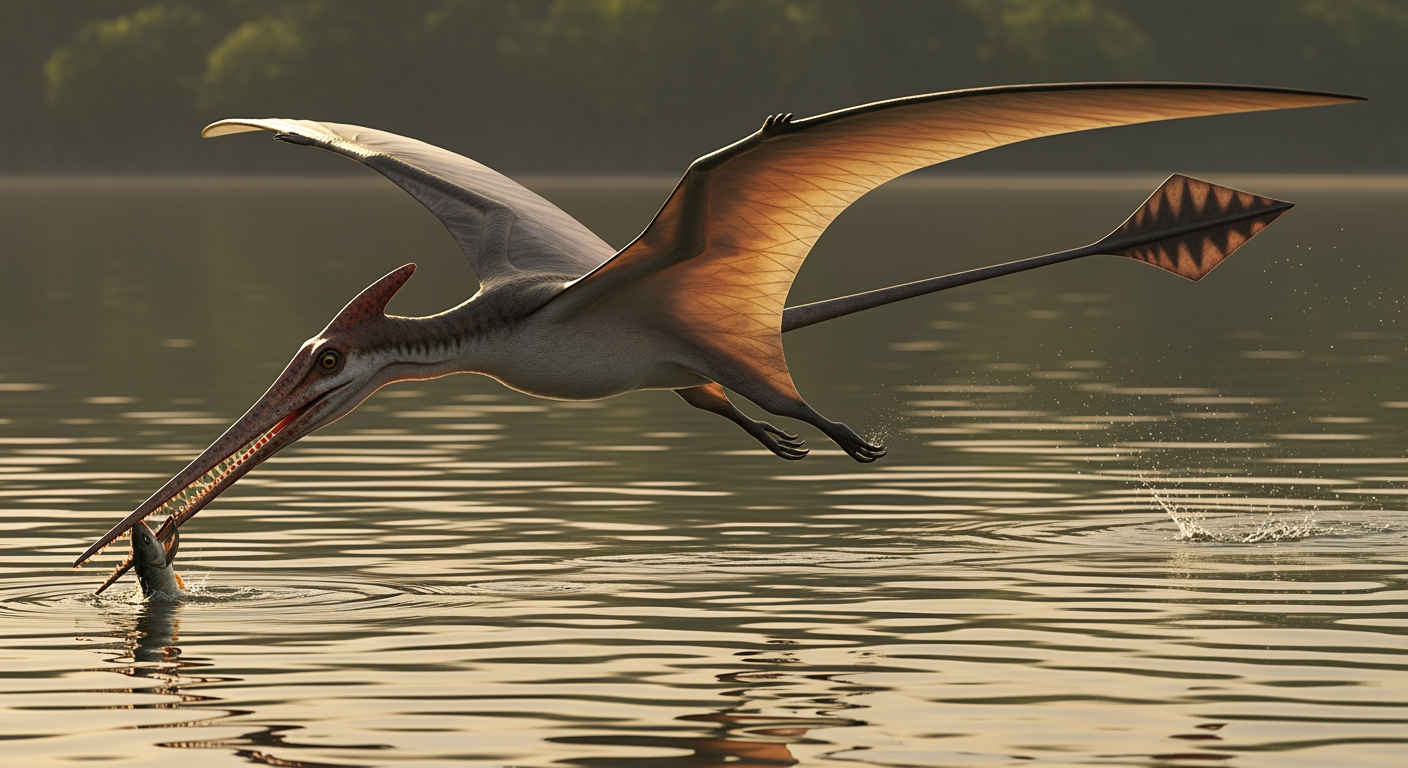
If you’ve ever searched for a “flying dinosaur with teeth,” Rhamphorhynchus is a perfect example. This Late Jurassic pterosaur had a mouthful of long, forward-jutting teeth ideal for spearing slippery fish, plus a long stiff tail tipped with a diamond-shaped vane that worked like a rudder. It belonged to an earlier, more primitive group of pterosaurs — the long-tailed forms that came before the short-tailed pterodactyloids like Pteranodon.
Dimorphodon — the big-headed early flyer
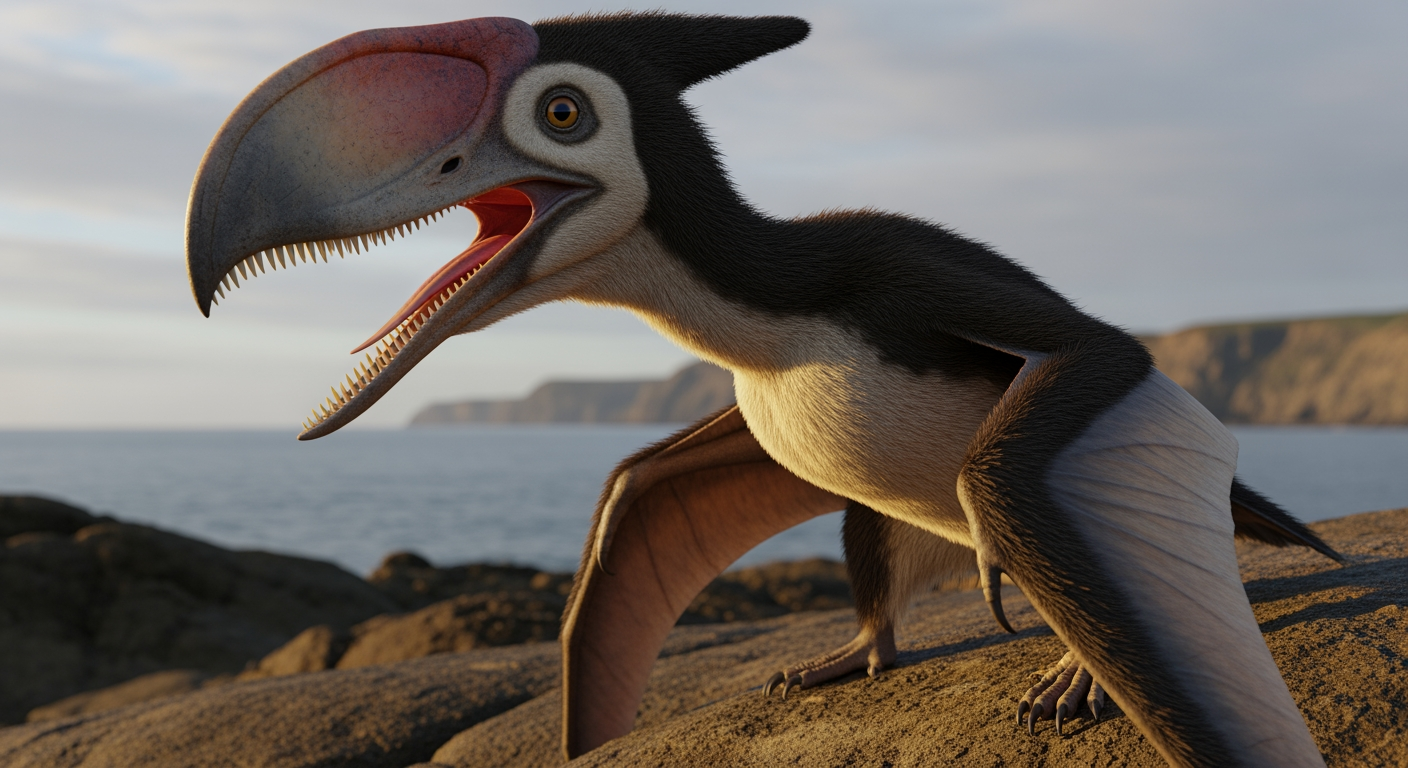
One of the earliest pterosaurs, Dimorphodon lived in the Early Jurassic and had a wingspan of around 1.4 metres. Its standout feature was its head: tall, deep and surprisingly large, a bit like a puffin’s. That oversized skull is probably why some people imagine a “flying dinosaur with a T-Rex head” — Dimorphodon is about as close as the real fossil record gets to that mental image, though its jaws were lined with two different tooth types (which is what its name means) rather than a tyrannosaur’s bone-crushers.
Anurognathus — the pocket-sized pterosaur
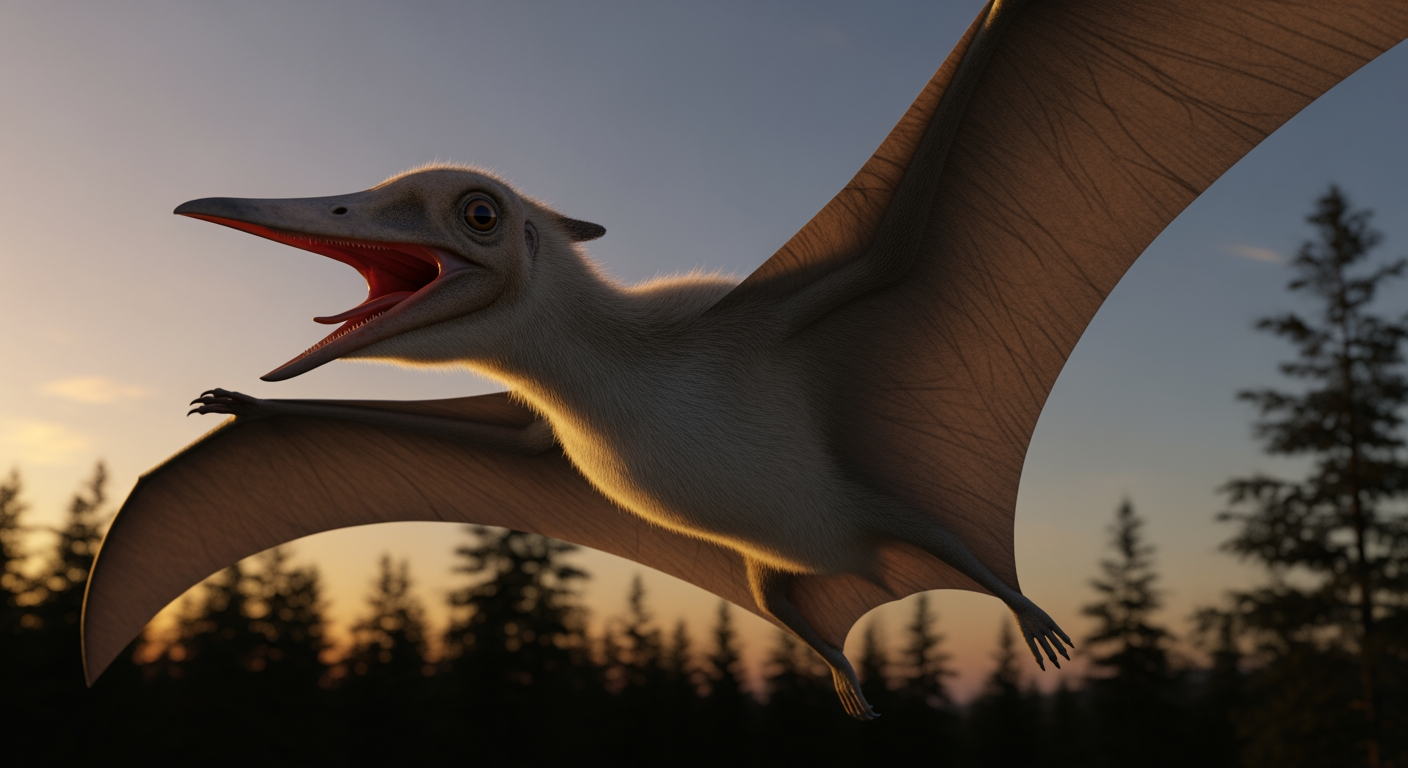
Not every flyer was a monster. Anurognathus was a tiny Late Jurassic pterosaur with a wingspan of roughly 35 centimetres, a short face and a wide gape for catching insects in mid-air at dusk, much like a bat or a nightjar does today. It’s one of the best answers to “what was the smallest flying dinosaur?” — a reminder that the pterosaurs filled the small, fast niches as well as the giant ones. (A handful of even tinier forms, like Nemicolopterus, were smaller still.)
Those are the headliners, but the pterosaur family tree was enormous — well over a hundred species in a huge range of shapes. A few more worth knowing by name: Nyctosaurus, a toothless Late Cretaceous flyer famous for an extravagant antler-like head crest; Tropeognathus and Ornithocheirus, large keel-snouted fish-hunters whose jaws ended in rounded crests that cut through water as they skimmed; and Tapejara, with a tall, sail-shaped crest that probably worked as a billboard for display. Run through the full list of flying dinosaur names and the same lesson keeps coming up: the skies of the Mesozoic were as crowded and varied as any rainforest is today.
Where and how did flying dinosaurs live?
Different flying reptiles filled completely different roles, which is exactly why so many species could share one world. The big coastal forms like Pteranodon and the ornithocheirids lived much as seabirds do now, soaring over open water on long, narrow wings and snatching fish near the surface. The tiny ones like Anurognathus were nocturnal insect-hunters, while the giant azhdarchids such as Quetzalcoatlus and Hatzegopteryx strode across floodplains hunting on foot, grabbing anything small enough to swallow.
Most flying reptiles were carnivorous in the broad sense — fish, insects, small animals — rather than plant-eaters, and their bodies were finely tuned for flight. Their bones were hollow and air-filled, like a bird’s, making them astonishingly light for their size, and that fuzzy coat of pycnofibres suggests many were warm-blooded and active, not the cold, scaly gliders of old illustrations. These weren’t clumsy leather kites; they were among the most sophisticated flying animals that have ever lived.
The real flying dinosaurs: birds and their feathered cousins
Now for the genuine article. While pterosaurs owned the air, a quieter revolution was happening among small, feathered, meat-eating dinosaurs — and it would eventually give rise to every bird alive today. These are the true flying dinosaurs.
Archaeopteryx — the famous “first bird”
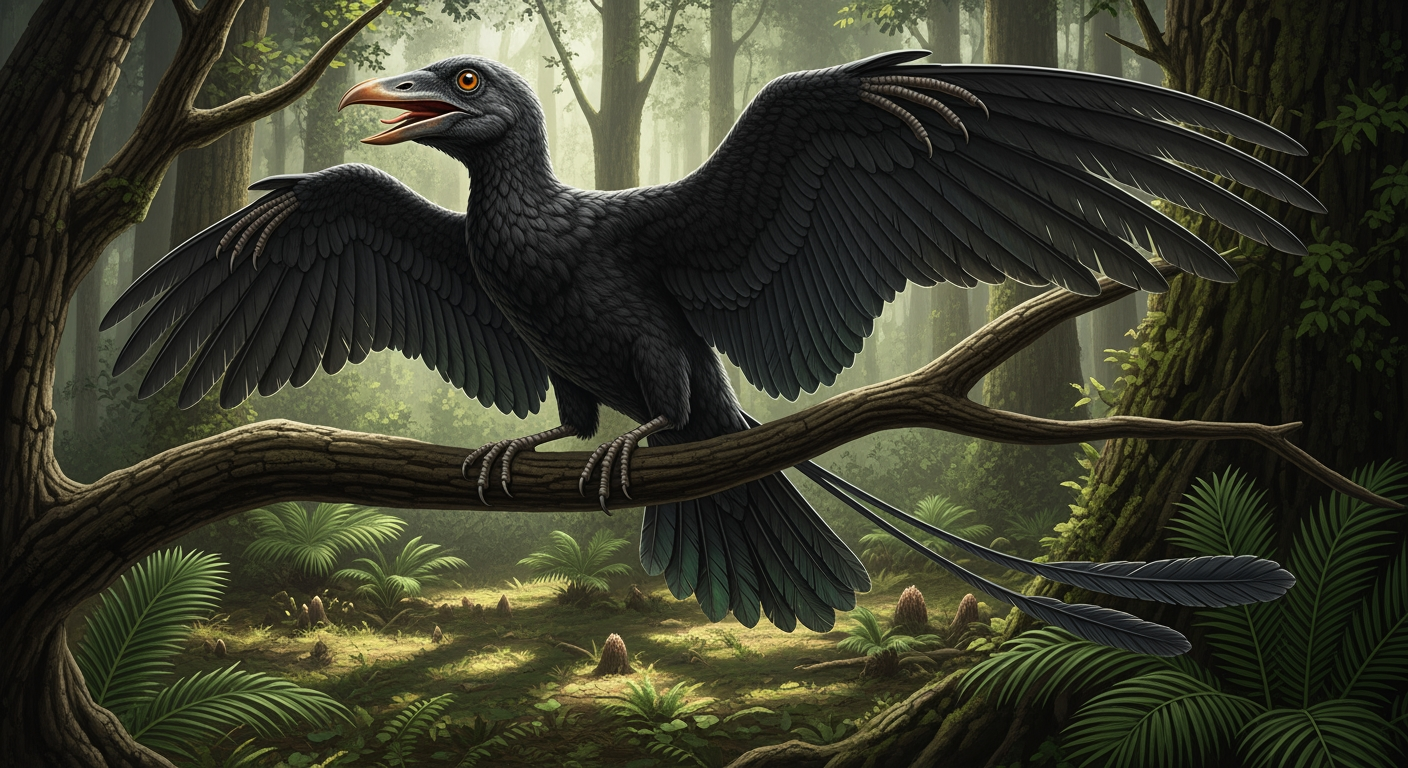
Archaeopteryx is the classic transitional fossil between feathered dinosaurs and modern birds. About the size of a crow and living in the Late Jurassic, roughly 150 million years ago, it had a mix of features that still gives biologists goosebumps: feathered wings and a wishbone like a bird, but also teeth, clawed fingers and a long bony tail like a dinosaur. It probably wasn’t a strong flyer — more of a glider and flutterer — but it sits right at the dawn of bird flight.
Microraptor — the four-winged “flying raptor”
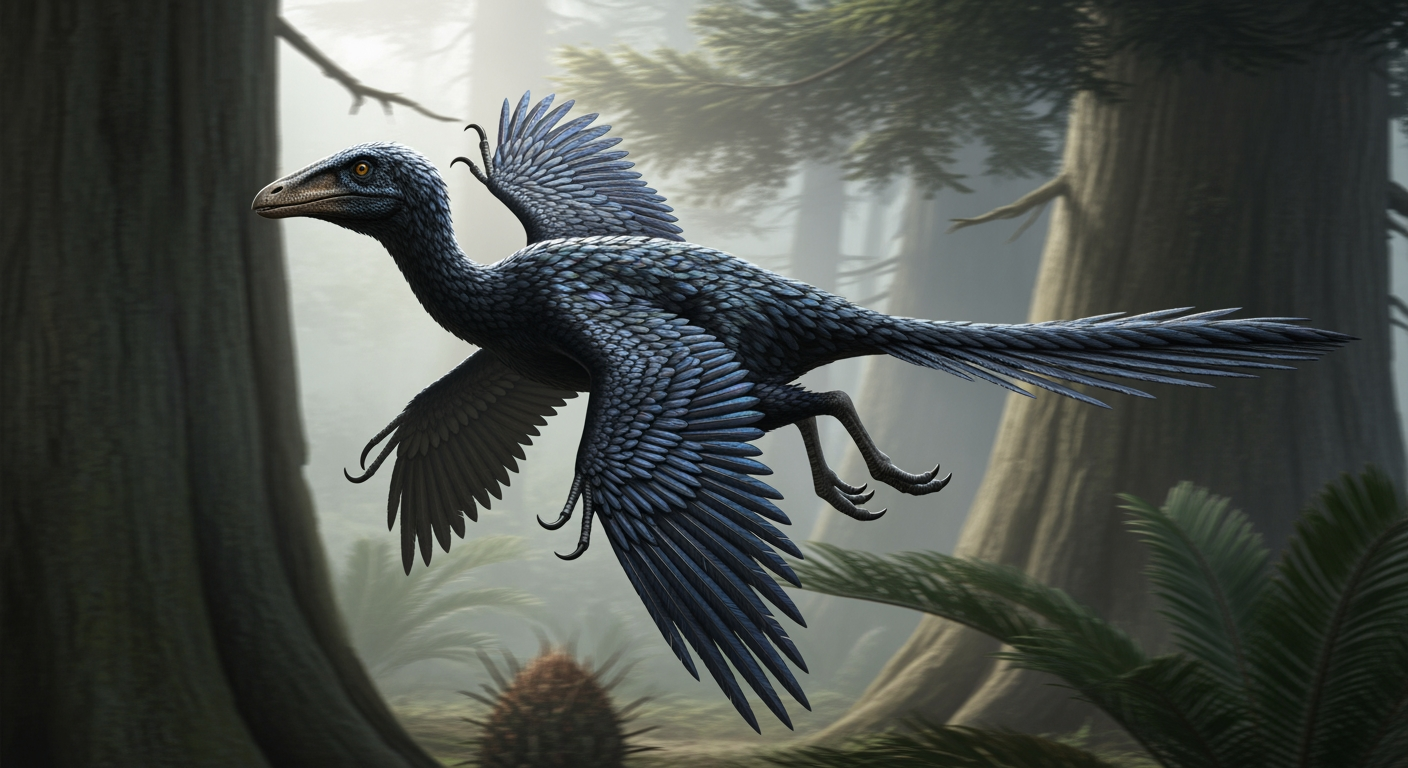
If you’ve searched for a “flying raptor dinosaur,” Microraptor is the genuine answer. This crow-sized Early Cretaceous dinosaur was a close relative of the raptors made famous on screen — and it had long flight feathers not just on its arms but on its legs too, giving it four wings. Fossils even preserve traces of its glossy black, iridescent plumage. Microraptor almost certainly glided between trees rather than flapping like a bird, but it’s one of the clearest examples of a true dinosaur taking to the air.
Ichthyornis — the toothed seabird
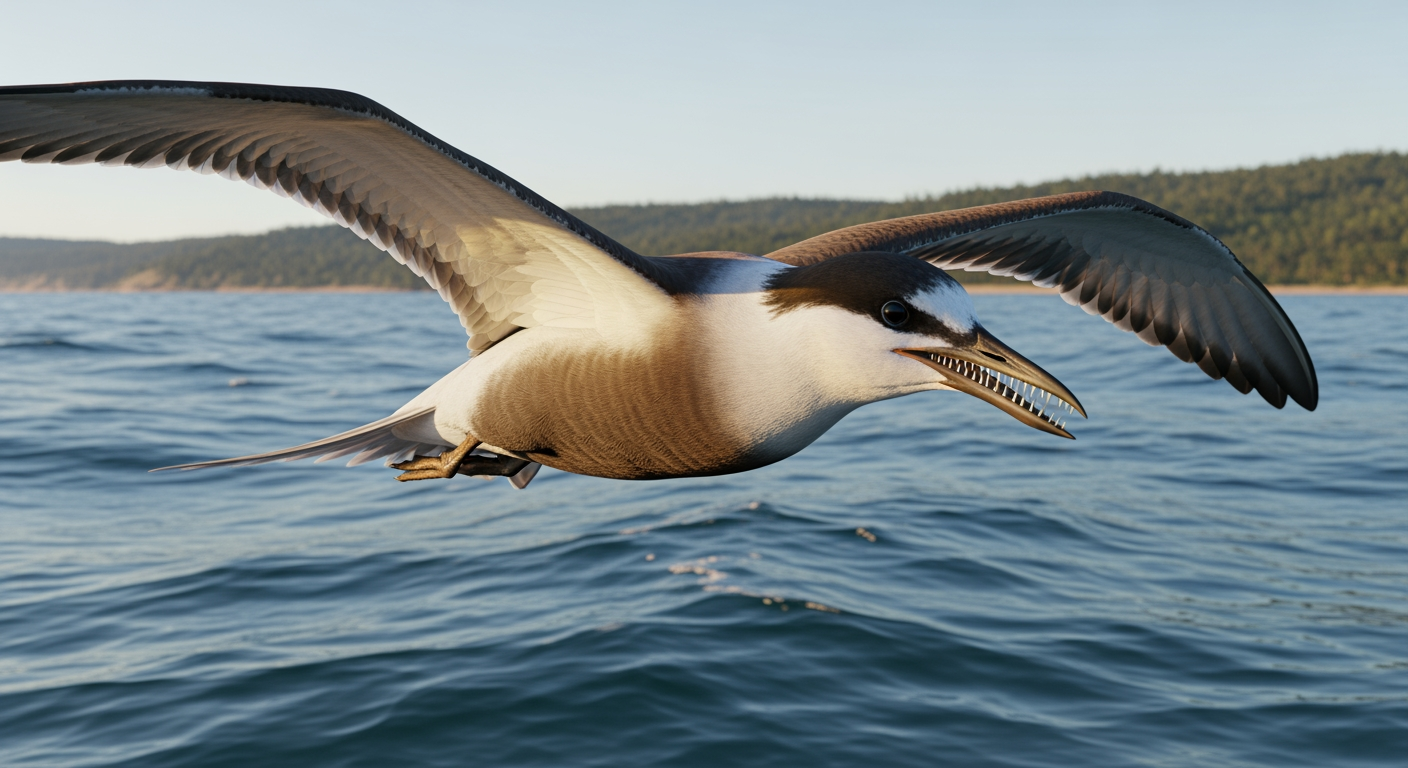
By the Late Cretaceous, birds had become powerful flyers. Ichthyornis looked much like a modern tern or gull and was a strong, agile flier — but it still kept a beak lined with small, sharp teeth. It was a key piece of evidence in the 19th century for how birds evolved, and it’s a true dinosaur in every modern sense of the word.
From these feathered pioneers came the birds that survived the mass extinction and went on to conquer the planet. So the next time a duck paddles past or a hawk circles overhead, remember: you’re watching a flying dinosaur that made it.
That’s the part most people never hear. The flying dinosaurs didn’t all die out. The pterosaurs did, and so did the giant land dinosaurs, but the feathered, flying branch survived the worst day in Earth’s history and became the roughly 11,000 bird species alive today — more than all mammal species combined.
Records: the biggest, smallest and fastest flyers
Pterosaurs and early birds pushed flight to extremes that no animal has matched since. Here are the headline numbers.
The biggest. The crown goes to Quetzalcoatlus and Hatzegopteryx, both with wingspans of around 10 to 11 metres — wider than many small aircraft, and far larger than any bird that has ever lived (today’s biggest flyer, the wandering albatross, tops out near 3.5 metres). Standing on the ground, these giants were as tall as a giraffe. When people ask about the largest flying dinosaur, or the biggest wingspan of any flying reptile, these two azhdarchids are the answer.
The smallest. At the other end of the scale, pterosaurs like Anurognathus and Nemicolopterus had wingspans of just 25 to 35 centimetres — smaller than many birds in your garden. Among feathered dinosaurs, the tiniest gliders were crow-sized or less. Small flyers were every bit as successful as the giants; they simply chased insects instead of fish.
The fastest. Exact speeds are hard to pin down from fossils, but the streamlined, fish-hunting pterosaurs were built for fast, efficient soaring over open water, and some estimates put the quickest of them well above 100 km/h in a dive. The early birds, meanwhile, were laying the groundwork for the falcons that are now the fastest animals on Earth.
Put it all together and the range is staggering: from a sparrow-sized insect-catcher you could cup in one hand, to a stalking giant that looked a passing human in the eye. No group of flying animals since — not even the birds — has ever spanned quite so much of the sky.
How did flight take to the skies?
Powered flight is so hard to evolve that, across the whole history of life, backboned animals have only managed it three times: pterosaurs first, then birds, and much later the bats. Each invented wings independently, from completely different starting points.
Pterosaurs got there first, in the Late Triassic, evolving that unique membrane wing on an elongated finger. Birds came later, growing flight out of small feathered dinosaurs that had first used feathers for warmth and display. Over millions of years, those feathers lengthened, the arms turned into wings, the tail shortened, the chest muscles grew, and gliding gradually became flapping. The result was so successful that, when the asteroid struck 66 million years ago and wiped out the pterosaurs and the giant dinosaurs, it was the birds — small, feathered, flying dinosaurs — that survived and inherited the sky.
So which was the first flying dinosaur? If we’re strict about it, the honour goes to an early bird-line theropod — Archaeopteryx is the classic candidate, though four-winged gliders like Microraptor show the experiment was running more than once. Researchers still debate how it began: did flight start with tree-dwellers gliding downward, or with running animals flapping to get airborne? Either way, the feathers came first, for warmth and showing off, and powered flight was the later bonus.
Common myths about flying dinosaurs
A few misunderstandings come up again and again. Let’s clear them up.
“A pterodactyl is a dinosaur.” It isn’t — it’s a pterosaur, a flying reptile that was a close cousin of dinosaurs but a separate group. Useful to know if you want to win a playground argument.
“Dimetrodon was a flying dinosaur.” Dimetrodon is a triple misunderstanding: it wasn’t a dinosaur, it couldn’t fly, and it actually lived and died long before the first dinosaurs even appeared. That famous sail-backed animal was a synapsid — part of the lineage that would eventually lead to mammals, including us.
“There was a flying dinosaur with a T-Rex head.” This is a pop-culture mash-up rather than a real animal. The closest the fossil record comes is Dimorphodon, whose deep, oversized skull can look startlingly large for its body — but it was a small pterosaur, not a winged tyrannosaur.
“Plesiosaurs and mosasaurs were swimming dinosaurs.” Same trap, different habitat: the giant sea reptiles weren’t dinosaurs either. We cover that whole story in can dinosaurs swim?
Flying dinosaurs in games, movies and theme parks
A lot of what we picture as “flying dinosaurs” comes straight from screens and rides — so here’s where the famous ones show up.
Jurassic Park and Jurassic World. The franchise leans heavily on Pteranodon and Dimorphodon for its aerial scares, and the newer films have brought in the giant Quetzalcoatlus, including in Jurassic World Rebirth. They’re dramatised for the screen — real pterosaurs couldn’t snatch and carry off people — but they’ve done more than anything to make these creatures household names.
ARK: Survival. In the survival game, several flying reptiles are tameable mounts — the nimble Pteranodon, the colossal Quetzal, and bird-like fliers among them — which is why so many players go searching for the best flying dinosaurs in ARK.
Universal Studios Japan. The park’s record-breaking roller coaster, “The Flying Dinosaur,” dangles riders face-down beneath the track as though snatched by a Pteranodon — one of the longest and tallest flying coasters in the world, and a bucket-list ride for thrill-seekers comparing it to the likes of VelociCoaster.
Beyond the big franchises. Flying reptiles turn up everywhere in pop culture: survival games like The Isle let players live as a pterosaur, the Pokémon Aerodactyl is a clear nod to these prehistoric flyers, and countless cartoons hand a child a friendly, cute flying dinosaur as a sidekick. It all shows how firmly these animals — pterosaurs and birds alike — have settled into our imagination, even when the “dinosaur” label isn’t strictly correct.
From Pterodactyl and Pteranodon to the giant Quetzalcoatlus — see our pick of the best flying dinosaur toys and figures.
Frequently asked questions
Can dinosaurs fly?
What is a flying dinosaur called?
What was the biggest flying dinosaur?
What was the smallest flying dinosaur?
Were pterosaurs dinosaurs?
How many kinds of flying dinosaurs were there?
Which flying dinosaur had teeth?
Was there a dinosaur that could walk, swim and fly?
Are flying dinosaurs real?
Did dinosaurs fly?
Is a pterodactyl a dinosaur?
What is the fastest flying dinosaur?
What flying dinosaur is in Jurassic World?
A note on accuracy: this guide follows mainstream paleontology. Sizes, wingspans and relationships are best estimates from published fossil studies, and a few details — such as exactly how the giant azhdarchids fed — are still actively debated and shift as new fossils are found.