Dinosaur With Sail on Back
Affiliate Disclosure: This article contains affiliate links to Amazon. If you make a purchase through these links, we may earn a small commission at no extra cost to you. This helps support DINO TOYS and allows us to continue creating great content about dinosaurs!
Our Top Picks
⚡ Our top picks
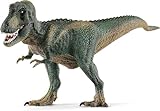
Editor’s pick Schleich T-Rex View on Amazon Best STEM pick National Geographic Dino Dig Kit View on Amazon Best plush Aurora Dinosaur Plush View on Amazon Editor's pickSchleich T-Rex
★★★★☆ (12,400+ ratings)The gold standard for realistic dinosaur figures. Hand-painted, museum-quality detail.
Best STEM pickNational Geographic Dino Dig Kit
★★★★☆ (14,000+ ratings)Excavate real fossils. Includes tools and learning guide. Hours of educational fun.
Best plushAurora Dinosaur Plush
★★★★☆ (3,400+ ratings)Super soft, huggable, and perfectly sized for little hands. Bean-filled for a floppy cuddle feel.


The dinosaur with a sail on its back is one of the most visually striking creatures in prehistoric history. Several dinosaurs and prehistoric reptiles evolved dramatic sail-like structures on their backs — from the massive fin of Spinosaurus to the plates of Dimetrodon (which technically wasn’t a dinosaur at all). But what were these sails for? Scientists have debated thermoregulation, display, and species recognition for decades.
This guide covers every major sail-backed dinosaur and reptile, what their sails were for, and the best toys and figures representing these spectacular creatures.
Quick Picks: Best Sail-Backed Dinosaur Toys
- Best Spinosaurus figure: PNSO Spinosaurus — scientifically accurate with updated sail design
- Best Dimetrodon figure: Schleich Dimetrodon — hand-painted museum-quality detail
- Best value: Safari Ltd Spinosaurus — accurate and affordable
- Best for young kids: Jurassic World Spinosaurus — large size with action features
Sail-Backed Dinosaurs and Prehistoric Reptiles
Spinosaurus — The Largest Sail-Backed Dinosaur
Spinosaurus is the most famous dinosaur with a sail on its back. At 50–60 feet long, it was likely the largest carnivorous dinosaur ever. Its sail was formed by neural spines extending up to 5.4 feet from the vertebrae, connected by skin or tissue. Recent research has dramatically updated our picture of Spinosaurus — it was semi-aquatic with a paddle-like tail, dense bones for ballast, and a crocodile-like snout for catching fish. The sail may have been used for display, thermoregulation, or even as a swimming fin. See our full T-Rex vs Spinosaurus comparison.
🛒 Check Today’s Price on Amazon
Dimetrodon — The Sail-Backed “Non-Dinosaur”
Dimetrodon is included in almost every dinosaur toy set, but it wasn’t actually a dinosaur — it was a synapsid (a group that eventually gave rise to mammals) that lived during the Permian period, about 280 million years ago — roughly 50 million years before the first dinosaurs appeared. Its spectacular sail was supported by elongated neural spines and may have functioned as a solar panel for thermoregulation, a display structure for attracting mates, or both. At 11 feet long, Dimetrodon was the apex predator of its time.
🛒 Check Today’s Price on Amazon
Ouranosaurus — The Duck-Billed Sail Dinosaur
Ouranosaurus was a 24-foot-long hadrosaur-like dinosaur from early Cretaceous Africa with a distinctive sail or hump on its back. Its neural spines were elongated but wider than Spinosaurus’s, leading some scientists to propose it had a fatty hump (like a bison) rather than a thin sail. Either way, Ouranosaurus is one of the most unusual-looking herbivorous dinosaurs ever discovered.
Amargasaurus — The Double-Sailed Sauropod
Amargasaurus was a small sauropod (about 33 feet long) from early Cretaceous South America with twin rows of tall neural spines along its neck and back. These may have supported paired sails, been covered in keratin sheaths (like horns), or supported a single split sail. Whatever the exact structure, Amargasaurus looked unlike any other long-necked dinosaur — a truly unique sight.
Arizonasaurus — The Triassic Sail Reptile
Arizonasaurus was a rauisuchian (crocodile-relative) from the Triassic period with a tall dorsal sail. At about 10 feet long, it was one of the earliest sail-backed predators and lived before dinosaurs became dominant. Its sail resembled Dimetrodon’s, though the two animals were separated by nearly 30 million years — an example of convergent evolution, where unrelated animals evolve similar features independently.
What Were Dinosaur Sails For?
Scientists have proposed several functions for dinosaur sails:
- Thermoregulation: A sail filled with blood vessels could absorb heat when turned toward the sun or release heat when turned away — like a biological solar panel and radiator.
- Sexual display: Larger, more colorful sails could attract mates, similar to a peacock’s tail. This is considered the leading hypothesis for most sail-backed species.
- Species recognition: Sails with distinctive shapes helped individuals identify their own species at a distance — important in ecosystems with multiple similar-sized predators.
- Swimming aid: For Spinosaurus specifically, the sail may have functioned as a dorsal fin, helping stabilize the animal during aquatic locomotion.
- Fat storage: Some researchers propose certain “sails” (like Ouranosaurus’s) were actually fatty humps for energy storage, similar to camel humps.
Frequently Asked Questions
What dinosaur had the biggest sail on its back?
Spinosaurus had the largest sail of any dinosaur, with neural spines reaching up to 5.4 feet tall. The sail stretched along most of its back, making it one of the most distinctive features of any prehistoric animal. However, Dimetrodon (which wasn’t a dinosaur) also had a proportionally very large sail relative to its body size.
Was Dimetrodon a dinosaur?
No. Dimetrodon was not a dinosaur — it was a synapsid, more closely related to modern mammals than to dinosaurs. It lived during the Permian period, about 50 million years before the first dinosaurs evolved. Despite appearing in most dinosaur toy sets, Dimetrodon belongs to a completely different branch of the reptile family tree. It’s one of the most common misconceptions in paleontology.
Why did some dinosaurs have sails on their backs?
The leading theories for dinosaur sails are sexual display (attracting mates with a large, colorful sail), thermoregulation (using the sail as a heat exchanger), and species recognition (identifying members of the same species at a distance). The exact function likely varied between species — Spinosaurus’s sail may have served a different purpose than Dimetrodon’s.
What are the best sail-backed dinosaur toys?
The PNSO Spinosaurus is the most scientifically accurate Spinosaurus figure available, featuring the updated semi-aquatic design with paddle tail. The Schleich Dimetrodon is the best sail-backed figure for younger kids. Safari Ltd also offers excellent Spinosaurus figures at a lower price point. See our realistic dinosaur figures guide for more options.
Did any herbivorous dinosaurs have sails?
Yes. Ouranosaurus was a plant-eating dinosaur with a distinctive sail or hump on its back. Several other herbivorous dinosaurs had elongated neural spines, though not all of them formed true sails. The presence of sails in both predators and herbivores suggests the feature evolved independently multiple times for different purposes.
Related Dinosaur Guides
- T-Rex vs Spinosaurus: Who Would Win?
- Realistic Dinosaur Figures
- Most Dangerous Dinosaurs
- Water Dinosaurs — Aquatic Prehistoric Creatures
- The Long Neck Dinosaur
- The Mesozoic Era Explained
- Best Dinosaur Toys 2026 — Complete Guide
- Best Dinosaur Dig Kits for Kids
- Best Dinosaur Toys by Age
- Best T-Rex Toys