Dino Toys is reader-supported. When you buy through links on this page we may earn an affiliate commission, at no extra cost to you. As an Amazon Associate we earn from qualifying purchases.
The Top 11 Long Neck Dinosaurs That Dominated Our Planet
The long-neck dinosaur, or sauropod, is one of the most recognizable groups of dinosaurs — mega-creatures that dominated our planet hundreds of millions of years ago. These animals were typically enormous, some standing as tall as a five-story building, and they shared a set of unmistakable traits: extremely long necks, a four-legged stance, a plant-eating diet, and a tendency to travel in herds.
Since the first sauropod fossils were described in the 19th century, researchers have identified more than 250 distinct sauropod species and over 175 genera. They were some of the mightiest animals ever to walk the Earth, and they continue to fascinate paleontologists today. In this article we count down the top 11 long-neck dinosaurs, ranked by neck length (measured from head to shoulders), with the size, diet, behavior and best facts about each.
The short version
- The longest necks belonged to Supersaurus and Mamenchisaurus — each around 50 feet.
- Sauropods were the largest land animals ever, some over 100 feet long.
- All were herbivores, swallowing plants whole and using gastroliths (stomach stones) to digest.
- Their fossils turn up on all seven continents — even Antarctica.
The top 11 long neck dinosaurs at a glance
| # | Dinosaur | Neck length | Period |
|---|---|---|---|
| 1 | Supersaurus | ~50 ft | Late Jurassic |
| 2 | Mamenchisaurus | ~50 ft | Late Jurassic |
| 3 | Sauroposeidon | ~39 ft | Early Cretaceous |
| 4 | Brachiosaurus | ~30 ft | Late Jurassic |
| 5 | Barosaurus | ~30 ft | Late Jurassic |
| 6 | Omeisaurus | ~30 ft | Mid–Late Jurassic |
| 7 | Argentinosaurus | ~29 ft | Late Cretaceous |
| 8 | Diplodocus | ~20 ft | Late Jurassic |
| 9 | Apatosaurus | ~20 ft | Late Jurassic |
| 10 | Cetiosaurus | ~15 ft | Middle Jurassic |
| 11 | Camarasaurus | ~12 ft | Late Jurassic |
1. Supersaurus — 50-foot neck
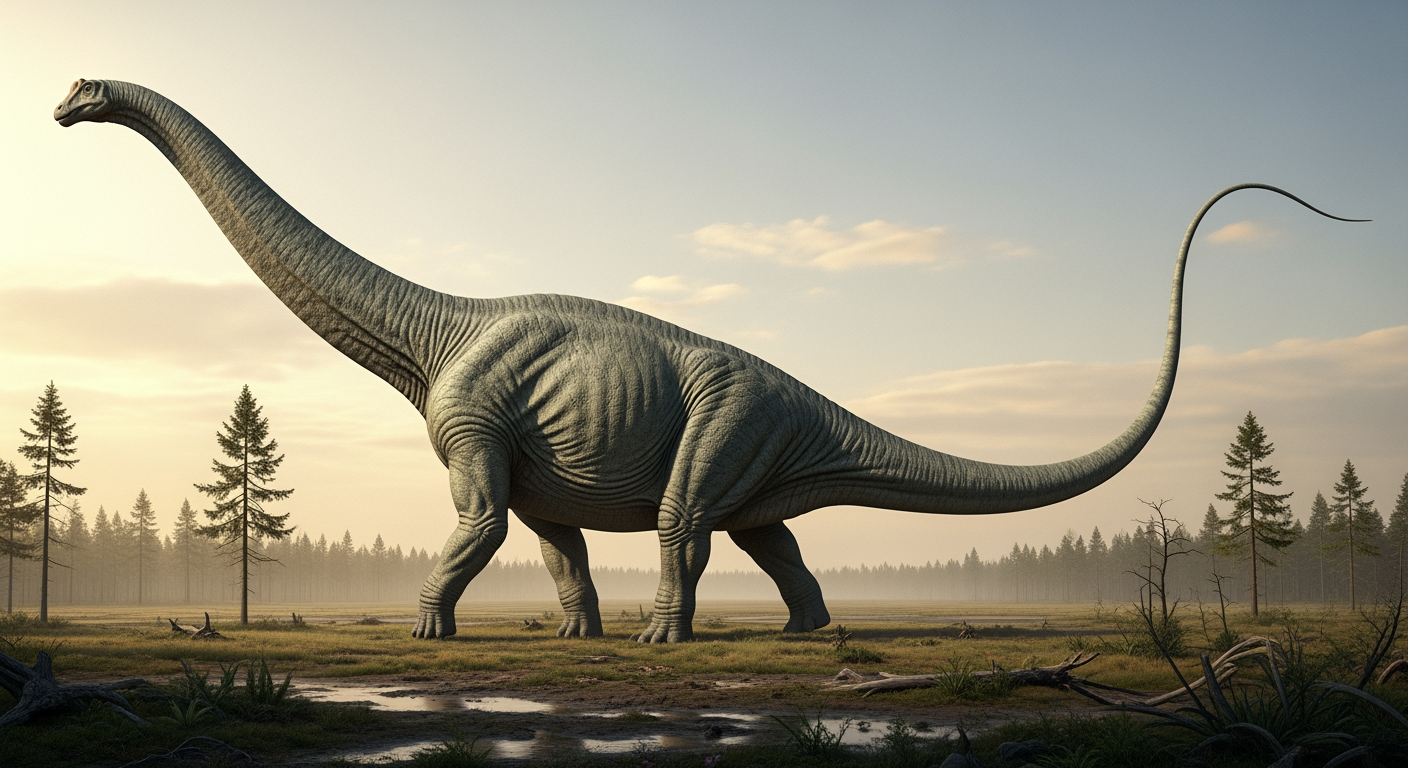
With an estimated total length longer than three school buses end to end, Supersaurus has been crowned by many scientists as the longest dinosaur in the world. It carried a 50-foot neck and a 60-foot tail, for a total body length of up to 138 feet, and roamed North America (and possibly Europe) during the Jurassic Period about 150 million years ago.
The first remains were discovered in 1972 by dinosaur field worker Jim Jensen in the Dry Mesa Dinosaur Quarry in Colorado, jumbled together with many other bones in what is famously called a “bone salad.” Scientists originally thought the bones belonged to three dinosaurs — Supersaurus, Ultrasaurus and Dystylosaurus — but later research, notably by paleontologist Brian Curtice, argued they all belonged to a single animal: Supersaurus. A reconstruction nicknamed “Jimbo” stands at the Wyoming Dinosaur Center.
Supersaurus lived entirely on plants, using blunt, spoon-shaped teeth to strip leaves and swallowing gastroliths (stomach stones) to help digestion. Like other herbivores it travelled in herds, migrating once local vegetation ran short. Its size meant it had few natural predators as an adult, though carnivores such as Allosaurus or Ceratosaurus may have hunted it in packs. It is classified as a diplodocid — a group of sauropods known for both very long necks and very long tails.
2. Mamenchisaurus — 50-foot neck
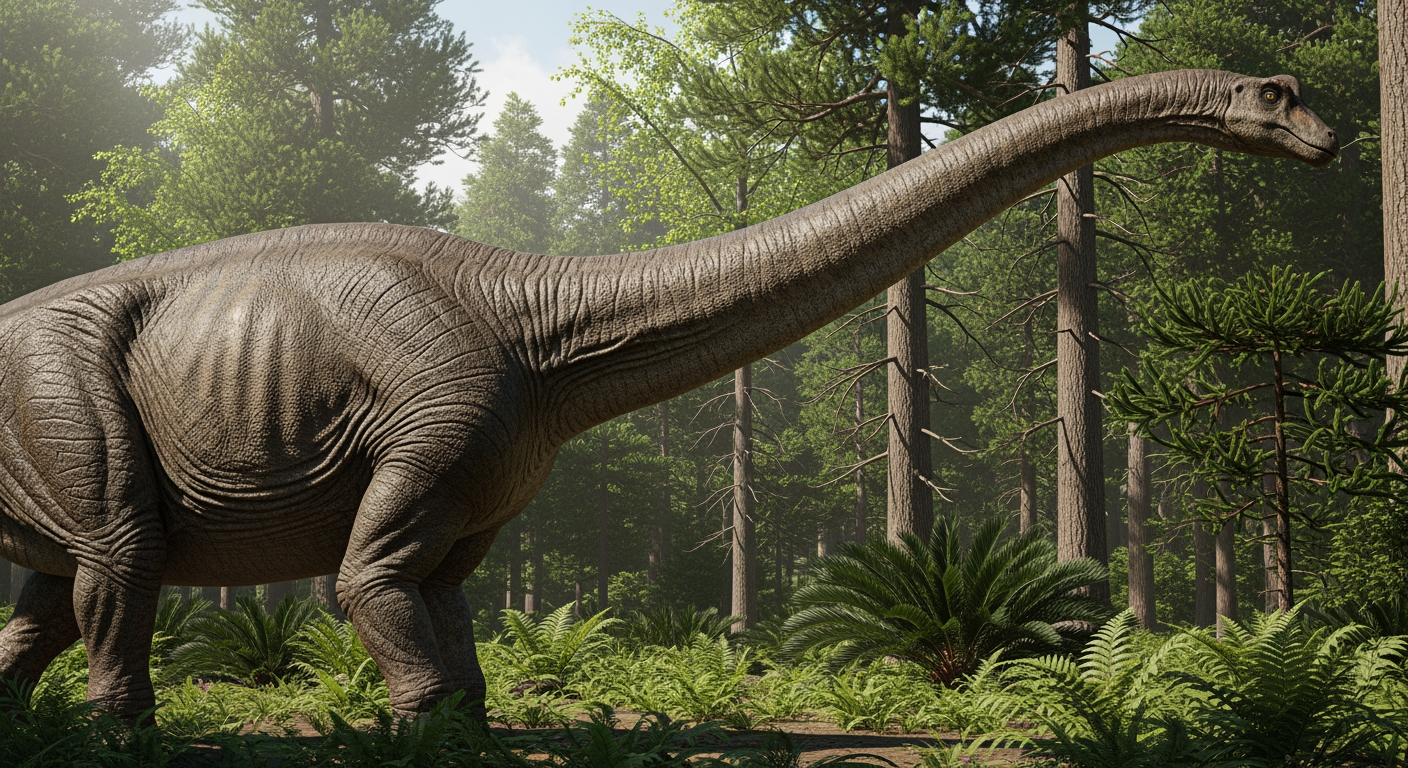
Mamenchisaurus was a Late Jurassic sauropod that roamed present-day East Asia over 160 million years ago. With a neck around 50 feet long — about 1.5 times the length of a double-decker bus — it had one of the longest necks of any animal known to science.
Early remains were collected in the late 1980s during the China–Canada Dinosaur Project, with a lower jaw, skull pieces and vertebrae found in the roughly 162-million-year-old rocks of the Shishugou Formation in northwest China. It wasn’t until decades later that an international team including Dr. Andrew J. Moore and Prof. Paul Barrett worked out the animal’s true proportions, concluding its neck reached about 50 feet — rivalling even Supersaurus, though Supersaurus had the longer body overall.
As a herbivore, Mamenchisaurus swallowed its food whole rather than chewing, using rake-like teeth to strip huge amounts of leaves from high branches; the rest of the work was done by a stomach that functioned like a fermentation tank. Its 50-foot neck — over six times longer than a giraffe’s — was built from lightweight vertebrae full of hollow spaces, braced by rod-like neck ribs for flexibility and control, and its breathing system included multiple air sacs running through the neck, chest and abdomen.
3. Sauroposeidon — 39-foot neck
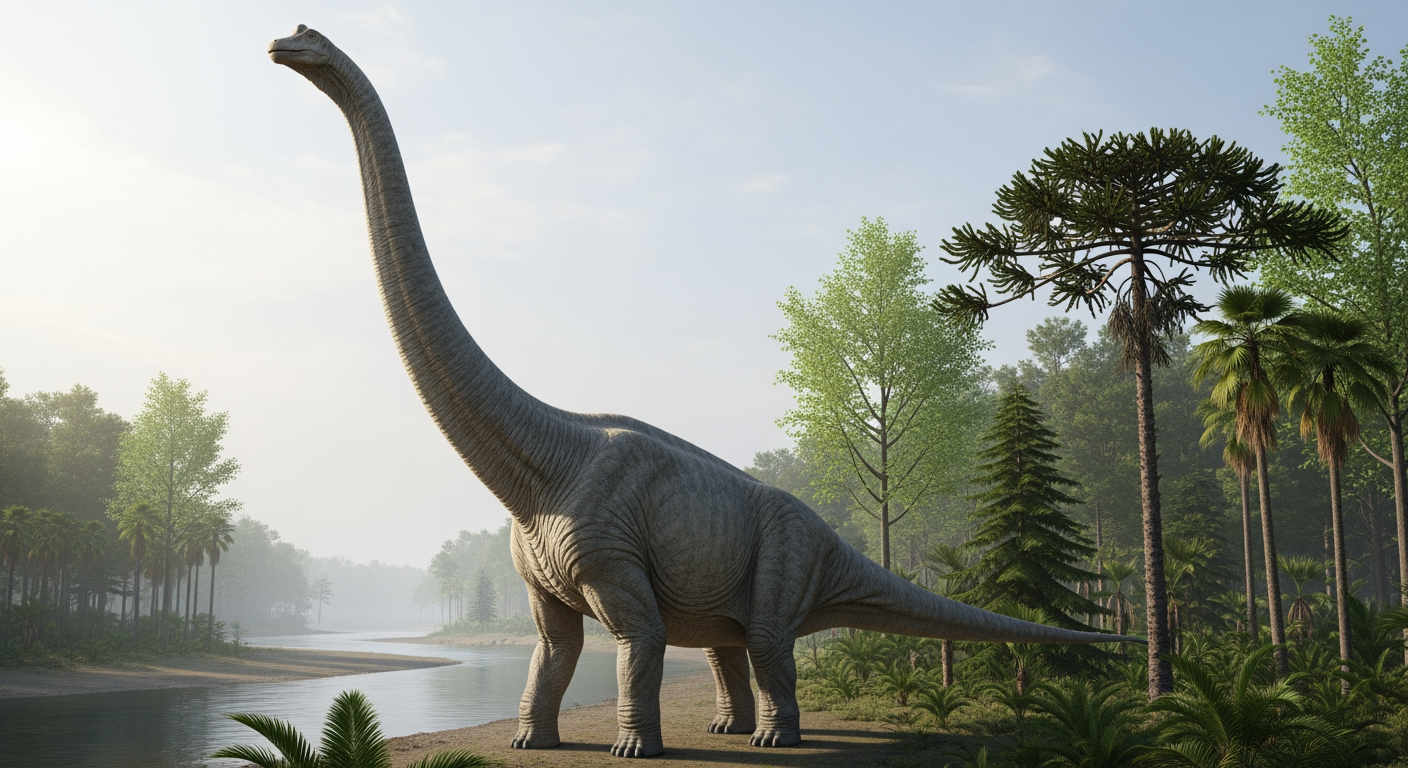
Sauroposeidon lived towards the end of the Early Cretaceous, about 113 to 110 million years ago, in the coastal region bordering what was then the Gulf of Mexico — an area that reached as far as present-day Oklahoma.
Its discovery is credited to Oklahoma bloodhound trainer Bobby Cross, who stumbled across fossils in the woods in 1994 and alerted the University of Oklahoma. Under paleontologist Richard L. Cifelli, a team excavated three complete and one partial vertebrae. Living in a lush river delta, the dinosaur would have fed on tropical vegetation such as conifers, magnolias, palms and sycamores.
Those neck bones revealed an animal with a 39-foot neck that may have weighed over 50 tons, able to raise its head some 18 metres into the air. It was named after Poseidon, the Greek god associated with earthquakes and the sea. Some experts suspect Sauroposeidon may have fed with its neck held lower rather than fully vertical, since raising such a neck straight up would have put enormous strain on its heart.
4. Brachiosaurus — 30-foot neck
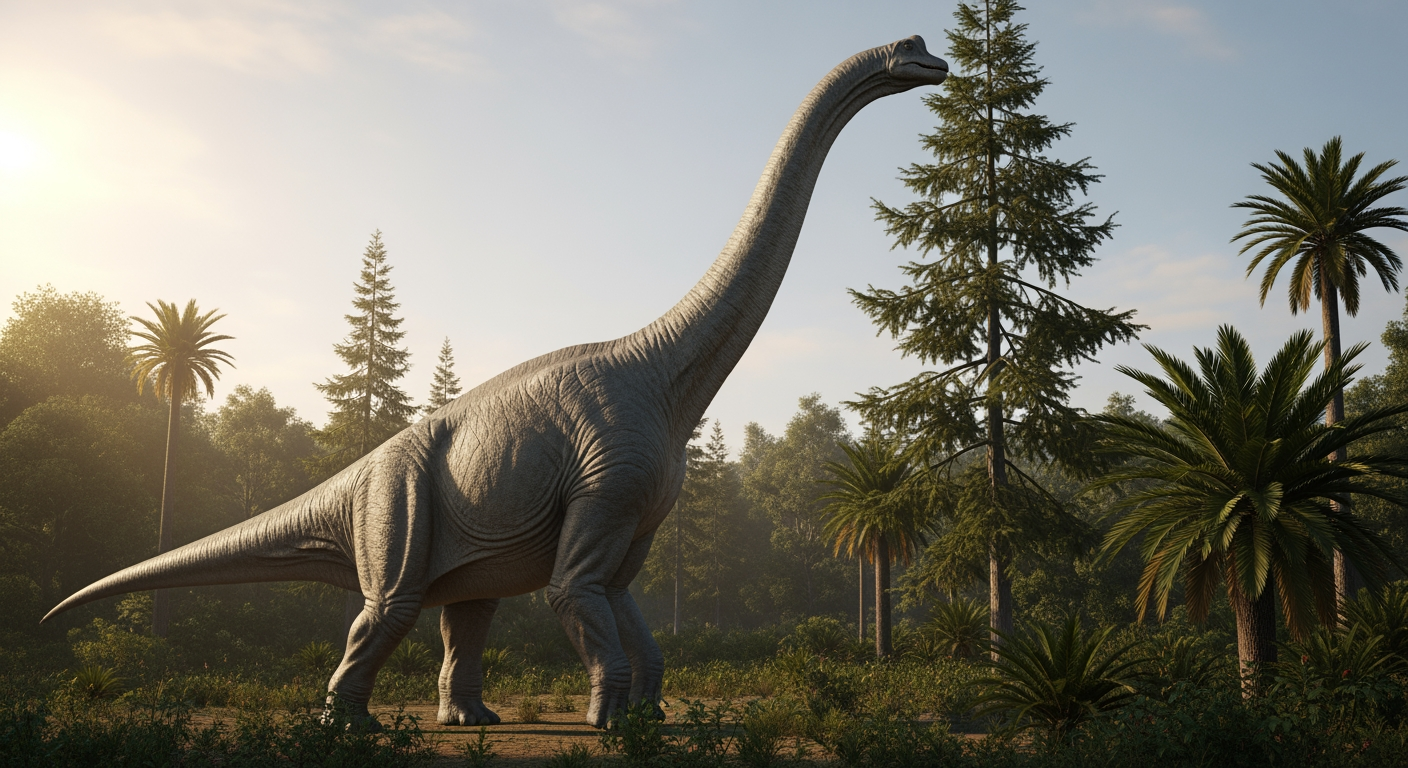
From the Greek for “arm lizard,” Brachiosaurus was one of the tallest dinosaurs ever to walk the Earth, with a neck about 30 feet long — roughly the length of a school bus. It lived in North America during the Late Jurassic, around 150 million years ago.
The first fossils were discovered in 1900 by paleontologist Elmer S. Riggs near Grand Junction, Colorado. A skull found earlier was later matched to the same species, helping complete the picture of the animal. Like all sauropods it was a herbivore, and to fuel its enormous body it had to eat more than 800 pounds of plant matter a day — cycads, ginkgos and conifers — using spoon-shaped teeth set in a thick, strong jaw.
Brachiosaurus had an unusual build: shorter hind legs and longer front legs, reflected in its full name Brachiosaurus altithorax (“high-chested arm lizard”). It also had a small head, a flat nose and a relatively short tail for a sauropod — but its standout feature was that mighty 30-foot neck, held in a graceful S-curve.
5. Barosaurus — 30-foot neck
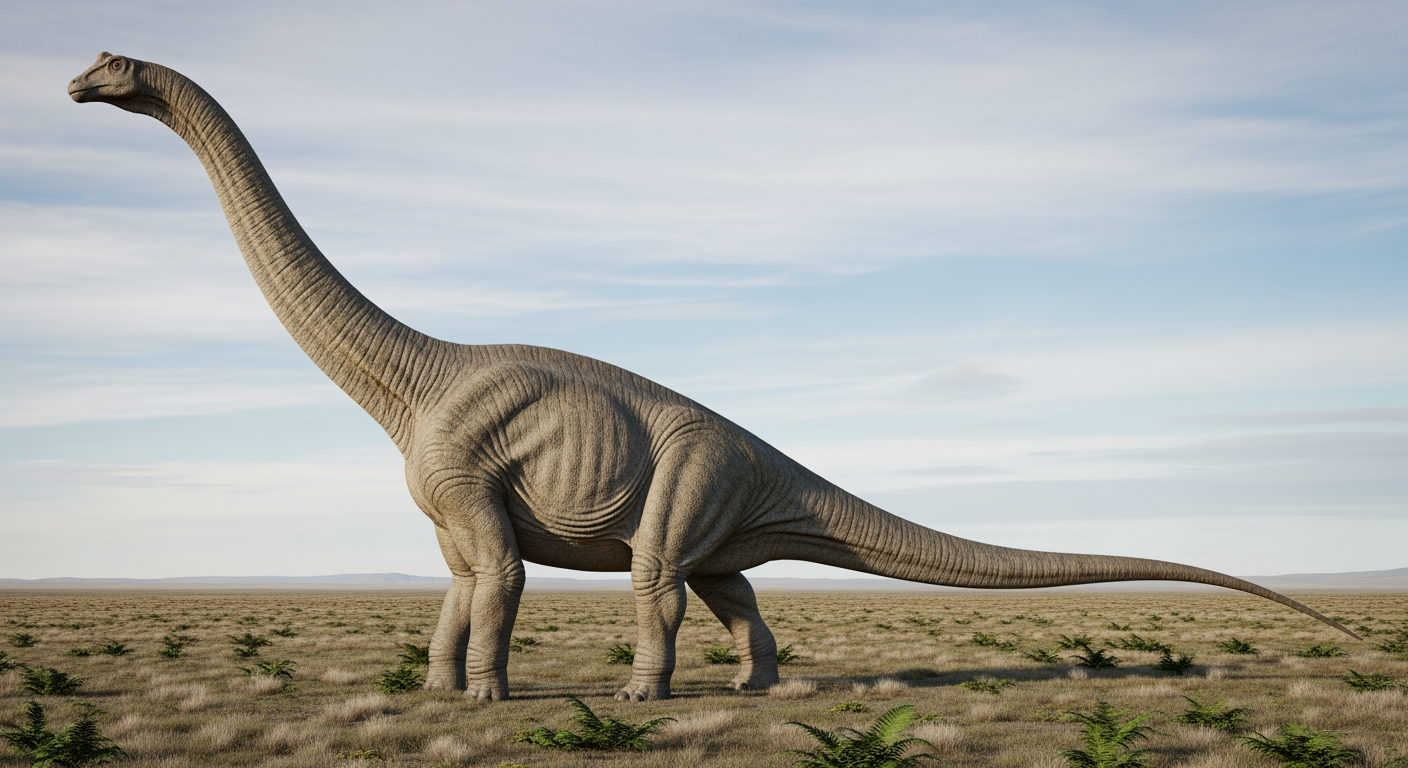
Barosaurus had an astonishing 30-foot neck that, by some estimates, weighed over 1.5 tons on its own — which has fuelled long debates over whether it held that neck high in a curve or stretched out closer to the ground. About 155 to 145 million years ago it roamed the plains of what is now North America, a slender-headed, long-bodied herbivore closely resembling Late Jurassic relatives like Diplodocus and Apatosaurus.
It is one of the rarer dinosaurs on this list, known from only a handful of specimens. The first fairly complete remains were found by American paleontologist Earl Douglass in 1923 at the Carnegie Quarry, part of the Morrison Formation. In 2007, Royal Ontario Museum curator David Evans identified an overlooked set of fossils in storage as the most complete Barosaurus known. The name comes from the Greek barys (“heavy”) and saurus (“lizard”) — fitting for an animal of over 20 tons, tall enough to peer over a five-story building.
6. Omeisaurus — 30-foot neck
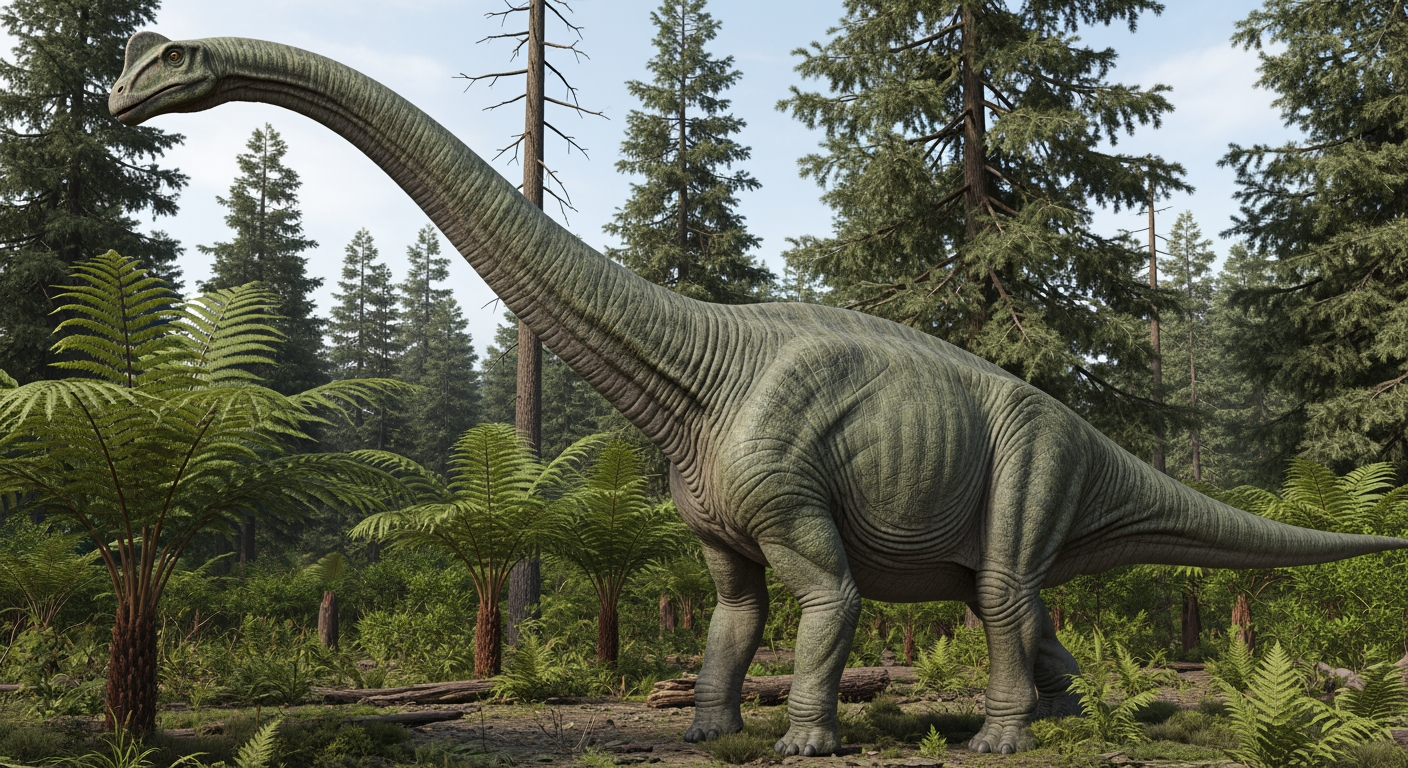
One of the more obscure dinosaurs here, Omeisaurus was a sauropod that lived in Asia during the Middle to Late Jurassic, around 160 million years ago. Its neck was extraordinarily long — close to half its entire body length.
Its fossils were first discovered in 1936 by paleontologists Charles Lewis Camp and Yang Zhongjian. The early material was incomplete — just four neck vertebrae and skull fragments — and Yang gave it the name Omeisaurus (“Omei lizard”) after Mount Emeishan in Sichuan Province, near where it was found; more remains have since turned up across China. Some specimens reached nearly 70 feet long, yet it is still considered medium-sized for a sauropod, and as a big-appetite herbivore it likely needed more than 400 pounds of plants a day. It wasn’t until the 1980s that researchers realised just how long-necked it was: up to 30 feet, built from 17 elongated vertebrae — one of the longest necks relative to body size of any known sauropod.
7. Argentinosaurus — 29-foot neck
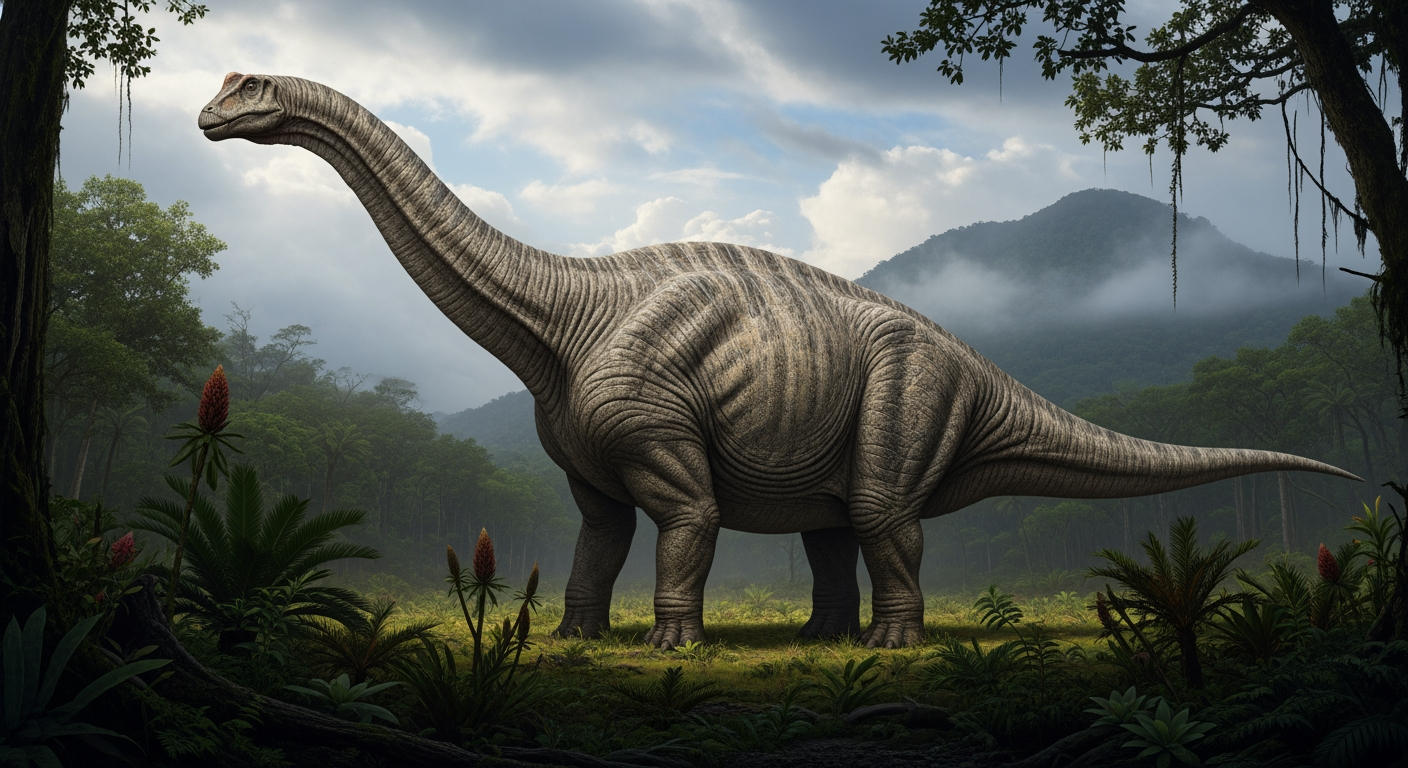
With an estimated total length of around 100 feet and a weight that may have reached 90 tons or more, the titanosaur Argentinosaurus is one of the largest land animals ever discovered. It lived during the Cretaceous Period in what is now Argentina.
Its fossils were first found in 1987 by farmer Guillermo Heredia on his land in Neuquén Province; Argentine paleontologist José F. Bonaparte later led further excavations, and the dinosaur was named for the country where it was found. Argentinosaurus was very slow — researchers estimate a top speed of about five miles per hour given its sheer bulk — and it reached maturity late, with some estimates suggesting it took around 40 years to reach full size. Its neck stretched a staggering 29 feet, paired with a small head, a long tail and four short, muscular legs.
8. Diplodocus — 20-foot neck
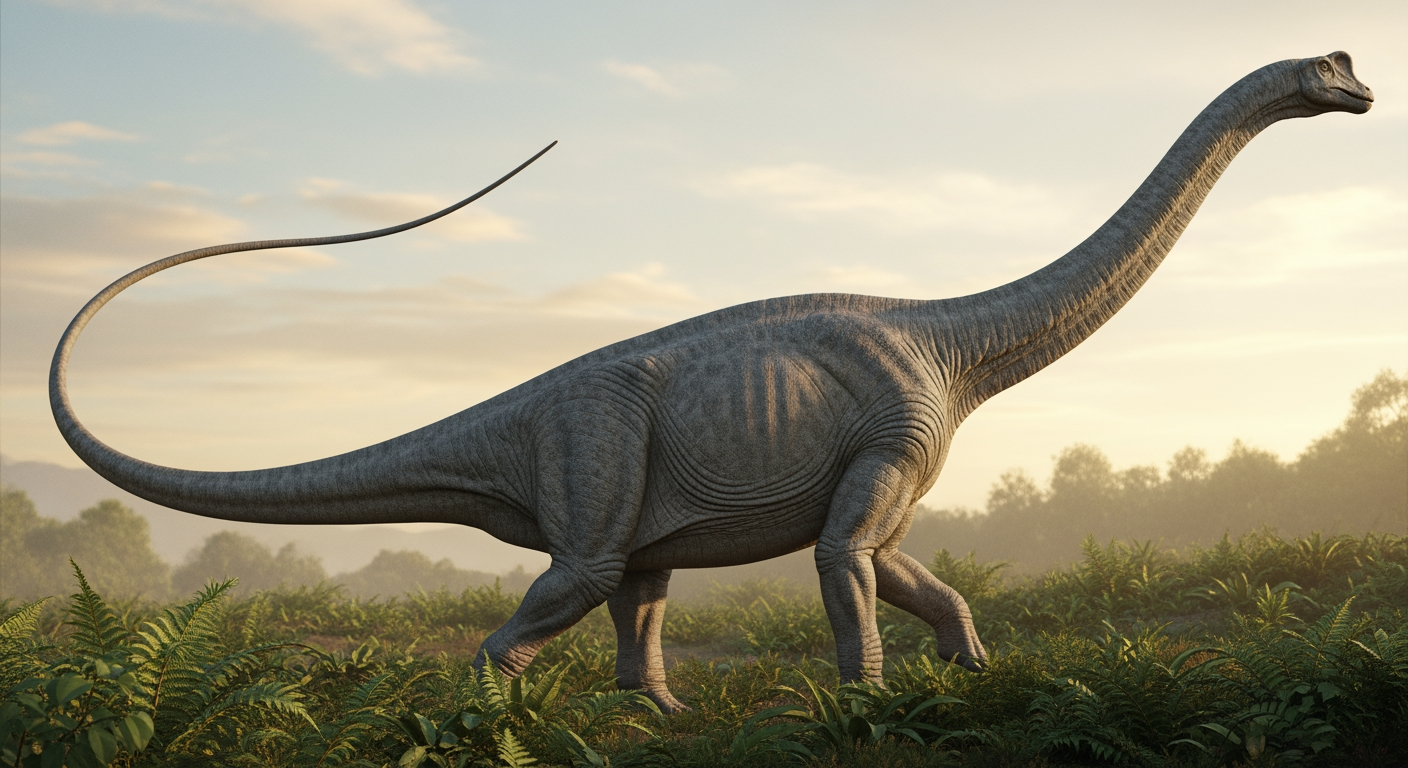
Diplodocus lived in the Late Jurassic, about 161 to 146 million years ago, and with its 20-foot neck it ranks among the largest animals ever to walk the Earth. The first remains were found in 1877 by Benjamin Mudge and Samuel W. Williston near Cañon City, Colorado, and many more have since come from the Morrison Formation across Colorado, Montana, Utah and Wyoming. The name was coined by American paleontologist Othniel Charles Marsh in 1878.
Diplodocus belongs to the diplodocids, the group that also includes Apatosaurus and Supersaurus. Although it measured up to 92 feet long, it weighed only about 15 tons — nearly half the mass of the similarly built Apatosaurus. Its name (“double beam”) refers to the double rows of bones on the underside of its exceptionally long tail, which added support and flexibility. Despite its size it had an unusually small skull — only about two feet long — with tiny, peg-like teeth ideal for raking and crushing leaves. The neck, while long, was less flexible up-and-down than those of some other sauropods.
9. Apatosaurus — 20-foot neck
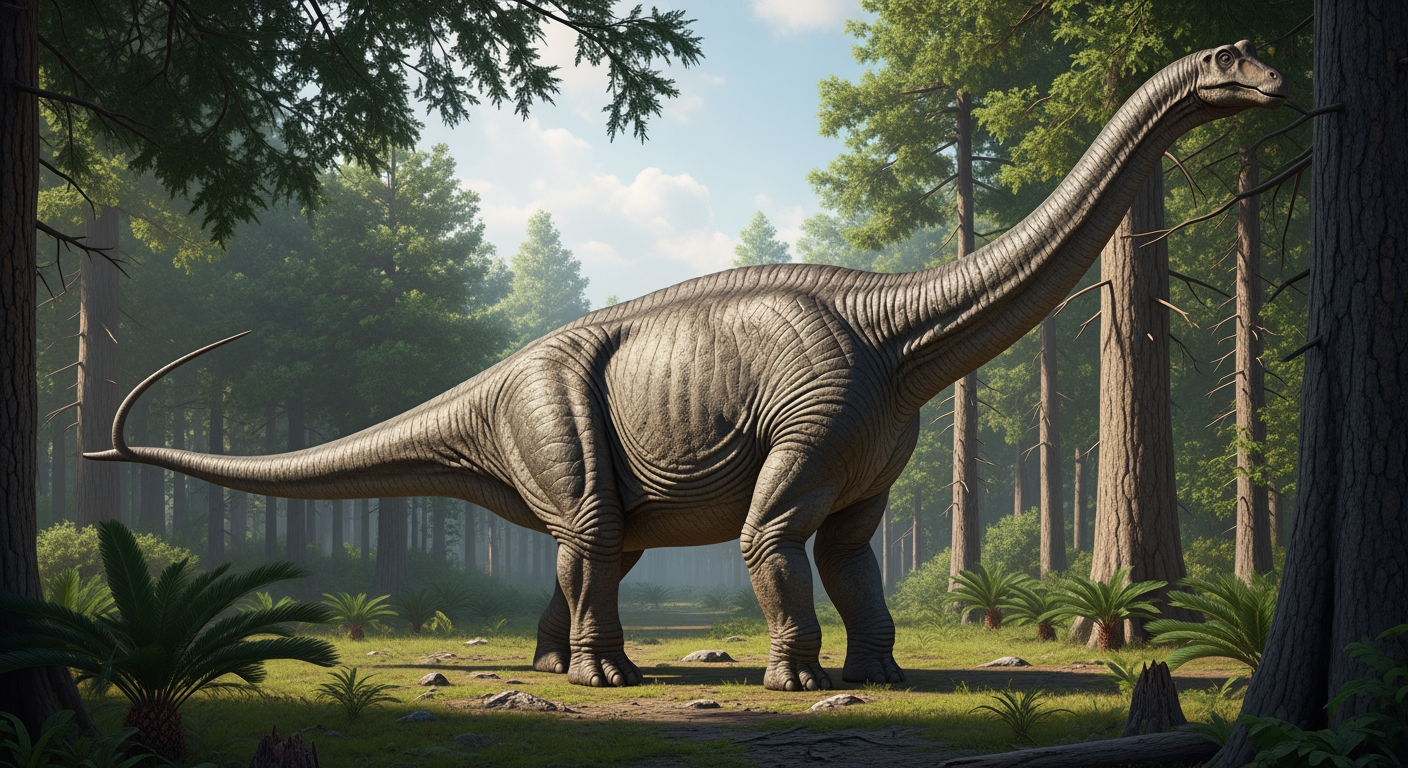
Apatosaurus was a giant herbivore that lived in North America about 150 million years ago, in the Late Jurassic — one of the best-known long-necked dinosaurs of all. Its remains come from the foothills of Colorado and the fossil-rich Morrison Formation, with naturalist Arthur Lakes and paleontologist O. C. Marsh credited for the early discoveries.
Marsh also named a similar sauropod, Brontosaurus; decades later paleontologist Elmer Riggs concluded the two were the same and folded Brontosaurus into Apatosaurus — though, intriguingly, some recent studies have argued Brontosaurus may be distinct after all. As a herbivore, Apatosaurus ate mainly leaves and fruit, using small, peg-like teeth to strip vegetation before swallowing it whole to ferment in its stomach. It reached around 75 feet long and roughly 25 tons, and unlike the shorter-tailed Brachiosaurus it had a long, whip-like tail.
10. Cetiosaurus — 15-foot neck
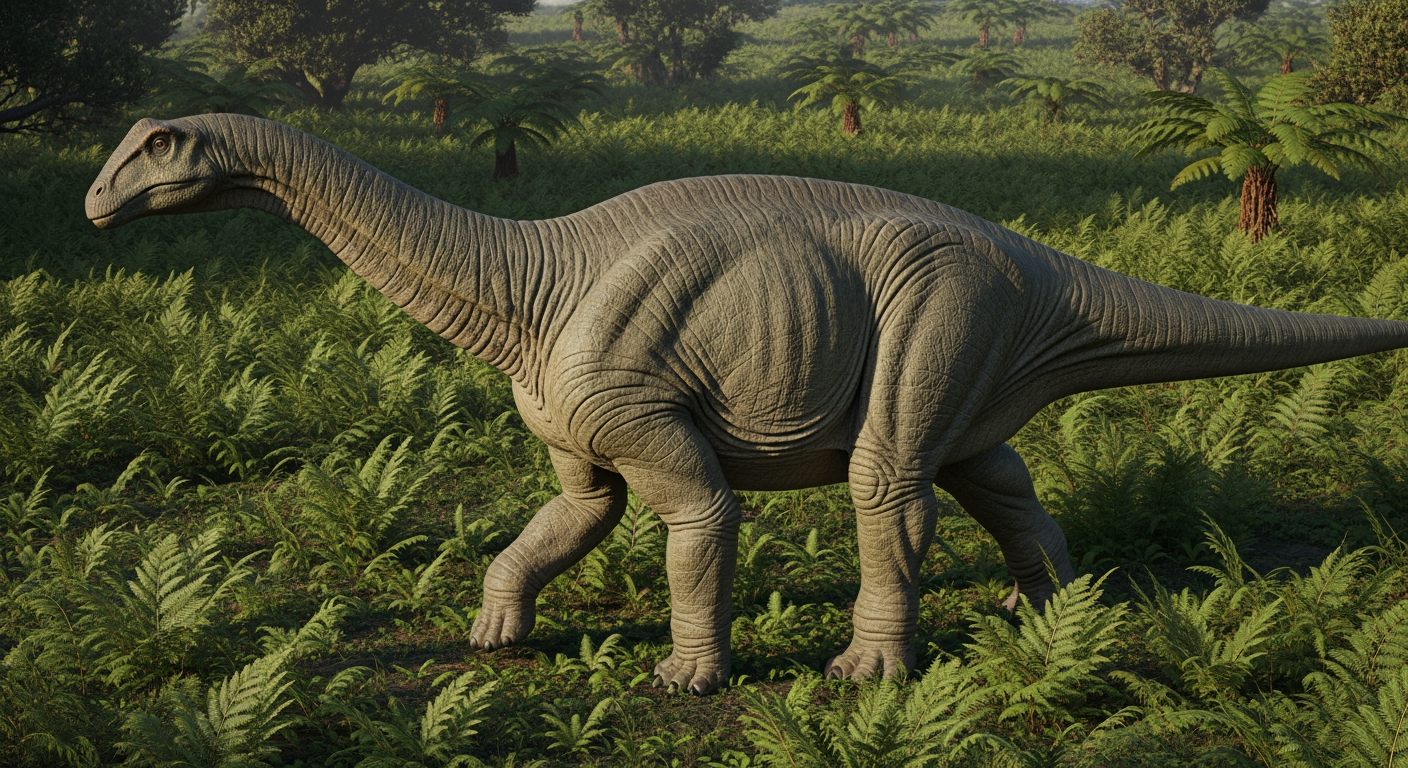
Meaning “whale lizard,” Cetiosaurus was a long-necked herbivore of the Middle Jurassic, about 170 to 160 million years ago, and one of the most common sauropods of its time across Western Europe and North Africa, including Morocco.
British anatomist Richard Owen first described limb bones and vertebrae from several English sites in 1841. The bones resembled a crocodile’s and the vertebrae a whale’s, leading Owen to imagine a whale-like reptile that preyed on marine life; only later, helped by skeletons found near Oxford in 1861, were the remains recognised as a sauropod dinosaur. At 50 to 60 feet from head to tail it was smaller than Brachiosaurus or Apatosaurus, but for its early time it was a giant, since the truly enormous sauropods would not appear for many millions of years. It weighed roughly 10 tons, walked on all fours, and like other sauropods used peg-like teeth to strip vegetation.
11. Camarasaurus — 12-foot neck
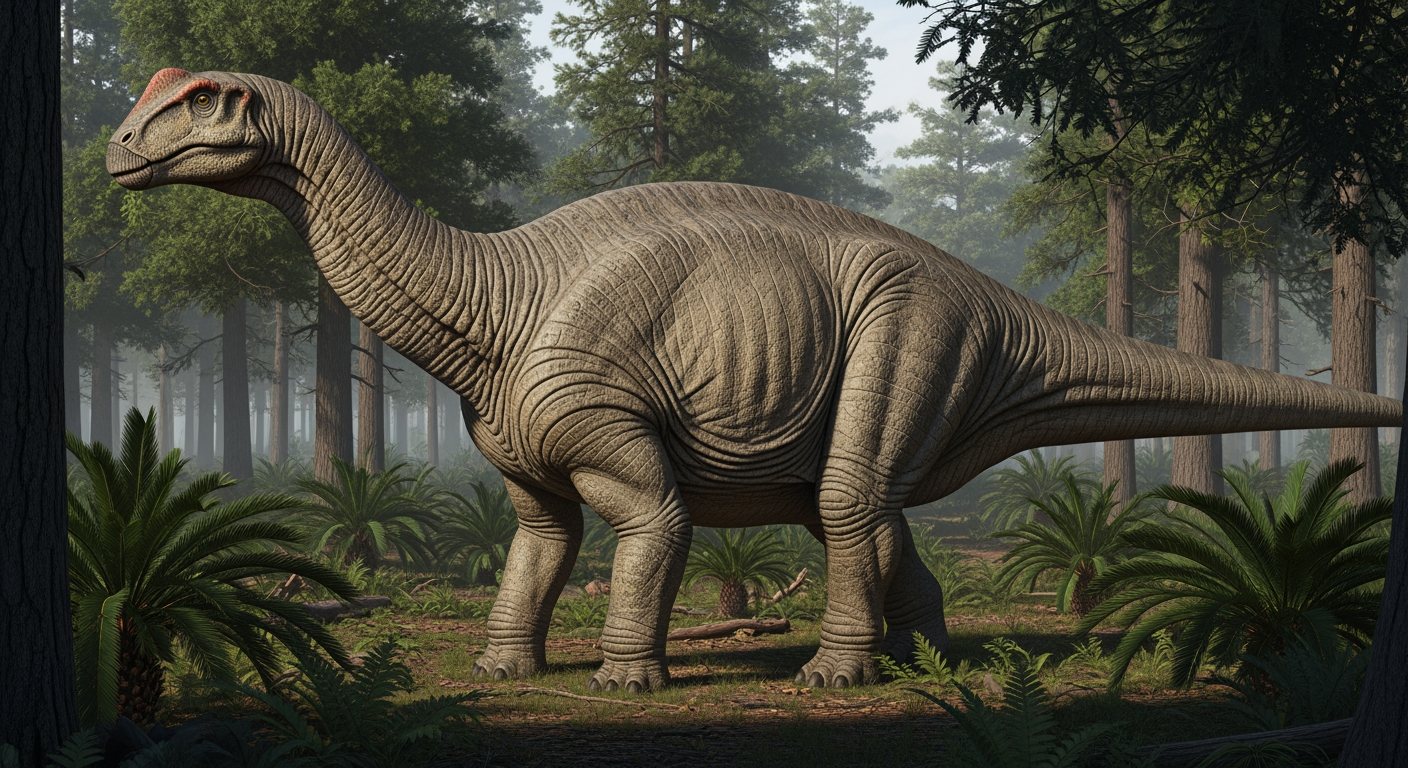
With a total body length of about 59 feet, Camarasaurus was one of the smaller sauropods, living in North America roughly 155 to 145 million years ago in the Late Jurassic — though even at that size its neck was substantially longer than its trunk. It is one of the most commonly found dinosaurs, with remains across the present-day United States.
The first remains were found by Oramel W. Lucas in 1877, and the first complete skeleton was unearthed by Charles W. Gilmore in 1925. The sheer number and clustering of finds suggests these animals travelled in herds. The name means “chambered lizard,” a nod to its hollow vertebrae, and it is classified as a saurischian (“lizard-hipped”) dinosaur. It had large, spoon-shaped teeth and a short, square skull. Several Camarasaurus fossils have been found with Allosaurus bite marks — a sign it sometimes fell prey to that fierce carnivore.
Bring a long-neck home — see our pick of the best Brachiosaurus toys and dinosaur figures for every age.
Interesting facts about long neck dinosaurs
They laid their eggs on the move
Rather than building nests, sauropods seem to have dropped their eggs while walking — a claim supported by fossilised eggs found in long, linear patterns.
They were the largest land animals ever
With bodies reaching over 100 feet and weights of many tons, sauropods are the largest animals ever to have lived on land.
They had tiny brains
Despite their size, long-necked dinosaurs had remarkably small brains — about the size of a tennis ball on average. The brain of Diplodocus, one of the longest of all, weighed only around four ounces.
Air sacs made their necks lighter
Many sauropods like Brachiosaurus had air sacs branching off the bones of the neck and chest — part of a bird-like respiratory system that also hollowed out the vertebrae, making that enormous neck lighter and more flexible than it looks.
They roamed all seven continents
Sauropod fossils have been found on every continent, even Antarctica — because hundreds of millions of years ago the continents were joined together, and dinosaurs could simply walk between them.
When the long necks vanished: the Sauropod Hiatus
During the Late Cretaceous — roughly 100 to 75 million years ago — something strange happened in North America. The long-necked sauropods, once common there, all but disappear from the fossil record. Paleontologists call this gap the “Sauropod Hiatus.”
Then came Alamosaurus, a long-necked titanosaur that lived at the very end of the Cretaceous — its appearance marks the end of the hiatus. So why did the gap happen? Most scientists point to changes in climate, plant life or habitat that made North America unsuitable for sauropods for a stretch; some think sauropods later returned from South America, crossing back over land. Another idea is that there was no true gap at all — just geological conditions that left few fossils from that window. We still aren’t certain, and scientists keep studying it.
Final thoughts
Long-neck dinosaurs are some of the most fascinating creatures ever to exist, dominating the planet for tens of millions of years with their colossal bodies and towering stances. Giants like Supersaurus and Mamenchisaurus reached around 50 feet in neck length alone — the height of a five-story building. Yet just two centuries ago their very existence was unknown to us. Since then more than 250 sauropod species have been described, with many more surely waiting in the rock — and every expedition brings the giants a little more into focus.
Frequently asked questions
How long did a sauropod live?
Did long-necked dinosaurs have teeth?
Did sauropods eat rocks?
What is a long-necked dinosaur with a sail?
A note on accuracy: this guide follows mainstream paleontology. Sizes, dates and neck lengths are best estimates from published fossil studies, and they shift as new specimens are found.