
Dino Toys is reader-supported. When you buy through links on this page we may earn an affiliate commission, at no extra cost to you. As an Amazon Associate we earn from qualifying purchases.
Can Dinosaurs Swim? The Evidence for Aquatic Adaptations in Prehistoric Giants
Picture a massive Spinosaurus gliding through a river like a crocodile. It isn’t just a movie scene — some dinosaurs really did show adaptations for life around water. So, could dinosaurs swim? The honest answer turns out to be far more interesting than a simple yes or no.
The short answer
- No known dinosaur was fully aquatic — none spent its whole life in the water.
- Spinosaurus is the best aquatic candidate, though exactly how well it swam is hotly debated.
- The famous “sea monsters” — plesiosaurs, ichthyosaurs and mosasaurs — were marine reptiles, not dinosaurs.
- Most dinosaurs were land animals that could probably paddle or wade when they had to, much like elephants today.
Dinosaur, or true marine reptile? A quick guide
Half the confusion around “water dinosaurs” comes from mixing up dinosaurs with the reptiles that actually ruled the seas. Here’s who’s who.
| Creature | A dinosaur? | In the water |
|---|---|---|
| Spinosaurus | Yes | Best aquatic candidate — fished, maybe swam (debated) |
| Baryonyx | Yes | Caught fish at the water’s edge |
| Tyrannosaurus | Yes | Could probably wade or paddle |
| Hesperornis | Yes (a bird) | Expert diver with webbed feet |
| Plesiosaurus | No — marine reptile | Lived out in the open sea |
| Ichthyosaurs | No — marine reptile | Fully aquatic, dolphin-like |
| Mosasaurus | No — marine reptile | Apex ocean predator |
Spinosaurus: the best aquatic candidate
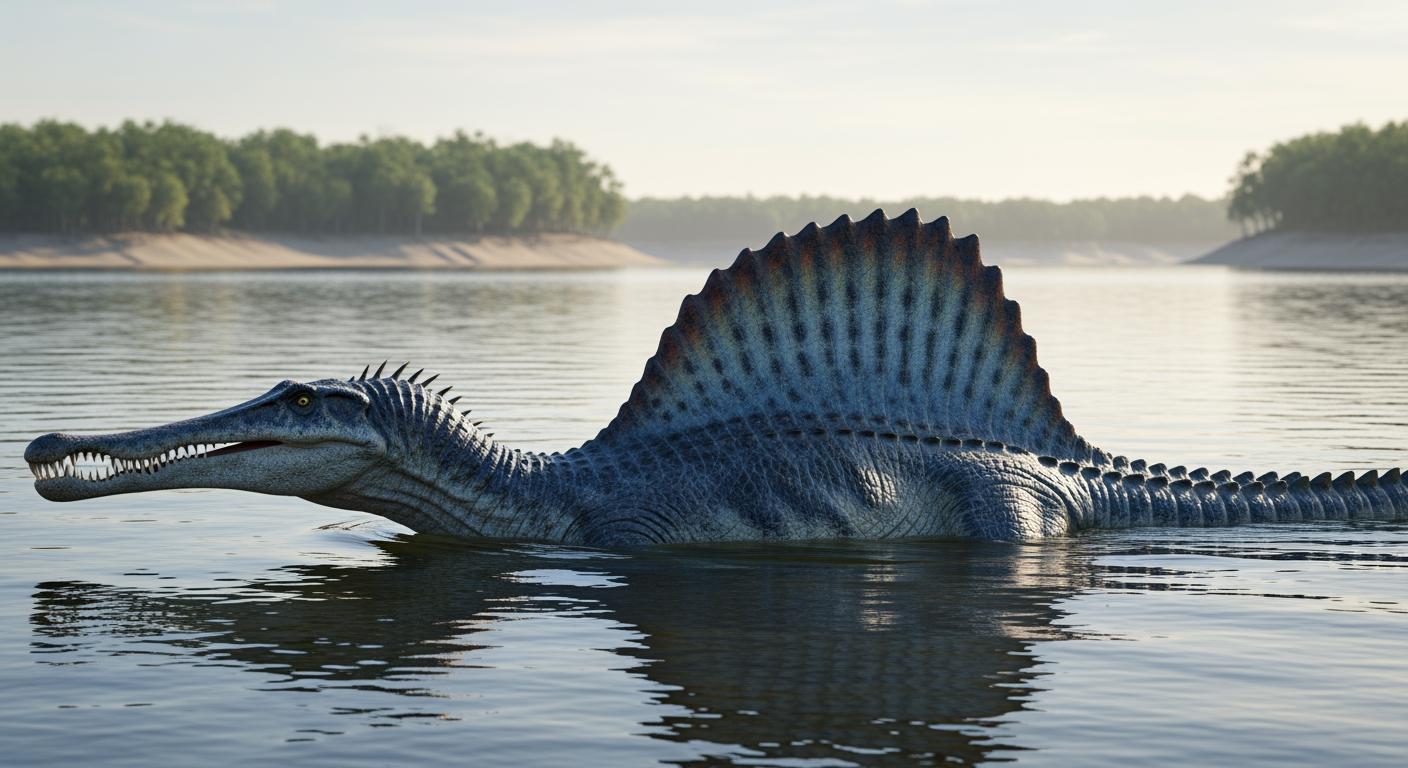
Spinosaurus takes the gold medal here. It lived about 95 million years ago in what is now North Africa (the Kem Kem region of Morocco), then a landscape of wide, deep rivers. Nizar Ibrahim’s team found a string of water-friendly traits: dense bones for buoyancy control, a long crocodile-like snout, conical fish-catching teeth and, in a 2020 study, a tall, paddle-shaped tail.
Here’s the honest state of the science, though: how well Spinosaurus actually swam is genuinely contested. Some researchers read those traits as an active, diving pursuit-predator; others argue it was more of a shoreline wader that fished from the bank rather than chasing prey underwater. What everyone agrees on is that it was tied to water more closely than any other known dinosaur — the exact swimming style is still being worked out.
Baryonyx: the prehistoric fisherman
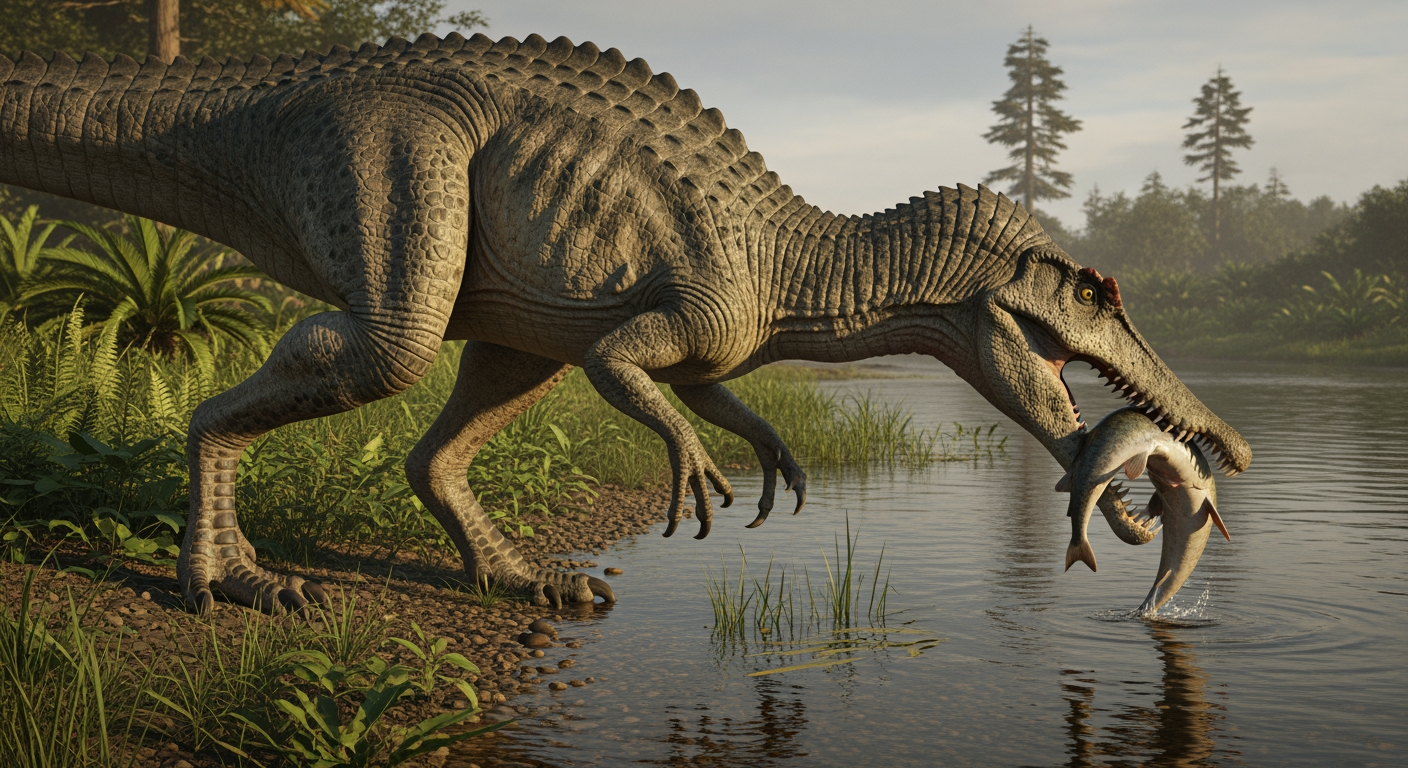
When we think of dinosaur predators the T-Rex usually steals the show, but some carnivores were part-time anglers. Baryonyx, a close relative of Spinosaurus, had a large hooked claw on each thumb and a narrow, croc-like snout — and one famous specimen was found with fish scales in its stomach region. Picture a prehistoric fisherman, scooping prey out of the shallows.
The swimming ankylosaur? Liaoningosaurus
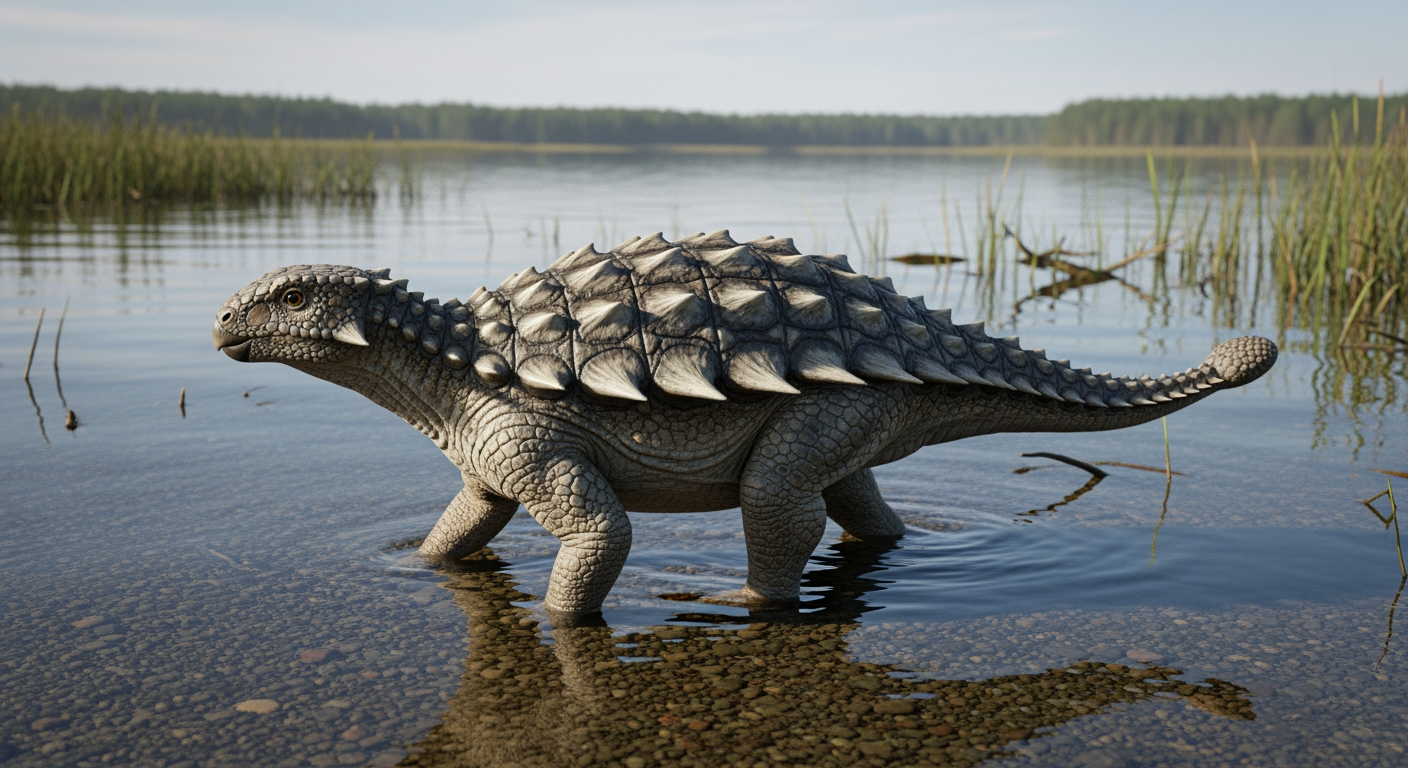
Imagine a walking tank that liked a swim. That’s the idea behind Liaoningosaurus, a small early ankylosaur from China — a separate animal from the famous Ankylosaurus, which lived much later and an ocean away. Based on a single specimen, some scientists proposed it was a semi-aquatic, fish-eating armoured dinosaur. It’s a fun image — the dinosaur equivalent of a hippo — but the interpretation is debated, so treat it as an intriguing maybe rather than a settled fact.
Could T-Rex swim?
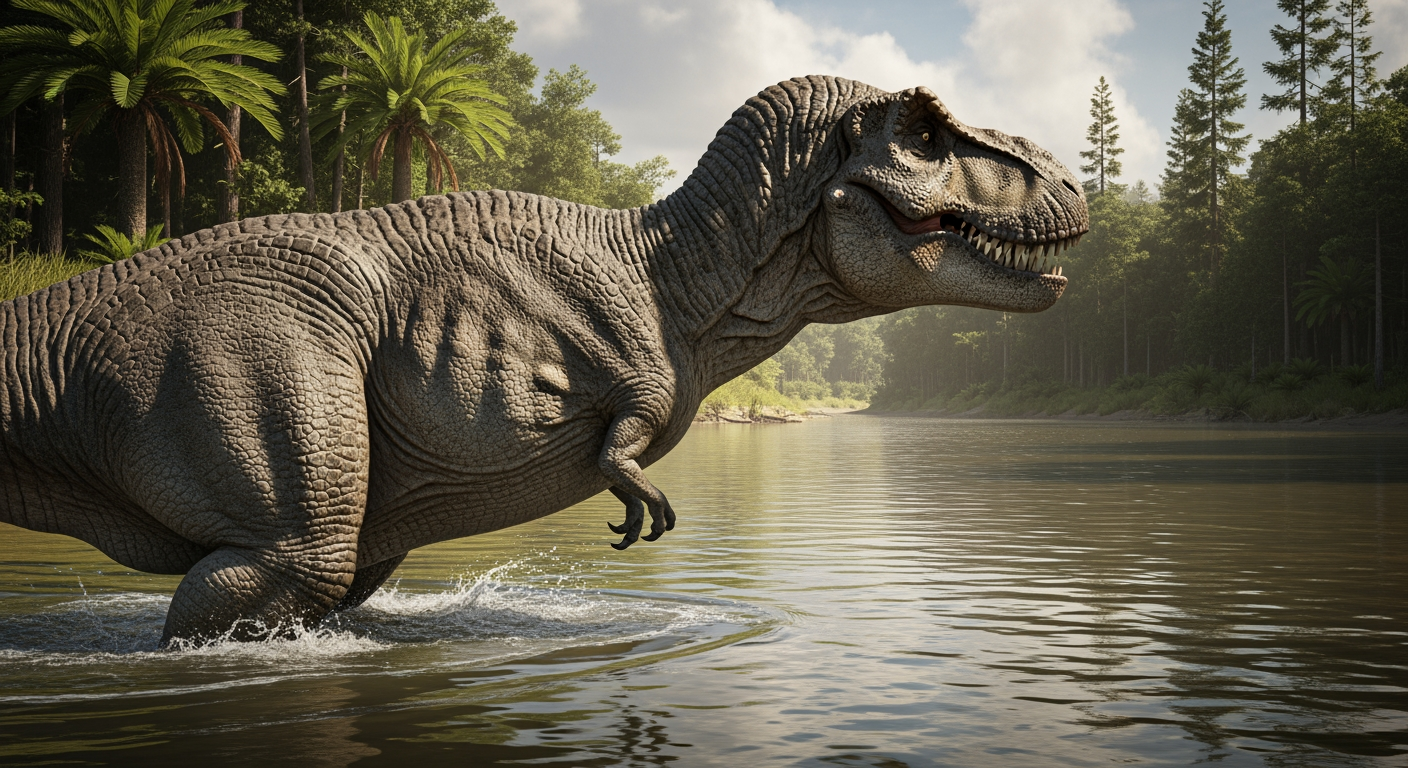
Tyrannosaurus wasn’t built for laps in a pool, but it almost certainly didn’t drown at the first puddle either. Many large land animals today — elephants, even big cats — can paddle surprisingly well, and trackways show some big meat-eating dinosaurs did cross water. So picture T-Rex wading chest-deep, or paddling across a river to reach prey, rather than diving after fish.
What about the long-necks?
The giant long neck dinosaurs (sauropods) were firmly land animals — the old idea that they lived half-submerged to support their weight was abandoned decades ago. That said, their fossil trackways hint they could wade and even float-punt across water when crossing it, using that long neck to keep breathing. They weren’t doing backstroke, but water wasn’t necessarily a barrier.
Birds: the dinosaurs that really took to water
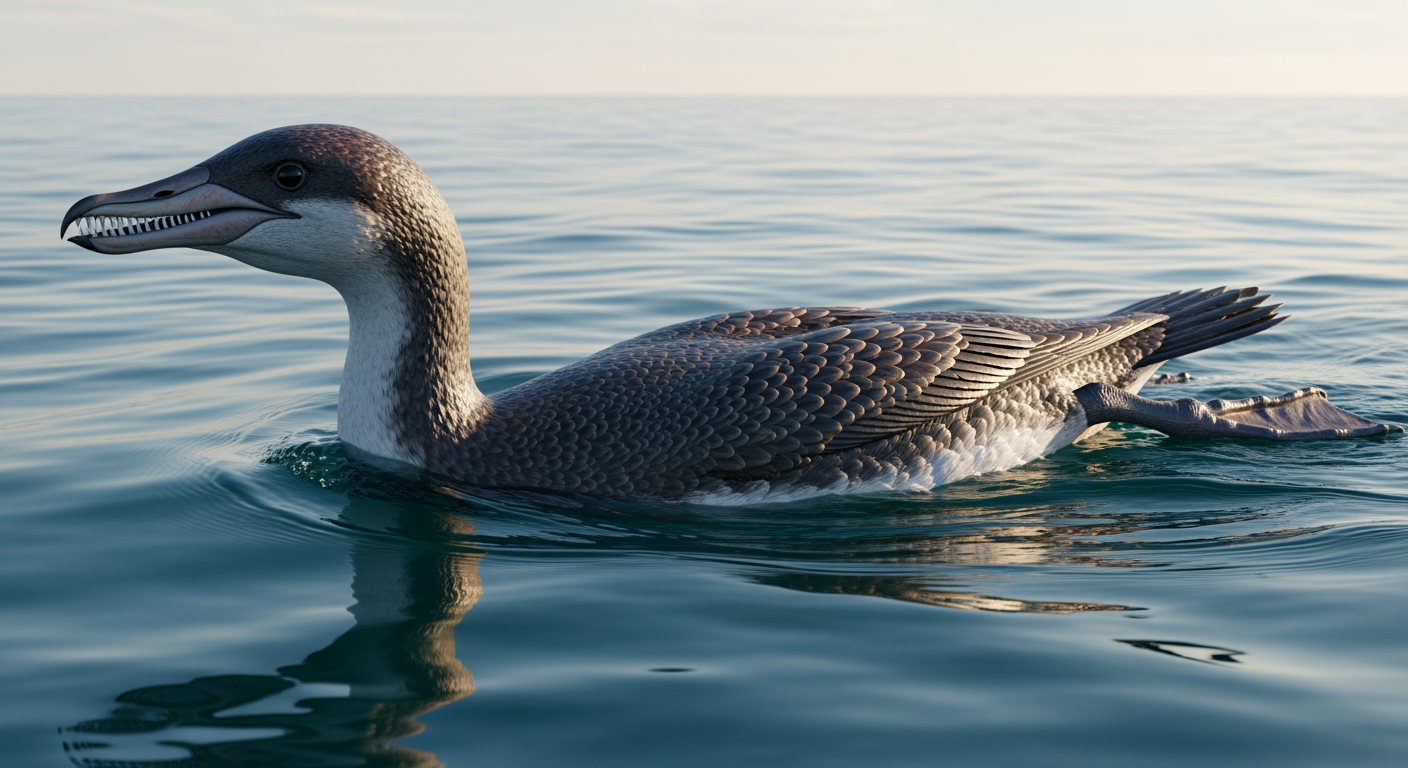
Here’s the twist: birds are dinosaurs, and plenty of them are superb swimmers. Back in the Cretaceous, the toothed, flightless Hesperornis dived for fish using powerful webbed feet, like a prehistoric loon. And today’s ducks and penguins carry that same dinosaur lineage straight into the water — living proof that “dinosaurs” took to swimming far more successfully than any Spinosaurus.
The real sea monsters weren’t dinosaurs
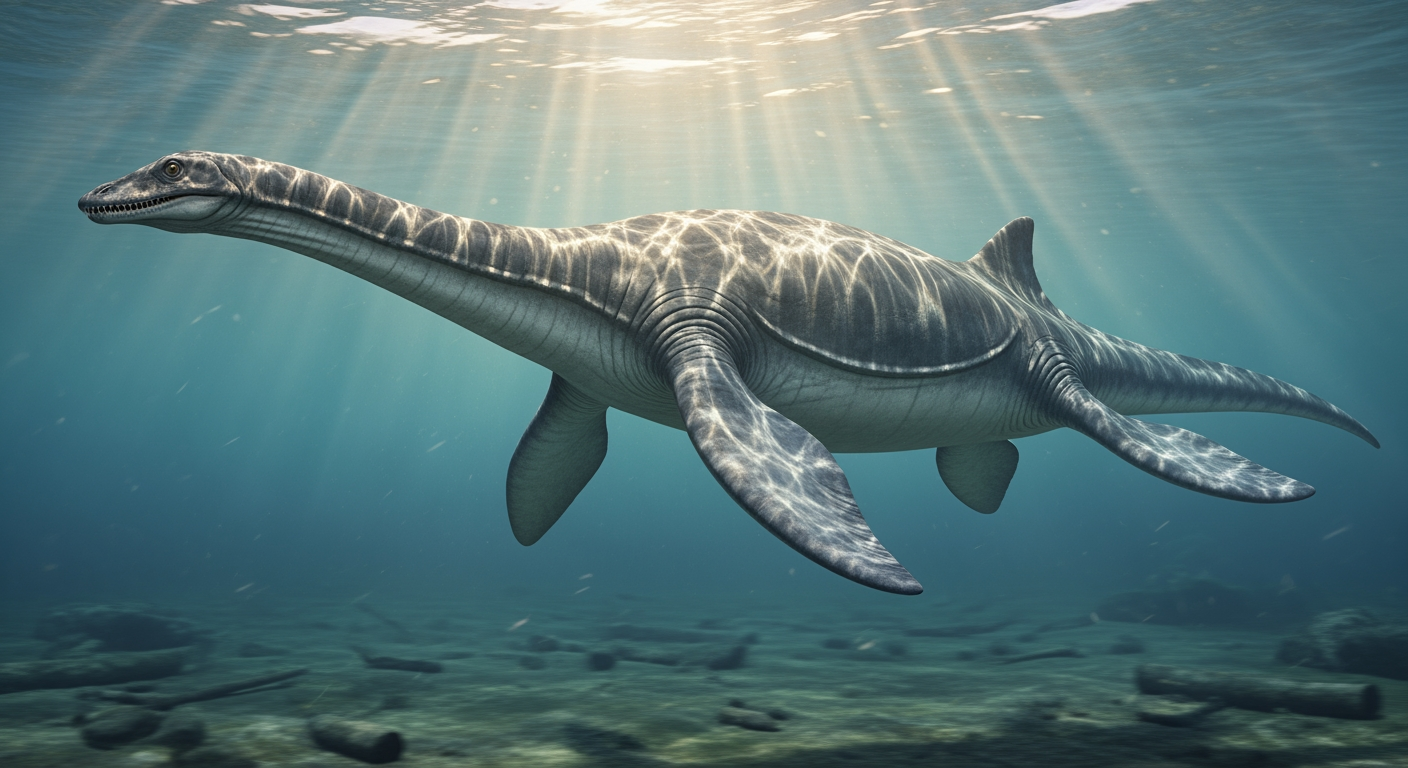
The creatures that truly lived in the sea — long-necked plesiosaurs, dolphin-shaped ichthyosaurs and the colossal mosasaurs — were marine reptiles, a completely separate group from dinosaurs. With streamlined bodies and flipper-like limbs, they were built for a full-time ocean life that no dinosaur ever matched.
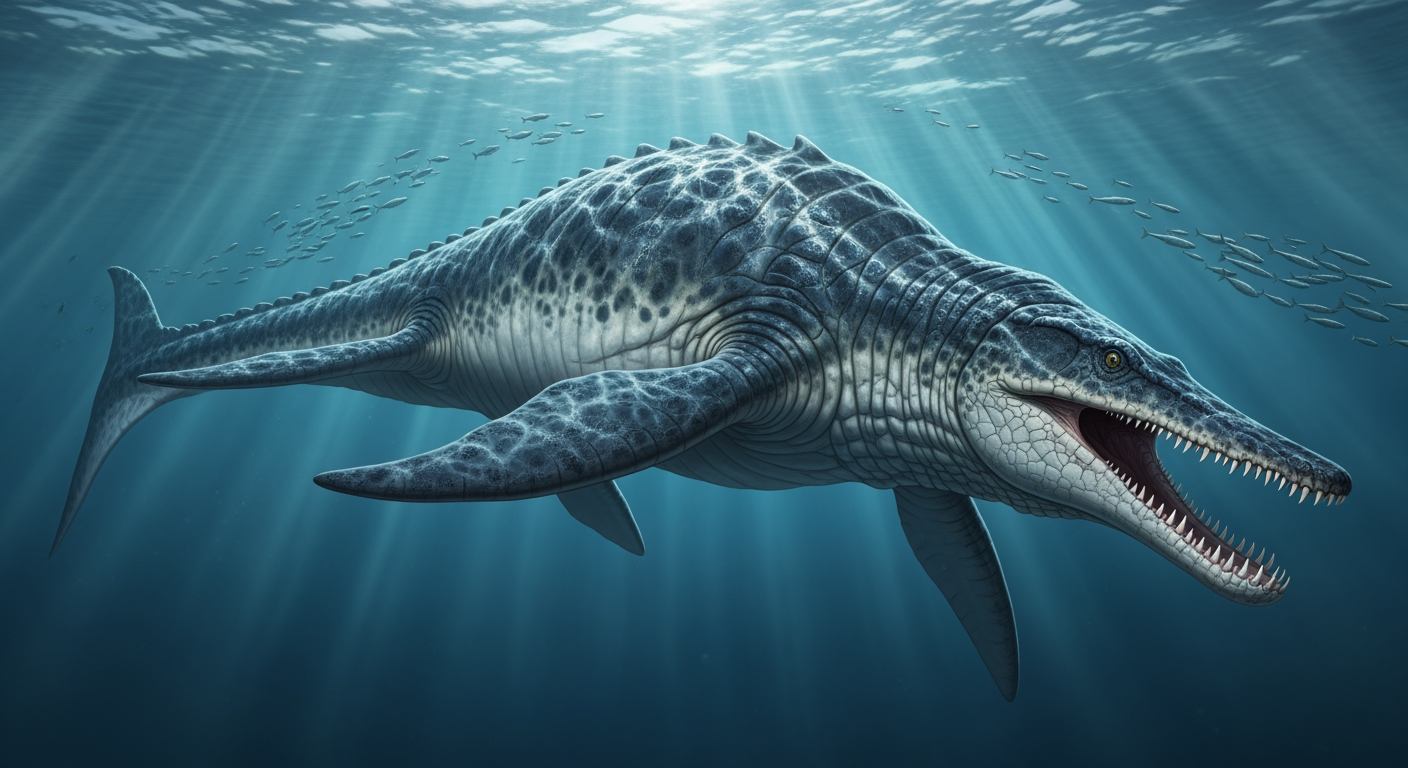
So next time someone calls a plesiosaur or mosasaur a “swimming dinosaur,” you can gently set the record straight: some dinosaurs splashed and waded, but the true rulers of the waves belonged to a different family altogether.
From Spinosaurus to Mosasaurus — see our pick of the best dinosaur (and sea-monster) figures.
Frequently asked questions
Could any dinosaur swim?
Was any dinosaur fully aquatic?
What made Spinosaurus special?
Was there a dinosaur that could fly, swim and walk?
Could T-Rex swim?
A note on accuracy: this guide follows mainstream paleontology. Some claims here — especially how (and how much) Spinosaurus swam — are actively debated, and interpretations shift as new fossils are studied.