Dinosaurs Without Tails
Affiliate Disclosure: This article contains affiliate links to Amazon. If you make a purchase through these links, we may earn a small commission at no extra cost to you. This helps support DINO TOYS and allows us to continue creating great content about dinosaurs!
Our Top Picks
⚡ Our top picks
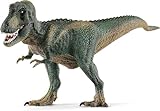
Editor’s pick Schleich T-Rex View on Amazon Best STEM pick National Geographic Dino Dig Kit View on Amazon Best plush Aurora Dinosaur Plush View on Amazon Editor's pickSchleich T-Rex
★★★★☆ (12,400+ ratings)The gold standard for realistic dinosaur figures. Hand-painted, museum-quality detail.
Best STEM pickNational Geographic Dino Dig Kit
★★★★☆ (14,000+ ratings)Excavate real fossils. Includes tools and learning guide. Hours of educational fun.
Best plushAurora Dinosaur Plush
★★★★☆ (3,400+ ratings)Super soft, huggable, and perfectly sized for little hands. Bean-filled for a floppy cuddle feel.


The question of dinosaurs without tails is surprisingly nuanced. Every non-avian dinosaur had a tail — it was a defining feature of the group, essential for balance, locomotion, defense, and communication. But the real story is how dinosaur tails evolved, shortened, and eventually disappeared as dinosaurs became birds. Modern birds are the only “tailless dinosaurs” — they traded long bony tails for a short, fused structure called a pygostyle that supports their tail feathers.
This guide explores dinosaur tail evolution, why tails were so important, famous dinosaurs with remarkable tail adaptations, and how the tail eventually vanished in the bird lineage. Plus, the best toys for kids fascinated by dinosaur anatomy.
Quick Picks: Best Dinosaur Anatomy Toys
- Best Ankylosaurus figure: Schleich Ankylosaurus — shows the famous tail club in detail
- Best Stegosaurus figure: Schleich Stegosaurus — displays the iconic thagomizer tail spikes
- Best anatomy kit: National Geographic Dino Fossil Dig Kit — excavate and learn skeletal structure
- Best feathered dino: Safari Ltd Feathered Velociraptor — shows tail evolution toward birds
Did Any Dinosaurs Lack Tails?
No non-avian dinosaur lacked a tail entirely. All dinosaurs had tails — from the shortest to the most spectacularly long. The tail was a fundamental part of dinosaur anatomy, connected to the spine and supported by numerous vertebrae. What varied dramatically was tail length, shape, flexibility, and function. Some dinosaurs had tails that were relatively short compared to their body (like certain ceratopsians), while others had tails longer than the rest of their body combined (like Diplodocus).
The only true “dinosaurs without tails” are modern birds — which are living dinosaurs. Birds evolved a shortened, fused tail structure called a pygostyle that supports fan-shaped tail feathers. This evolutionary change happened gradually over tens of millions of years as the long bony tail of theropod dinosaurs shortened with each generation.
Amazing Dinosaur Tail Adaptations
Ankylosaurus — The Tail Club
The Ankylosaurus tail ended in a massive bony club that could swing with devastating force — enough to shatter bone. The club was formed from fused vertebrae and osteoderms (bony plates) and acted like a medieval mace. Scientists estimate a full-force swing could break the leg bones of a T-Rex. This was a purely defensive weapon — the tail club allowed Ankylosaurus to survive alongside the most powerful predators of the late Cretaceous.
🛒 Check Today’s Price on Amazon
Stegosaurus — The Thagomizer
The Stegosaurus tail featured 2–4 sharp spikes (each up to 3 feet long) called the thagomizer — a term actually coined by cartoonist Gary Larson in a 1982 Far Side comic that was later adopted by paleontologists. Stegosaurus swung its flexible tail sideways to impale attackers like Allosaurus. Fossil evidence includes Allosaurus vertebrae with puncture wounds matching Stegosaurus tail spike dimensions.
🛒 Check Today’s Price on Amazon
Diplodocus — The Whip Tail
The Diplodocus tail was extraordinarily long — up to 45 feet — and tapered to a thin, whip-like tip. Computer simulations suggest the tail tip could reach supersonic speeds when cracked, creating a sonic boom loud enough to startle predators. This may have been the most unusual defensive weapon in dinosaur history — a biological bullwhip.
Spinosaurus — The Paddle Tail
Recent discoveries showed that Spinosaurus had a tall, fin-like tail perfect for swimming — confirming it was a semi-aquatic predator. The broad, paddle-shaped tail generated thrust in water, making Spinosaurus the only known dinosaur adapted for active aquatic locomotion. This discovery fundamentally changed our understanding of how diverse dinosaur lifestyles really were.
Velociraptor — The Stiff Balance Rod
Velociraptor’s tail was stiffened by bony tendons along its length, turning it into a rigid counterbalance that allowed rapid turns during high-speed chases. It functioned like a tightrope walker’s pole — providing stability during the agile, predatory maneuvers raptors were famous for.
How Dinosaurs Lost Their Tails: The Bird Evolution
The transition from long-tailed dinosaurs to short-tailed birds happened gradually over the Cretaceous period:
- Archaeopteryx (150 mya): Long bony tail with feathers along its length — still very dinosaur-like
- Confuciusornis (125 mya): Shorter tail with a pygostyle beginning to form — transitional stage
- Modern birds (66 mya–present): Fully fused pygostyle supporting fan-shaped tail feathers — the bony tail is essentially gone
The shortening of the tail allowed birds to develop better flight control, reduce body weight, and evolve the fan-shaped tail feathers that serve as rudders and brakes during flight. The tail didn’t disappear — it transformed from a long chain of vertebrae into a compact, specialized flight tool.
Frequently Asked Questions
Did any dinosaurs not have tails?
All non-avian dinosaurs had tails. The tail was a fundamental part of dinosaur anatomy for balance, defense, and locomotion. The only “dinosaurs” without long bony tails are modern birds, which evolved a shortened, fused tail structure called a pygostyle over millions of years of evolution.
What was the most dangerous dinosaur tail?
The Ankylosaurus tail club was likely the most dangerous — a massive bony club that could deliver bone-shattering blows to predators. The Stegosaurus thagomizer (spiked tail) was also extremely dangerous, with fossil evidence showing it successfully punctured Allosaurus bones. Both tails evolved specifically as anti-predator weapons.
Why did birds lose their tails?
Birds evolved shorter tails because a compact pygostyle with fan-shaped feathers provided better flight control than a long bony tail. The lighter structure reduced body weight (critical for flight) while the feather fan acted as a more efficient rudder and brake. This evolutionary trade-off gave birds superior aerial agility compared to their long-tailed dinosaur ancestors.
What dinosaur had the longest tail?
Diplodocus had one of the longest dinosaur tails at up to 45 feet — nearly half its total body length. Some sauropods like Supersaurus may have had even longer tails, but incomplete fossil records make exact measurements uncertain. The longest tails belonged to sauropod dinosaurs, which used them for balance, defense, and possibly communication through whip-cracking sounds.
Could dinosaurs regrow their tails like lizards?
No. Unlike modern lizards that can regenerate lost tails, dinosaurs could not regrow their tails. Dinosaur tails contained complex vertebrae, muscles, and blood vessels that couldn’t regenerate. Tail loss would have been permanently debilitating or fatal. The regeneration ability in lizards evolved independently and is not shared by the dinosaur-bird lineage.
Related Dinosaur Guides
- Best Dinosaur Toys 2026 — Complete Guide
- Realistic Dinosaur Figures
- The Long Neck Dinosaur — Complete Guide
- Flying Dinosaurs — Complete Guide
- Feathered Dinosaurs: Science and Toys
- T-Rex vs Spinosaurus: Who Would Win?
- Best Dinosaur Dig Kits for Kids
- The Mesozoic Era Explained
- Best Dinosaur Toys by Age
- Best T-Rex Toys
You Might Also Like
- Best Dinosaur Toys 2026: Top Picks for Every Age (Expert Tested)
- Is Godzilla a Dinosaur or a Dragon ?
- Best Velociraptor Toys 2026 — Feathered Raptors, Jurassic Blue & Collector Figures
- Best Dinosaur Easter Basket Fillers 2026 — Egg Hunt Picks & Spring Gifts
- Mattel vs Schleich vs Safari Ltd Dinosaurs: Which Brand Is Best? (2026)