
Which Dinosaur Had Hollow Limb Bones ?
Affiliate Disclosure: This article contains affiliate links to Amazon. If you make a purchase through these links, we may earn a small commission at no extra cost to you. This helps support DINO TOYS and allows us to continue creating great content about dinosaurs!
Our Top Picks
⚡ Our top picks
Editor’s pick Schleich T-Rex View on Amazon Best STEM pick National Geographic Dino Dig Kit View on Amazon Best plush Aurora Dinosaur Plush View on Amazon Editor's pickSchleich T-Rex
★★★★☆ (12,400+ ratings)The gold standard for realistic dinosaur figures. Hand-painted, museum-quality detail.
Best STEM pickNational Geographic Dino Dig Kit
★★★★☆ (14,000+ ratings)Excavate real fossils. Includes tools and learning guide. Hours of educational fun.
Best plushAurora Dinosaur Plush
★★★★☆ (3,400+ ratings)Super soft, huggable, and perfectly sized for little hands. Bean-filled for a floppy cuddle feel.
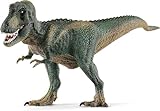


The question “which dinosaur had hollow limb bones” comes up frequently in dinosaur trivia and science education. Hollow bones were a key evolutionary adaptation that allowed certain dinosaurs to grow large while staying lightweight enough to move quickly — and this trait is directly connected to why birds can fly today.
Which Dinosaurs Had Hollow Limb Bones?
The dinosaurs with hollow (pneumatized) limb bones were primarily theropods — the two-legged predatory dinosaurs. This includes T-Rex, Velociraptor, Allosaurus, and all other meat-eating dinosaurs, as well as their descendants: modern birds. Sauropods (long-necked dinosaurs like Brachiosaurus) also had hollow vertebrae and some hollow limb bones, which helped reduce the weight of their massive bodies. The most extremely hollow bones belonged to pterosaurs (flying reptiles) and small theropods closely related to birds.
Why Did Dinosaurs Have Hollow Bones?
Weight Reduction for Speed
Hollow bones significantly reduced body weight without sacrificing structural strength — the same engineering principle used in modern airplane wings and bicycle frames. For predatory theropods like Velociraptor and Gallimimus, lighter bones meant faster running speeds, quicker turns, and more efficient hunting. A hollow bone can be up to 50% lighter than a solid bone of the same external dimensions while retaining most of its strength.
Air Sac System & Breathing
The hollow spaces in dinosaur bones were connected to an air sac respiratory system — the same system found in modern birds. Air sacs extended into the hollow bones, creating a one-directional airflow through the lungs that was far more efficient than mammalian breathing. This allowed theropods to maintain high activity levels and sustained running without getting winded — a crucial advantage for predators chasing prey.
Giant Size Management
For sauropods like Brachiosaurus and Diplodocus, hollow vertebrae and partially hollow limb bones were essential for reaching enormous sizes. Without hollow bones, a 70-ton Argentinosaurus would have been too heavy to support its own weight on land. The air-filled bones reduced skeletal weight by an estimated 10–15%, making the difference between a viable body plan and a structural impossibility.
Hollow Bones vs Solid Bones in Dinosaurs
Dinosaurs with Hollow Bones
All theropods (T-Rex, Velociraptor, Spinosaurus, Allosaurus), sauropods (Brachiosaurus, Diplodocus, Apatosaurus), and pterosaurs had varying degrees of bone hollowness. The smallest theropods closest to the bird lineage had the most extensively hollow skeletons. Modern birds inherited this trait and have the most pneumatized bones of any living vertebrate.
Dinosaurs with Solid Bones
Ornithischian dinosaurs — including Triceratops, Stegosaurus, Ankylosaurus, and hadrosaurs — generally had solid, dense bones. These herbivores didn’t need the speed advantage of lightweight bones and instead benefited from denser, stronger skeletal structures that supported heavy armor, horns, and defensive body plans. Their solid bones made them more resistant to predator attacks.
The Connection to Modern Birds
The hollow bone structure of theropod dinosaurs is one of the strongest pieces of evidence that birds evolved directly from dinosaurs. Modern birds have extremely hollow, lightweight bones filled with air sacs — a direct inheritance from their theropod ancestors. When paleontologists examine the cross-section of a Velociraptor bone and a modern eagle bone, the internal structure is remarkably similar. This evolutionary innovation, developed over 200 million years ago, is what ultimately made bird flight possible.
For kids fascinated by dinosaur anatomy and the dinosaur-to-bird connection, the DK Dinosaur Visual Encyclopedia provides detailed skeletal illustrations showing hollow bone structures across species.
🛒 Check Today’s Price on Amazon
Frequently Asked Questions
Did T-Rex have hollow bones?
Yes — T-Rex had partially hollow bones, especially in its skull, vertebrae, and some limb elements. The massive skull of T-Rex contained extensive air pockets (sinuses) that reduced head weight without sacrificing bite force. However, T-Rex’s leg bones were more solid than smaller theropods because they needed to support 9+ tons of body weight. The balance of hollow and solid elements optimized both weight and structural strength.
How do scientists know dinosaur bones were hollow?
Paleontologists can see the internal structure of fossilized bones through CT scanning and cross-sectional cuts. Hollow bones leave distinctive internal patterns — thin outer walls with internal struts and chambers — that are clearly visible in well-preserved fossils. These patterns are identical to the pneumatized bones found in modern birds, confirming the hollow structure.
Are hollow bones weaker than solid bones?
Not necessarily — hollow bones use an engineering principle called a “hollow tube” structure that provides excellent strength-to-weight ratio. A hollow cylinder resists bending forces almost as well as a solid cylinder of the same outer diameter but weighs significantly less. Nature’s design is similar to how engineers use hollow steel tubes instead of solid rods in construction.
Which dinosaur had the most hollow bones?
The small theropods closest to the bird lineage — like Archaeopteryx, Microraptor, and Velociraptor — had the most extensively pneumatized skeletons. Among larger dinosaurs, ornithomimosaurs (like Gallimimus) had very hollow bones relative to their size, which contributed to their exceptional running speed. Pterosaurs (flying reptiles) had even more extremely hollow bones than any dinosaur.
Do any modern animals besides birds have hollow bones?
Birds are the only living animals with extensively pneumatized (air-sac-connected) hollow bones. Some mammals have minor air spaces in certain skull bones (sinuses), but nothing approaching the systematic hollow bone structure of birds. This unique feature is a direct evolutionary inheritance from theropod dinosaurs and is one of the key adaptations that enables flight.
Related Dinosaur Guides
- Types of Dinosaurs — Complete Guide
- Best Dinosaur Toys 2026
- Flying Dinosaurs Guide
- Best Dinosaur Books for Kids
- Best Dinosaur STEM Toys
- Realistic Dinosaur Figures
- The Long-Neck Dinosaur Guide
- Dinosaur Figurines Guide
- Best Dinosaur Toys by Age
- Best T-Rex Toys