Did Dinosaurs Have Two Brains ?
Affiliate Disclosure: This article contains affiliate links to Amazon. If you make a purchase through these links, we may earn a small commission at no extra cost to you. This helps support DINO TOYS and allows us to continue creating great content about dinosaurs!
Our Top Picks
⚡ Our top picks
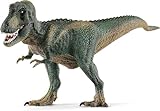
Editor’s pick Schleich T-Rex View on Amazon Best STEM pick National Geographic Dino Dig Kit View on Amazon Best plush Aurora Dinosaur Plush View on Amazon Editor's pickSchleich T-Rex
★★★★☆ (12,400+ ratings)The gold standard for realistic dinosaur figures. Hand-painted, museum-quality detail.
Best STEM pickNational Geographic Dino Dig Kit
★★★★☆ (14,000+ ratings)Excavate real fossils. Includes tools and learning guide. Hours of educational fun.
Best plushAurora Dinosaur Plush
★★★★☆ (3,400+ ratings)Super soft, huggable, and perfectly sized for little hands. Bean-filled for a floppy cuddle feel.


The idea that dinosaurs had two brains is one of the most persistent myths in paleontology. For over a century, people believed Stegosaurus and other large dinosaurs had a “second brain” in their hip to control their back half — because their actual brains were supposedly too small to manage such massive bodies. But did dinosaurs really have two brains? Science says no — and the real story is actually more interesting than the myth.
This guide breaks down the two-brain dinosaur myth, explains what was really going on, and explores what we know about dinosaur intelligence. Plus, we recommend the best dinosaur toys for kids curious about dino brains and anatomy.
Quick Picks: Best Dinosaur Anatomy and STEM Toys
- Best anatomy toy: National Geographic Dino Fossil Dig Kit — excavate and learn real paleontology
- Best Stegosaurus figure: Schleich Stegosaurus — museum-quality detail of the “two-brain” dino
- Best educational book: National Geographic Ultimate Dinopedia — covers dino brains and anatomy
- Best STEM kit: Dinosaur Skeleton Assembly Kit — build and learn bone structure
The Two-Brain Myth: Where Did It Come From?
The two-brain dinosaur myth originated in 1877 when paleontologist O.C. Marsh discovered that Stegosaurus had an incredibly small brain — roughly the size of a walnut, weighing about 2.8 ounces — inside a 2-ton body. He also noticed an enlarged cavity in the hip region of the spinal canal that was 20 times larger than the brain cavity. Marsh suggested this enlargement might have served as a “posterior brain” that controlled the tail and hind legs.
The idea was irresistible: a dinosaur so big and so dumb that it needed two brains to function. It appeared in textbooks, museums, and even poetry for the next century. But modern science has thoroughly debunked it.
What Was Really in the Hip Cavity?
The glycogen body theory
Modern paleontologists believe the enlarged hip cavity in Stegosaurus and other dinosaurs contained a glycogen body — not a second brain. A glycogen body is a mass of glycogen (stored sugar) found in the spinal canals of modern birds (which are living dinosaurs). It likely served as an energy reserve for the nervous system, providing quick fuel for nerve function — especially important for coordinating the powerful tail muscles Stegosaurus used to swing its spiked thagomizer at predators.
Why it wasn’t a brain
A brain requires neurons organized into complex processing structures. The hip cavity in dinosaurs contained no evidence of neural tissue organization — no nerve cell clusters, no processing centers. It was simply an enlarged space in the spinal canal, similar to structures found in many modern animals. Even modern ostriches have enlarged sacral canals, and nobody suggests they have two brains.
How Smart Were Dinosaurs Really?
Understanding encephalization quotient (EQ)
Scientists measure animal intelligence using the encephalization quotient (EQ) — the ratio of brain size to expected brain size for an animal of that body weight. A higher EQ generally indicates greater cognitive ability. Here’s how dinosaurs compare:
- Troodon: EQ of 5.8 — the smartest dinosaur, comparable to modern birds
- Velociraptor: EQ of ~2.0 — reasonably intelligent, good problem-solving ability
- T-Rex: EQ of ~2.4 — surprisingly smart for its size, with excellent sensory processing
- Stegosaurus: EQ of ~0.6 — one of the least intelligent dinosaurs relative to body size
- Sauropods (Brachiosaurus): EQ of ~0.2 — very low intelligence, relying on size for survival
The smartest dinosaurs: Troodon and raptors
Troodon had the largest brain relative to its body of any known dinosaur. At about 6 feet long and 100 pounds, it had a brain comparable in size and structure to modern birds like crows — animals known for tool use and problem-solving. Troodon had stereoscopic vision, large eyes (suggesting night hunting), and grasping hands. If any dinosaur was approaching mammalian-level intelligence, it was Troodon.
T-Rex: smarter than you think
Recent research on T-Rex brain endocasts (3D models from skull cavities) reveals a surprisingly large brain for a dinosaur — with massive olfactory bulbs (incredible sense of smell), large optic lobes (excellent vision), and a well-developed cerebrum. Some researchers have controversially suggested T-Rex may have had intelligence approaching that of modern primates, though this claim is heavily debated. What’s clear is that T-Rex was no dim-witted brute.
Dinosaur Brain Facts That Blow Kids’ Minds
- Smallest brain: Stegosaurus’s brain weighed about 2.8 ounces — in a body weighing 5,000+ pounds. That’s like controlling a school bus with a cell phone processor.
- Biggest brain: T-Rex had one of the largest dinosaur brains at roughly the size of a human fist — but it still weighed only about 1 pound in a 9-ton body.
- Birds inherited dino brains: Modern crows and parrots have brain structures directly inherited from their dinosaur ancestors — and they can solve puzzles, use tools, and even recognize human faces.
- Brain endocasts: Scientists create 3D models of dinosaur brains by scanning the inside of fossilized skulls — a technique called paleoneurology.
Best Toys for Kids Interested in Dinosaur Anatomy
National Geographic Dino Fossil Dig Kit
This hands-on STEM dinosaur kit lets kids excavate a replica dinosaur skeleton bone by bone — teaching real paleontology techniques and anatomy. It’s the best way for kids to learn about dinosaur skeletal structure, including the skull (where the brain lived) and the hip region (where the “second brain” myth originated).
🛒 Check Today’s Price on Amazon
Schleich Stegosaurus
The Schleich Stegosaurus is the perfect companion figure for discussing the two-brain myth. Hand-painted with museum-quality detail, it shows the distinctive plates, thagomizer tail spikes, and tiny head that fueled the original misconception. A great conversation starter for dino-curious kids.
🛒 Check Today’s Price on Amazon
Frequently Asked Questions
Did dinosaurs really have two brains?
No. The two-brain dinosaur myth has been thoroughly debunked. The enlarged hip cavity in Stegosaurus and other dinosaurs likely contained a glycogen body (an energy storage organ), not a second brain. All dinosaurs had a single brain located in their skull, just like every other vertebrate animal.
Why did people think Stegosaurus had two brains?
In 1877, paleontologist O.C. Marsh noticed that Stegosaurus had a tiny brain cavity in its skull but a much larger cavity in its hip region. He speculated this enlargement might have functioned as a “posterior brain.” The idea persisted for over a century because it made an appealing story — a dinosaur so big it needed two brains — but modern science has shown the hip cavity contained a glycogen body, not neural tissue.
What was the smartest dinosaur?
Troodon is considered the smartest dinosaur based on its encephalization quotient (EQ of 5.8). It had a brain comparable in relative size to modern crows, stereoscopic vision, and grasping hands. T-Rex was also surprisingly intelligent with a well-developed brain, and recent research suggests it may have been smarter than previously thought.
How big was a T-Rex brain?
A T-Rex brain was roughly the size of a human fist, weighing about 1 pound. While small compared to its 9-ton body, it was one of the largest brains of any dinosaur. Brain endocasts show well-developed regions for smell, vision, and motor coordination — making T-Rex a capable hunter with excellent sensory abilities.
Do any modern animals have two brains?
No vertebrate animal has two true brains. Some invertebrates like octopuses have decentralized nervous systems with nerve clusters (ganglia) in each arm that can act somewhat independently. The dinosaur “two-brain” concept was a misinterpretation of normal spinal anatomy — enlarged sacral canals are found in many modern animals, including birds, without being considered “brains.”
Related Dinosaur Guides
- Best Dinosaur Toys 2026 — Complete Guide
- The Mesozoic Era Explained
- Feathered Dinosaurs: Science and Toys
- Best Dinosaur Dig Kits for Kids
- Best STEM Dinosaur Toys
- Realistic Dinosaur Figures
- T-Rex vs Spinosaurus: Who Would Win?
- The Long Neck Dinosaur — Complete Guide
- Best Dinosaur Toys by Age
- Best T-Rex Toys